
Introduction
Keeping your home spotless does not have to feel overwhelming. With the right cleaning hacks for house, you can simplify your routine, save time, and achieve better results with less effort. Many people believe deep cleaning requires hours of hard work. However, smart strategies and practical shortcuts can transform how you manage everyday mess.
Instead of struggling with stubborn dust, stains, or clutter, using proven cleaning hacks for house helps you clean faster and smarter. These expert-backed techniques focus on efficiency, consistency, and practical solutions that fit into real-life routines.
Whether you manage a busy household or simply want a more organized space, these cleaning hacks for house will help you maintain a fresh environment without stress. Most importantly, they rely on simple methods that work repeatedly.
Let’s explore the most effective cleaning hacks that professionals actually use.
Why Smart Cleaning Matters
Cleaning is not about effort alone. It is about strategy.
When you follow structured cleaning hacks for house:
- You reduce cleaning time
- You prevent buildup
- You avoid exhausting routines
- You maintain consistency
More importantly, small daily actions stop large messes from forming.
Daily Cleaning Hacks for House That Save Time
Daily habits create long-term cleanliness. Instead of waiting for visible mess, use these quick hacks.
1. The 5-Minute Reset Rule
Clean small zones daily:
- Kitchen counters
- Coffee tables
- Entry areas
This prevents clutter buildup.
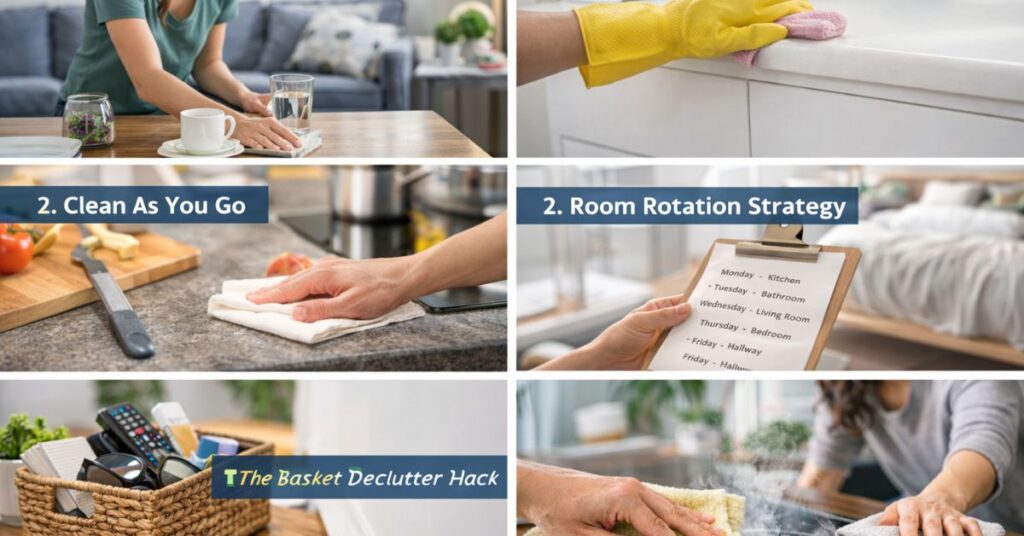
2. Clean As You Go
While cooking or working:
- Wipe surfaces immediately
- Put items back instantly
- Avoid stacking mess
This simple habit reduces major cleaning later.
3. Use the One-Touch Rule
Touch items only once.
Instead of placing something “for later,” put it back immediately.
This hack reduces clutter dramatically.
Weekly Cleaning Hacks for House That Maintain Freshness
Weekly routines ensure dirt never accumulates beyond control.
1. Top-to-Bottom Cleaning Method
Always clean from:
- High surfaces
- Mid-level areas
- Floors last
This prevents re-cleaning due to falling dust.
2. The Room Rotation Strategy
Instead of cleaning everything at once:
- Assign one room per day
- Focus on detail cleaning
This avoids burnout.
3. Use the Two-Cloth System
- One damp cloth for cleaning
- One dry cloth for polishing
This increases efficiency and prevents streaks.
Time-Saving Cleaning Hacks for House
Modern cleaning should be efficient.
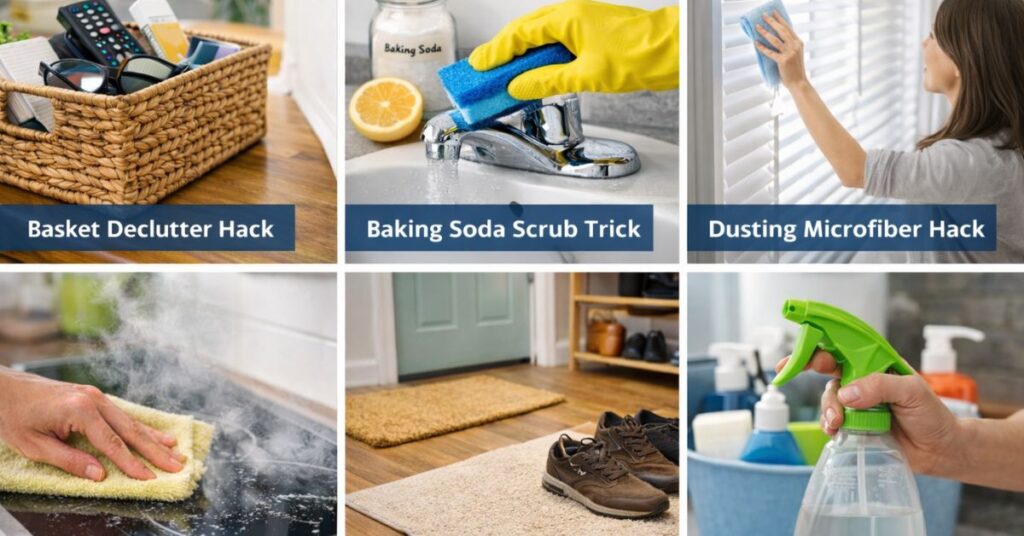
1. The Basket Declutter Hack
Use a basket to collect misplaced items.
After cleaning:
- Return items in one go
This avoids multiple trips.
2. The 15-Minute Power Clean
Set a timer for:
- Quick wiping
- Decluttering
- Dust removal
Short bursts increase motivation and results.
3. Multitasking Cleaning Strategy
Let tasks overlap:
- Allow surfaces to soak while you clean another area
- Work in zones
This cuts cleaning time significantly.
Deep Cleaning Hacks for House
Occasional deep cleaning is necessary. However, smart methods simplify it.
1. Steam-Effect Method
Use warm moisture to loosen grime before wiping.
This reduces scrubbing effort.
2. Hidden Spot Cleaning
Focus on often ignored areas:
- Behind furniture
- Under cushions
- Corner edges
Cleaning these improves overall freshness.
3. The Detail-First Approach
Start with small areas like:
- Handles
- Switches
- Edges
These spots collect surprising amounts of dirt.
Organization-Based Cleaning Hacks
Clean homes are organized homes.
1. Use Storage Zones
Assign specific locations for:
- Frequently used items
- Rarely used items
This reduces mess instantly.
2. Vertical Storage Trick
Utilize vertical space to:
- Avoid surface clutter
- Maintain visual cleanliness
3. Labeling Hack
Labels prevent:
- Misplacement
- Random stacking
Consistency keeps spaces tidy.
Preventive Cleaning Strategies
Prevention saves time.
1. Entryway Control
Place mats and storage near entry points.
This stops outside dirt from spreading.
2. Surface Protection
Use protective layers where needed.
This reduces cleaning frequency.
3. Immediate Spill Response
Never delay cleaning spills.
Quick action prevents stains and buildup.
Expert-Level Cleaning Habits
Professionals rely on routine, not effort.
1. Clean by Priority
Focus on:
- High-traffic areas
- Frequently touched surfaces
2. Use Micro-Cycles
Short daily cleaning sessions prevent heavy work later.
3. Maintain Air Flow
Good airflow reduces dust accumulation.
Practical Example
Consider this simple routine:
Daily:
- Reset visible surfaces
- Declutter small areas
Weekly:
- Clean one room deeply
- Focus on hidden spots
Monthly:
- Detail clean storage zones
This structured system keeps homes consistently clean.
Conclusion
Maintaining a spotless home does not require endless hours of work. Instead, using practical cleaning hacks for house helps you stay ahead of mess before it becomes overwhelming. When you apply smart routines, small daily actions, and preventive habits, cleaning becomes easier and more manageable.
The key is consistency. Simple strategies like the one-touch rule, room rotation, and top-to-bottom cleaning dramatically reduce effort. Over time, these habits eliminate the need for exhausting deep cleaning sessions.
Moreover, efficient cleaning improves comfort and creates a more organized environment. Instead of reacting to mess, you stay in control.
Start small. Apply just two or three of these cleaning hacks for house today. Gradually build your routine and enjoy a cleaner, calmer home without stress.
Ready to simplify your cleaning routine? Start using these smart cleaning hacks today and transform your home effortlessly.
Daily resets, room rotation, and top-to-bottom cleaning are highly effective.
Daily small actions and weekly focused cleaning work best.
Yes. Smart methods reduce effort and prevent large mess buildup.
Use zone cleaning and 15-minute power sessions.
They focus on consistency and preventive strategies.

Muhammad Ahad — SEO Specialist helping websites grow with smart, clean, and result-driven strategies. I improve rankings, boost organic traffic, and turn content into authority. I believe real SEO is built on data, trust, and consistency.