
Introduction
When people think about apartment cleaning, they imagine dusting shelves or mopping floors. However, crime scene cleaner Tyler’s apartment secrets reveal a very different reality. Apartment cleaning sometimes involves restoring spaces after traumatic events. These situations demand precision, safety awareness, and professional-level sanitation.
Tyler’s experience shows that apartment environments require unique cleanup strategies. Apartments are compact. They share ventilation systems and walls. Therefore, contamination risks spread faster than in larger homes.
More importantly, effective restoration protects both current residents and future tenants. This is why understanding crime scene cleaner Tyler’s apartment secrets can transform how serious apartment cleaning is approached.
In this guide, you will learn:
- Professional apartment restoration methods
- Safety-first cleaning principles
- Step-by-step apartment recovery strategies
- Practical lessons from real-life apartment cleanup situations
If you manage, own, or live in apartments, this knowledge is essential
Understanding Apartment Cleanup After Traumatic Events
Apartment cleaning after traumatic incidents is not routine cleaning. Instead, it focuses on restoring safety and livability.
Apartments create unique conditions:
- Limited airflow
- Shared structural elements
- Close proximity between residents
Therefore, contamination can spread through:
- Carpeting
- Flooring gaps
- HVAC systems
- Wall materials
Tyler emphasizes that apartment cleanup is about containment first. Cleaning comes second.
Why Crime Scene Cleaner Tyler’s Apartment Secrets Matter
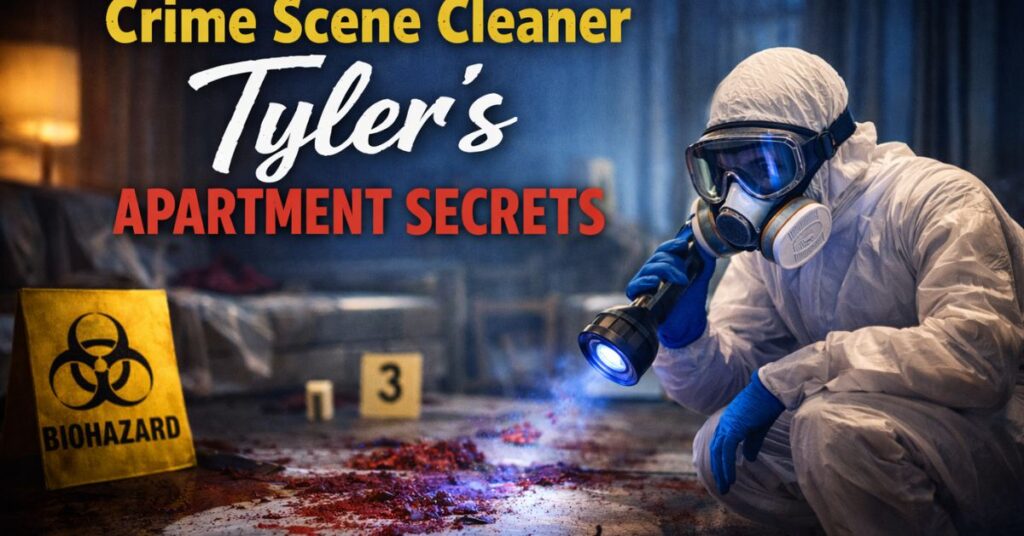
Crime scene cleaner Tyler’s apartment secrets focus on one key idea: apartments behave differently than houses.
For example:
- Fluids may seep into subflooring quickly
- Odors can travel through shared vents
- Bacteria may settle in hidden spaces
Because of this, Tyler never treats an apartment like a standalone unit.
Instead, he evaluates:
- Vertical spread risk
- Shared surface exposure
- Neighbor safety concerns
This apartment-first mindset prevents future sanitation issues.
Apartment-Specific Cleaning Challenges
1. Structural Absorption
Apartments often contain:
- Engineered wood
- Laminate flooring
- Drywall partitions
These materials absorb contaminants quickly.
2. Limited Ventilation
Unlike detached homes, apartments depend on shared air systems.
Therefore:
Contaminants can circulate unless isolated early.
3. Shared Spaces
Hallways and entry points increase exposure risks.
Thus, Tyler always secures:
- Entry pathways
- Elevators
- Adjacent walls
Step-by-Step Apartment Restoration Process
Crime scene cleaner Tyler’s apartment secrets follow a structured process.
Step 1: Apartment Risk Assessment
Tyler begins by identifying:
- Contamination zones
- Porous surfaces
- Airflow pathways
This prevents unnecessary spread.
Step 2: Controlled Containment
Next, isolation barriers are installed.
These include:
- Sealed entry points
- Negative air zones
- Protective coverings
Containment ensures neighboring units remain safe.
Step 3: Removal of Affected Materials
In apartments, surface cleaning is not always enough.
Therefore, Tyler removes:
- Damaged flooring
- Contaminated drywall
- Absorbed soft materials
This step restores structural hygiene.
Step 4: Deep Sanitization
After removal, he applies:
- Surface disinfectants
- Structural sanitation agents
- Air purification treatments
Each step targets apartment-specific risk areas.
Safety Measures Used in Apartment Cleanup
Safety always comes first.
Tyler follows strict protocols:
- Protective equipment usage
- Controlled disposal methods
- Safe handling procedures
Additionally, apartment environments demand:
- Noise control
- Discreet operations
- Minimal disruption
This ensures respect for neighboring residents.
Crime Scene Cleaner Tyler’s Apartment Secrets for Odor Removal
Odor is one of the toughest apartment challenges.
Unlike open homes, apartments trap smells.
Tyler uses layered strategies:
Structural Neutralization
Instead of masking odors, he neutralizes them.
This involves:
- Treating subfloors
- Cleaning wall cavities
- Addressing air ducts
Air Treatment
He improves air quality using:
- Vent sanitation
- Controlled airflow techniques
As a result, apartments regain freshness without artificial fragrances.
Preventing Cross-Contamination in Apartments
Crime scene cleaner Tyler’s apartment secrets highlight prevention.
Because apartments share infrastructure, prevention is critical.
Tyler recommends:
- Immediate containment
- Isolated cleaning zones
- Safe waste handling
Additionally, cleaning always progresses from:
Clean → Semi-affected → Heavily affected areas
This sequence avoids spread.
Apartment Cleaning Tools Tyler Relies On
Tyler uses apartment-specific equipment:
- Compact sanitation tools
- Targeted surface treatments
- Precision cleaning instruments
These tools allow deep cleaning without structural damage.
Furthermore, apartment-safe equipment minimizes disturbance to neighbors.
Long-Term Apartment Sanitation Strategies
Restoration does not end after cleaning.
Tyler advises ongoing apartment care:
Maintenance Checklist
- Inspect flooring monthly
- Check ventilation paths
- Monitor hidden moisture zones
Preventive Measures
- Use sealants on porous surfaces
- Improve air circulation
- Maintain routine sanitation
These steps ensure lasting safety.
Practical Lessons from Crime Scene Cleaner Tyler’s Apartment Secrets
Tyler’s work reveals key apartment cleaning truths:
- Apartments require containment-first cleaning
- Structural materials must be assessed early
- Air systems play a major role in sanitation
- Odor removal needs deep treatment
- Prevention is more effective than repeated cleaning
Applying these lessons improves apartment restoration outcomes.
Conclusion
Crime scene cleaner Tyler’s apartment secrets offer powerful insights into advanced apartment cleaning. Unlike routine maintenance, apartment restoration after traumatic events demands a strategic approach.
Apartments present unique risks. Shared walls, limited ventilation, and absorbent materials increase contamination challenges. Therefore, effective cleaning must prioritize containment, structural assessment, and deep sanitation.
Tyler’s methods emphasize safety, prevention, and long-term hygiene. His apartment-focused techniques ensure spaces become safe and livable again.
More importantly, these strategies help property owners and residents maintain healthier environments. By understanding these expert insights, apartment cleaning can move beyond surface-level results.
Ultimately, proper apartment restoration protects everyone — both now and in the future.
Call to Action:
Want more expert apartment cleaning insights? Explore CleanHomeCraft’s apartment care guides to keep your living space safe and pristine.
Apartments share walls and air systems. Therefore, contamination spreads faster.
Yes, if structural areas are untreated. Tyler’s apartment secrets focus on deep neutralization.
No. Many contaminants absorb into flooring and walls.
Containment and controlled cleaning sequences prevent spread.
Shared ventilation systems increase exposure risks.

Muhammad Ahad — SEO Specialist helping websites grow with smart, clean, and result-driven strategies. I improve rankings, boost organic traffic, and turn content into authority. I believe real SEO is built on data, trust, and consistency.
1 thought on “Crime Scene Cleaner Tyler’s Apartment Secrets”