

Introduction
I started using baking soda and vinegar cleaning methods years ago when I wanted a simpler way to handle everyday messes around the house. Instead of filling cabinets with specialized cleaners, I found that two common pantry items could tackle many cleaning jobs surprisingly well.
Baking soda helps scrub away dirt, absorb odors, and loosen grime. Vinegar works as a natural acid that dissolves mineral deposits, soap scum, and light stains. When used correctly, they can make routine cleaning easier while reducing the number of products needed around the home.
The key is understanding when to use them separately and when to combine them. Many homeowners assume mixing them instantly creates a powerful cleaner, but the real effectiveness depends on the cleaning task.
In this article, I’ll share practical baking soda and vinegar cleaning techniques that have worked well in kitchens, bathrooms, and other household spaces.
Why Baking Soda and Vinegar Work So Well
Baking soda is a mild alkaline powder. It helps:
- Neutralize odors
- Lift grease
- Gently scrub surfaces
- Remove food residue
Vinegar contains acetic acid, which helps:
- Break down mineral buildup
- Cut through soap scum
- Remove hard water spots
- Eliminate many household odors
When these ingredients react, they create fizzing bubbles that help loosen debris. This bubbling action is useful for clearing dirt from small spaces and breaking apart stubborn buildup.
Benefits of Baking Soda and Vinegar Cleaning
Affordable Household Cleaning
Most households already have these ingredients in the kitchen. A single box of baking soda and a bottle of vinegar can handle many routine cleaning jobs.
Reduced Chemical Exposure
Many people prefer baking soda and vinegar cleaning because it limits the need for strong commercial products.
Multi-Purpose Use
These ingredients work in multiple areas:
- Kitchen sinks
- Countertops
- Bathroom fixtures
- Drains
- Garbage disposals
- Tile surfaces
Environmentally Friendly Option
Since both ingredients break down naturally, they are often considered a more eco-friendly cleaning choice.
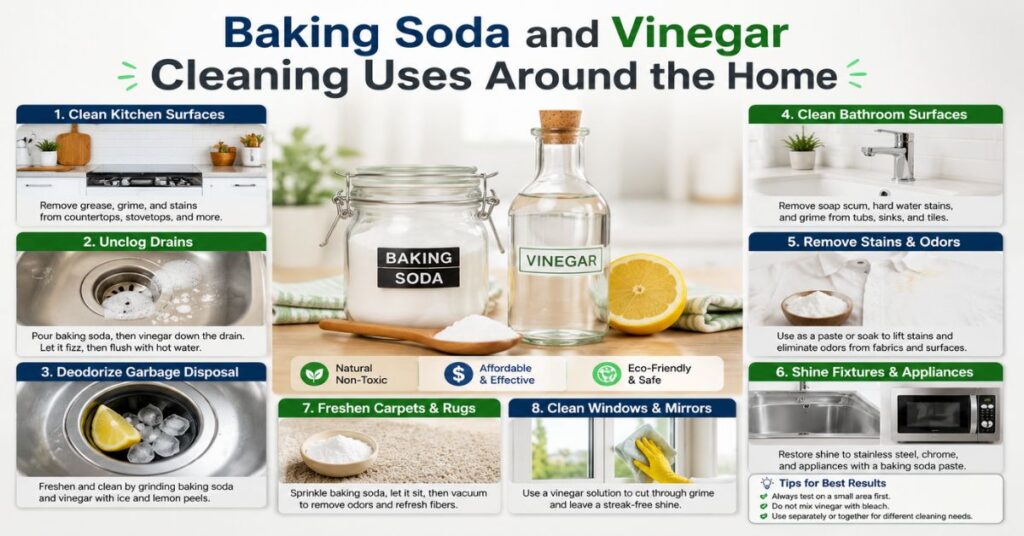
Baking Soda and Vinegar Cleaning Uses Around the Home
Kitchen Sink Cleaning
Kitchen sinks collect food particles, grease, and odors quickly.
Steps:
- Sprinkle baking soda across the sink.
- Scrub with a damp sponge.
- Pour vinegar over problem areas.
- Allow fizzing for several minutes.
- Rinse with warm water.
The result is a fresher sink with less buildup.
Refrigerator Odor Control
A refrigerator can develop odors from leftovers and produce.
Try this method:
- Place an open box of baking soda inside.
- Wipe shelves using diluted vinegar.
- Dry with a clean cloth.
This combination helps control lingering smells while keeping surfaces clean.
Microwave Cleaning
Microwave splatters can become difficult to remove.
Method:
- Heat a bowl containing equal parts water and vinegar.
- Let steam sit for five minutes.
- Wipe interior surfaces.
- Use baking soda on stubborn spots.
The softened residue wipes away much more easily.
Garbage Disposal Refreshing
For unpleasant disposal odors:
- Add half a cup of baking soda.
- Pour one cup vinegar into the drain.
- Wait ten minutes.
- Flush with hot water.
This helps remove odor-causing buildup.
Using Baking Soda and Vinegar Cleaning in Bathrooms
Bathrooms are one of the best places to use these ingredients.
Cleaning Shower Doors
Soap scum often builds up on glass surfaces.
Steps:
- Apply baking soda paste.
- Gently scrub the glass.
- Spray vinegar over the surface.
- Wipe clean.
- Rinse thoroughly.
The glass often appears clearer and brighter afterward.
Bathtub Maintenance
Bathtubs collect soap residue and mineral deposits.
A simple process:
- Sprinkle baking soda over the tub.
- Spray vinegar lightly.
- Allow several minutes.
- Scrub with a non-scratch sponge.
- Rinse completely.
Toilet Bowl Cleaning
Many homeowners use baking soda and vinegar cleaning for toilet maintenance.
Procedure:
- Add one cup vinegar.
- Sprinkle baking soda into the bowl.
- Wait fifteen minutes.
- Scrub with a toilet brush.
- Flush.
This helps reduce stains and odors.
Comparison Table: Common Household Cleaning Tasks
| Cleaning Task | Baking Soda | Vinegar | Combined Use |
| Sink Cleaning | Excellent | Good | Excellent |
| Drain Freshening | Good | Good | Excellent |
| Odor Removal | Excellent | Good | Very Good |
| Hard Water Stains | Fair | Excellent | Excellent |
| Grease Removal | Good | Fair | Good |
| Toilet Cleaning | Good | Good | Excellent |
| Shower Glass | Good | Excellent | Excellent |
| Refrigerator Cleaning | Good | Good | Very Good |
Best Practices for Baking Soda and Vinegar Cleaning
Use Them Separately When Possible
One common mistake is mixing both ingredients in a container before cleaning.
When mixed together immediately, much of the cleaning power becomes neutralized. Often, better results come from applying baking soda first and vinegar afterward.
Test Delicate Surfaces
Always test on a hidden area before cleaning:
- Natural stone
- Marble
- Granite
- Specialty finishes
Vinegar can damage certain materials.
Avoid Excessive Scrubbing
Baking soda is gentle, but aggressive scrubbing can still affect some finishes.
Use soft cloths or non-abrasive sponges whenever possible.
Areas Where Vinegar Should Not Be Used
Although useful, vinegar is not suitable everywhere.
Avoid using it on:
- Marble countertops
- Natural stone floors
- Granite surfaces
- Waxed furniture
- Some hardwood floors
The acidity may damage protective finishes over time.
Common Mistakes People Make
Using Too Much Product
More is not always better.
A small amount of baking soda often provides enough scrubbing action.
Expecting Instant Results
Heavy buildup may require:
- Multiple applications
- Additional scrubbing
- Longer soaking times
Patience usually improves results.
Ignoring Surface Compatibility
Not every surface reacts well to acidic cleaners.
Always verify manufacturer recommendations.
Deep Cleaning with Baking Soda and Vinegar
Tile Grout Refreshing
Grout lines attract dirt and discoloration.
Method:
- Apply baking soda paste.
- Let sit for ten minutes.
- Spray vinegar.
- Scrub using a grout brush.
- Rinse thoroughly.
This technique often helps brighten grout without harsh chemicals.
Oven Cleaning
Oven buildup can become difficult to remove.
Try this process:
- Spread baking soda paste inside the oven.
- Leave overnight.
- Spray vinegar over dried residue.
- Wipe away loosened grime.
Several rounds may be needed for heavily soiled ovens.
Washing Machine Maintenance
Washing machines benefit from periodic cleaning.
Run:
- Hot water cycle with vinegar
- Followed by a cycle with baking soda
This helps reduce odors and residue accumulation.
How Often Should You Use These Methods?
Cleaning frequency depends on household activity.
General recommendations:
- Kitchen sink: Daily or every few days
- Bathroom fixtures: Weekly
- Toilet bowl: Weekly
- Refrigerator wipe-down: Monthly
- Washing machine: Monthly
- Oven deep cleaning: Every few months
Consistent maintenance prevents major buildup and reduces cleaning effort later.
Is Baking Soda and Vinegar Cleaning Better Than Commercial Products?
The answer depends on the task.
For routine maintenance, baking soda and vinegar cleaning can perform very well.
Commercial products may still be useful for:
- Severe mold problems
- Heavy grease accumulation
- Specialized surfaces
- Disinfection requirements
Many homeowners find that using natural methods for regular upkeep and commercial products only when necessary creates a practical balance.
Conclusion
Using baking soda and vinegar cleaning methods can simplify household maintenance while reducing reliance on multiple cleaning products. These two pantry staples work well for sinks, bathrooms, appliances, drains, and many everyday messes. The best results usually come from applying them strategically rather than mixing them together too early.
Whether you are tackling soap scum, unpleasant odors, or routine kitchen cleanup, baking soda and vinegar cleaning offers a practical and budget-friendly solution. Try a few of these techniques in your home and discover which methods fit naturally into your regular cleaning routine. Small habits often make the biggest difference in keeping a home fresh and comfortable.
Yes. They help remove odors, loosen grime, dissolve mineral deposits, and clean many household surfaces when used correctly.
No. Mixing them in a sealed bottle is ineffective and may create pressure buildup. Apply them separately for better results.
Generally yes. Many people use these ingredients for sinks, refrigerators, microwaves, and countertops. Always test surfaces first.
Yes. Vinegar may damage marble, granite, and certain natural stone surfaces.
Many homeowners perform this treatment once a month to help control odors and minor buildup.
Baking soda mainly cleans and deodorizes. It is not considered a strong disinfectant.

Muhammad Ahad — Passionate writer sharing informative, engaging, and easy-to-read articles across different topics. Focused on delivering valuable content that helps readers learn, explore, and stay inspired every day.
1 thought on “Baking Soda and Vinegar Cleaning: Natural Methods That Actually Work”