

Introduction
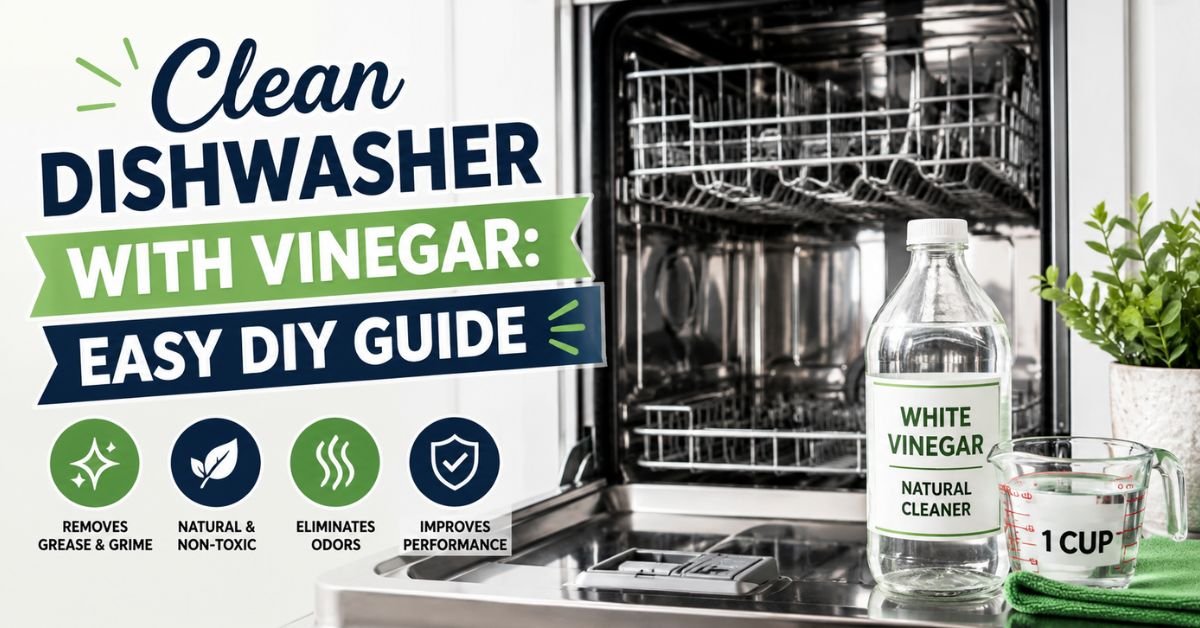
A dishwasher can look spotless on the outside while hiding grease, soap residue, and hard water deposits inside. I learned this after noticing that clean dishes were coming out with a cloudy film and an unpleasant smell. Instead of buying another expensive cleaning product, I decided to clean dishwasher with vinegar using a method that many homeowners overlook. The results surprised me. After one cleaning cycle, the interior looked brighter, odors disappeared, and the machine performed much better.
At Clean Home Craft, we enjoy testing simple household solutions that save money without making cleaning more complicated. Vinegar has become one of my favorite options because it is inexpensive, easy to find, and effective for routine dishwasher maintenance. The trick is knowing when and how to use it correctly.
This guide shares practical methods, common mistakes, and maintenance habits that keep your dishwasher running efficiently while helping dishes come out sparkling after every wash.
Why Vinegar Works So Well in a Dishwasher
White distilled vinegar contains mild acetic acid. Although it is gentle enough for regular household use, it can break down many of the deposits that build up inside a dishwasher over time.
Some of the problems vinegar helps with include:
- Mineral buildup from hard water
- Greasy residue
- Soap scum
- Light food particles
- Mild unpleasant odors
- Cloudy interior surfaces
Unlike heavily scented cleaners, vinegar leaves behind very little residue after a rinse cycle.
Signs Your Dishwasher Needs Cleaning
Many people wait until their dishwasher develops a bad smell before cleaning it. In reality, several smaller signs appear much earlier.
Watch for these common indicators:
- Glasses appear cloudy after washing.
- Plates no longer feel completely clean.
- The dishwasher smells musty when opened.
- Standing water collects near the filter.
- The spray arms seem partially clogged.
- White mineral deposits appear around the door or racks.
- Wash cycles seem less effective than before.
Cleaning every month usually prevents these issues from becoming serious.
How to Clean Dishwasher with Vinegar Step by Step
Before starting, make sure the dishwasher is completely empty.
Step 1: Remove Loose Debris
Open the dishwasher and inspect the bottom.
Take out:
- Food scraps
- Labels
- Toothpicks
- Small bones
- Pieces of broken glass if present
Removing debris first prevents blockages during the cleaning cycle.
Step 2: Clean the Filter
Most modern dishwashers have a removable filter.
Remove it according to your appliance manual and rinse it under warm water.
Use a soft brush to gently remove grease and trapped food. Avoid using metal brushes that may damage the mesh.
Step 3: Wipe the Door Seal
The rubber gasket around the door often collects moisture and grime.
Dip a microfiber cloth into warm water mixed with a little vinegar.
Carefully wipe:
- Door edges
- Rubber seals
- Hinges
- Corners
These hidden areas often cause lingering odors.
Step 4: Place Vinegar Correctly
Fill a dishwasher-safe bowl or measuring cup with one cup of white distilled vinegar.
Place it securely on the top rack.
Never pour vinegar directly into the detergent dispenser for this cleaning method.
Step 5: Run a Hot Water Cycle
Choose the hottest regular wash cycle available.
Do not add detergent.
During the cycle, the vinegar spreads throughout the dishwasher, dissolving mineral deposits and greasy buildup inside the tub, spray arms, and drain area.
What Happens During the Vinegar Cycle?
In the process of mixing hot water with vinegar, several cleaning processes occur simultaneously.
The vinegar helps loosen:
- Grease coating interior surfaces
- Soap residue
- Hard water stains
- Mild limescale
- Odor-causing bacteria attached to residue
While vinegar cannot disinfect every surface completely, it does leave the dishwasher much fresher.
Cleaning Schedule Based on Usage
The right schedule depends on how often your dishwasher runs.
| Dishwasher Usage | Recommended Vinegar Cleaning |
| Daily use | Once every month |
| 4–5 times weekly | Every 6 weeks |
| 2–3 times weekly | Every 2 months |
| Occasional use | Every 3 months |
| Hard water areas | Every month plus filter cleaning |
Following a schedule prevents heavy buildup instead of trying to remove months of accumulated residue.
Common Mistakes When Using Vinegar
Although vinegar is useful, improper use can reduce its effectiveness.
Avoid these mistakes.
Using Too Much Vinegar
More is not always better.
One cup is usually enough for a complete cleaning cycle.
Mixing Vinegar with Bleach
Never combine vinegar and bleach.
The combination creates harmful chlorine gas that is dangerous to breathe.
Ignoring the Filter
Running vinegar alone will not remove food trapped inside the filter.
Always clean the filter separately.
Cleaning an Empty Dishwasher Only Once a Year
Heavy buildup becomes much harder to remove over time.
Regular maintenance works better than occasional deep cleaning.
Using Vinegar on Certain Parts Too Frequently
Some manufacturers advise against repeated exposure of natural rubber seals to acidic cleaners.
Monthly cleaning is generally sufficient without overdoing it.
Can Vinegar Remove Hard Water Deposits?
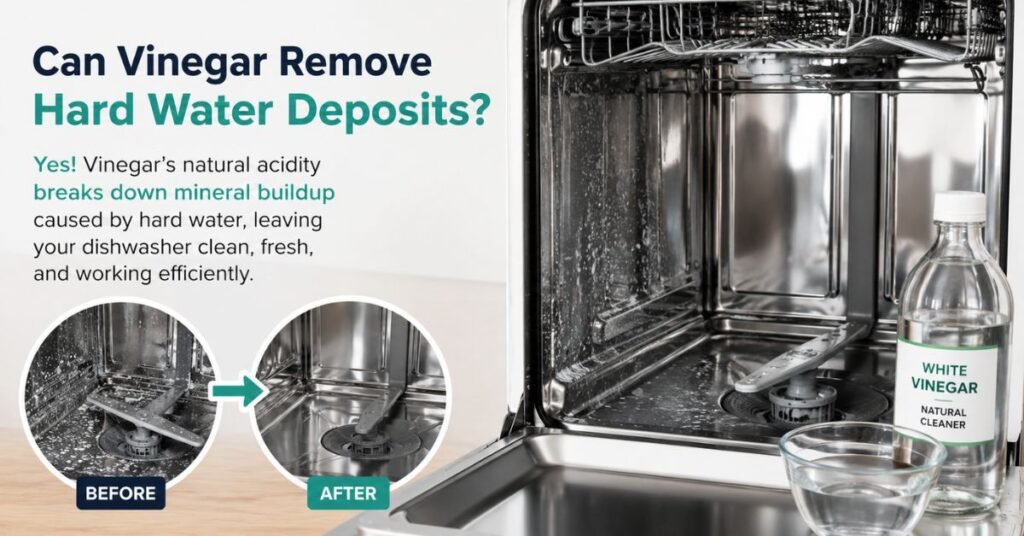
Hard water leaves behind white mineral spots that can affect both dishwasher performance and the appearance of dishes.
One reason many homeowners clean dishwasher with vinegar is to reduce these deposits naturally.
Light mineral buildup usually softens after one cleaning cycle.
If deposits have accumulated for years, two cleaning cycles spaced several days apart may be necessary. Extremely heavy limescale may require a commercial descaling product recommended by the dishwasher manufacturer.
Areas Vinegar Cleans Best
Vinegar reaches many parts of the dishwasher during a hot wash.
These include:
- Interior walls
- Upper spray arm
- Lower spray arm
- Dish racks
- Filter housing
- Drain opening
- Door interior
- Heating chamber surfaces
Door seals and tight corners are still best cleaned by hand wiping.
Extra Tip for Better Dishwasher Performance
One habit we’ve consistently found helpful at Clean Home Craft is checking the spray arm holes every month. Even after a successful vinegar cycle, tiny food particles or mineral deposits can clog these openings. A wooden toothpick or a soft brush is usually enough to clear them, allowing water to spray evenly and improving cleaning results without any extra cost.
Should You Add Baking Soda Too?
After finishing a vinegar cleaning cycle, many homeowners like to follow with baking soda for extra freshness.
Do not use vinegar and baking soda at the same time. When mixed together, they react immediately and neutralize much of each other’s cleaning power.
Instead, use this simple process:
- Complete the vinegar cleaning cycle.
- Sprinkle about one cup of baking soda across the bottom of the dishwasher.
- Run a short hot-water cycle.
This second step helps:
- Remove lingering odors
- Brighten the stainless steel interior
- Lift light stains
- Leave the dishwasher smelling fresher
Using this combination once a month is usually enough for regular maintenance.
Is Vinegar Safe for Every Dishwasher?
Most modern dishwashers can safely handle an occasional vinegar cleaning cycle. However, there are a few situations where you should check your owner’s manual first.
Be cautious if your dishwasher has:
- Natural rubber components
- Manufacturer warnings against acidic cleaners
- Existing seal damage
- Specialty interior coatings
If the manufacturer specifically advises against vinegar, follow their recommendations instead.
For most standard stainless steel dishwashers, occasional vinegar cleaning is considered safe when used properly.
Tips to Keep Your Dishwasher Cleaner for Longer
Cleaning is only part of the solution. Daily habits make a noticeable difference in keeping your dishwasher fresh between deep cleanings.
Here are a few practices that have worked well in my own kitchen:
Scrape Plates Before Loading
You don’t need to prewash every dish, but removing large food scraps prevents unnecessary buildup inside the filter.
Leave the Door Slightly Open
After the cycle finishes, leave the dishwasher door cracked open for a while.
This allows moisture to escape and helps prevent mold and mildew growth.
Clean the Filter Monthly
Even the best cleaning cycle cannot remove food trapped inside the filter.
A quick rinse each month keeps water flowing properly.
Use the Right Amount of Detergent
Too much detergent can leave residue inside the appliance.
Always follow the detergent manufacturer’s recommendations based on your water hardness.
Run Hot Water Before Starting
Turn on the kitchen sink’s hot water for a few seconds before starting the dishwasher.
This helps the dishwasher begin with hot water immediately, improving cleaning performance.
Avoid Overloading
Overcrowded racks prevent water from reaching every surface.
Leaving enough space between dishes allows the spray arms to clean more effectively.
Conclusion
Making time to clean dishwasher with vinegar once a month is one of the simplest ways to keep your appliance performing at its best. With only a cup of white distilled vinegar and a hot wash cycle, you can reduce odors, loosen mineral deposits, remove greasy residue, and help your dishwasher clean dishes more effectively.
The best results come from combining vinegar cleaning with regular filter maintenance, wiping the door seals, and avoiding common mistakes like mixing vinegar with bleach or skipping the filter altogether. These small habits can extend the life of your dishwasher while saving money on unnecessary repairs.
For more practical cleaning guides, household tips, and easy maintenance ideas, visit CleanHomeCraft.com. At Clean Home Craft, we believe everyday ingredients and smart routines can make home cleaning simpler, more affordable, and far more effective.
Weekly cleaning is usually unnecessary. For most households, once a month provides excellent results. Homes with very hard water may also benefit from a monthly schedule.
Plain white distilled vinegar is the best choice. Avoid flavored, colored, or specialty vinegars because they may leave residue or stains.
Vinegar can help dissolve light grease and residue, but it will not remove large food blockages or objects stuck in the drain. Mechanical cleaning may still be necessary.
For regular maintenance, vinegar is an affordable and effective option. Commercial cleaners may work better for heavy mineral buildup or severe limescale.
Usually not. Once the hot wash cycle finishes, the vinegar smell fades quickly, leaving the dishwasher fresh and clean.
Yes. Wiping the racks with a soft cloth dampened with diluted white vinegar helps remove light mineral deposits and greasy residue.

Muhammad Ahad — Passionate writer sharing informative, engaging, and easy-to-read articles across different topics. Focused on delivering valuable content that helps readers learn, explore, and stay inspired every day.
1 thought on “Clean Dishwasher with Vinegar: Easy DIY Guide ”