

Introduction
I used to think wiping the counter with a wet cloth was “good enough.” But after dealing with sticky grease near the stove, raw chicken spills, and that weird smell that comes back after a day, I realized something important: cleaning and sanitizing kitchen surfaces is not the same as just making things look clean.
A kitchen can look shiny but still carry bacteria, food residue, and hidden grime. Over the years, I’ve tested different sprays, homemade solutions, and even “fancy” disinfectants. Some worked great, some wasted money, and a few actually made surfaces worse by leaving dull patches.
In this guide, I’m sharing my practical, real-world routine for cleaning and sanitizing kitchen surfaces properly without making it complicated.
Why Cleaning and Sanitizing Are Two Different Jobs
Many people mix these two words, but they mean different things.
Cleaning Removes Dirt
Cleaning means removing:
- grease
- food crumbs
- stains
- sticky residue
- dust
Washing is about visible mess.
Sanitizing Reduces Germs
Sanitizing means reducing germs to a safer level. It doesn’t always kill everything, but it lowers bacteria enough for everyday safety.
When I started doing both steps correctly, I noticed:
- fewer food smells
- fewer fruit flies
- cleaner cutting boards
- less sticky countertop buildup
That’s the real power of cleaning and sanitizing kitchen surfaces.
The Kitchen Surfaces That Need Regular Attention
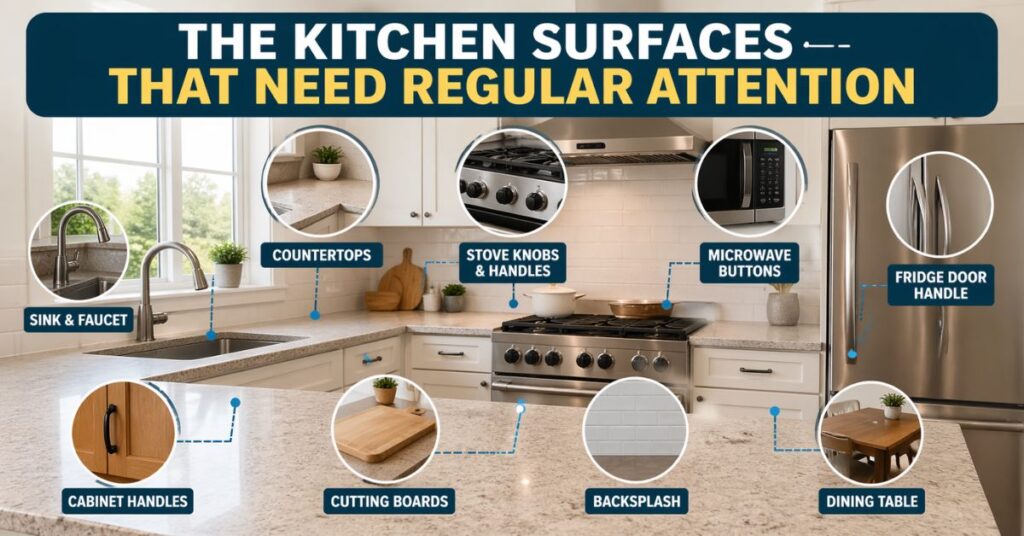
Some surfaces get dirty fast but are often ignored.
Here are the most common “germ hotspots” I clean weekly:
- countertops
- stove knobs and handles
- sink and faucet
- cutting boards
- fridge door handle
- cabinet handles
- dining table
- microwave buttons
- backsplash behind stove
If you focus on these, your whole kitchen stays fresher.
My Daily Routine for Cleaning and Sanitizing Kitchen Surfaces
I don’t deep clean daily, but I do follow a quick routine.
Step 1: Clear Everything First
Before wiping, I remove:
- appliances
- spice jars
- dishes
- cutting boards
This is important because wiping around objects leaves dirty “rings” that collect grime.
Step 2: Dry Wipe the Crumbs
I always do a quick dry wipe first using a paper towel or dry microfiber cloth.
This prevents wet wiping from turning crumbs into sticky paste.
Step 3: Wash With Soap Solution
I use warm water + dish soap. It cuts grease better than most sprays.
I wipe the surface properly, especially around corners and edges.
Step 4: Sanitize With the Right Product
After cleaning, I apply sanitizer and let it sit for a short time (usually 30 seconds to 2 minutes depending on the product).
This is the step most people skip, but it’s the main part of cleaning and sanitizing kitchen surfaces the right way.
Best Products for Cleaning and Sanitizing Kitchen Surfaces (What Actually Works)
You don’t need 10 different bottles. A few basic items are enough.
Dish Soap (Best for Grease)
Dish soap is my #1 choice for:
- stove area grease
- sticky countertops
- oily fingerprints
It’s gentle and safe on most surfaces.
Vinegar Spray (Good for Smell and Light Cleaning)
Vinegar works well for:
- deodorizing
- removing water spots
- cleaning glass or steel
But I don’t rely on vinegar alone for sanitizing after raw meat.
Disinfectant Spray or Wipes (For Germ Control)
When I want true germ-killing results, I use a disinfectant spray or wipe.
This is especially important after:
- raw chicken
- raw eggs
- meat juices
For cleaning and sanitizing kitchen surfaces, disinfectant is your best friend.
Hydrogen Peroxide (Great for Cutting Boards)
Hydrogen peroxide works well on:
- plastic cutting boards
- sinks
- stain-prone surfaces
It’s effective but should be stored properly.
Cleaning and Sanitizing Kitchen Surfaces by Material Type
Different surfaces need different handling. One wrong cleaner can ruin an expensive countertop.
Granite or Marble Countertops
Natural stone is sensitive. I avoid vinegar and harsh bleach.
Best approach:
- warm water + mild dish soap
- dry immediately
- use stone-safe sanitizer if needed
Laminate Countertops
Laminate is durable but can absorb water through seams.
My method:
- wipe gently
- don’t flood with water
- sanitize with a mild disinfectant spray
Stainless Steel (Sink, Appliances)
Stainless steel looks clean but shows streaks easily.
I use:
- dish soap + water wipe
- rinse cloth wipe
- dry microfiber finish
For sanitizing, I spray disinfectant and wipe after the contact time.
Wooden Cutting Boards
Wood is tricky because it absorbs moisture.
I do:
- wash quickly with soap and warm water
- dry immediately
- sanitize with hydrogen peroxide or food-safe sanitizer
- oil the board weekly
This is an important part of cleaning and sanitizing kitchen surfaces safely.
The Correct Order for Cleaning and Sanitizing Kitchen Surfaces
This order is what keeps your kitchen hygienic without spreading germs.
- Remove clutter
- Dry wipe crumbs
- Wash with soap solution
- Rinse if needed
- Apply sanitizer/disinfectant
- Wait for contact time
- Wipe or air dry
- Final dry buff (optional)
I follow this method because sanitizing over dirt doesn’t work well.
Step-by-Step Table: My Weekly Surface Cleaning Plan
| Kitchen Surface | How Often | Cleaning Method | Sanitizing Method |
| Countertops | Daily | Dish soap + warm water | Disinfectant spray (after raw food) |
| Sink | Daily | Scrub with soap | Hydrogen peroxide or disinfectant |
| Cutting boards | After each use | Hot water + soap | Peroxide or food-safe sanitizer |
| Stove top | 2–3 times/week | Degreasing dish soap mix | Disinfectant wipe |
| Fridge handles | Weekly | Soap cloth wipe | Disinfectant spray |
| Cabinet handles | Weekly | Warm soapy cloth | Sanitizing wipe |
| Microwave buttons | Weekly | Mild soap wipe | Light disinfectant wipe |
| Dining table | Daily | Soap + water | Sanitizer spray if needed |
This schedule keeps cleaning and sanitizing kitchen surfaces manageable without turning your life into nonstop scrubbing.
My Best Tips to Stop Cross-Contamination in the Kitchen
Cross-contamination is one of the biggest hidden problems.
Use Separate Cloths
I keep:
- one cloth for dishes
- one cloth for countertops
- one cloth for the stove
If you use the same cloth everywhere, you spread bacteria instead of removing it.
Replace Sponges Often
Sponges smell because they trap bacteria. I replace mine every 1–2 weeks.
Clean the Sink Last
I always clean the sink at the end because it collects all the dirt from rinsing cloths and washing hands.
Don’t Forget the Faucet
I’ve seen faucets covered in fingerprints and raw meat bacteria. Now I wipe it daily.
Common Mistakes People Make When Sanitizing Kitchen Surfaces
I made these mistakes too, so don’t feel bad.
Spraying Disinfectant on Grease
Disinfectant doesn’t work well on greasy buildup. Always clean first.
Wiping Too Fast
Most sanitizers need time to work. If you wipe instantly, you remove the product before it kills germs.
Using Too Much Bleach
Bleach is powerful but can damage surfaces and leave harsh smells. I only use it occasionally for deep cleaning.
Using Vinegar on Everything
Vinegar is great, but it can damage stone countertops and isn’t always strong enough after raw meat.
If you want real results, stick to proper cleaning and sanitizing kitchen surfaces steps.
Natural Cleaning Options That Actually Work (Without Fake Claims)
Natural cleaning can be effective if used smartly.
Here’s what I trust:
- baking soda paste for stains
- lemon for odor removal
- vinegar for glass and steel shine
- hot soapy water for daily cleaning
But for sanitizing after raw chicken or fish, I always use a real disinfectant. Being “natural” isn’t worth food poisoning.
How to Keep Kitchen Surfaces Clean Longer (My Lazy-Friendly Tricks)
I like cleaning, but I don’t want to clean all day.
These small habits reduce mess:
- wipe spills immediately (especially oil)
- use cutting mats for meat
- keep a small spray bottle ready
- clean while cooking, not after
- use trays under spice jars and oils
These habits make cleaning and sanitizing kitchen surfaces much easier.
Conclusion
A clean kitchen isn’t just about shiny counters it’s about reducing bacteria and keeping food prep safe. Once I learned the real difference between cleaning and sanitizing, my kitchen started smelling fresher, staying cleaner longer, and feeling more hygienic overall.
The best routine is simple: remove crumbs, wash with soap, then sanitize properly. If you stay consistent, cleaning and sanitizing kitchen surfaces becomes a quick habit instead of a stressful weekend task.
If you found this guide helpful, check out more practical home cleaning tips on CleanHomeCraft and keep your kitchen safe, fresh, and ready for daily cooking.
If you cook daily, sanitize at least once a day. Always sanitize after raw meat, eggs, or seafood contact.
Vinegar is good for cleaning and deodorizing, but it is not reliable for sanitizing after raw meat spills. Use a disinfectant for safety.
A food-safe disinfectant spray or diluted bleach solution (used correctly) is commonly safe. Always follow label directions and ventilation rules.
Some sanitizers are “no-rinse,” but others require wiping or rinsing. Always check the product label before using it on food prep areas.
Scrub with dish soap first, then sanitize using hydrogen peroxide or a disinfectant spray. Let it sit for at least 1 minute before rinsing.
Wash quickly with warm soapy water, dry immediately, then use hydrogen peroxide. Avoid soaking the board. Oil it weekly to prevent cracking.
Yes, but only if the surface stays wet for the recommended contact time. One quick wipe is usually not enough.

Muhammad Ahad — Passionate writer sharing informative, engaging, and easy-to-read articles across different topics. Focused on delivering valuable content that helps readers learn, explore, and stay inspired every day.
1 thought on “Cleaning and Sanitizing Kitchen Surfaces Like a Pro”