

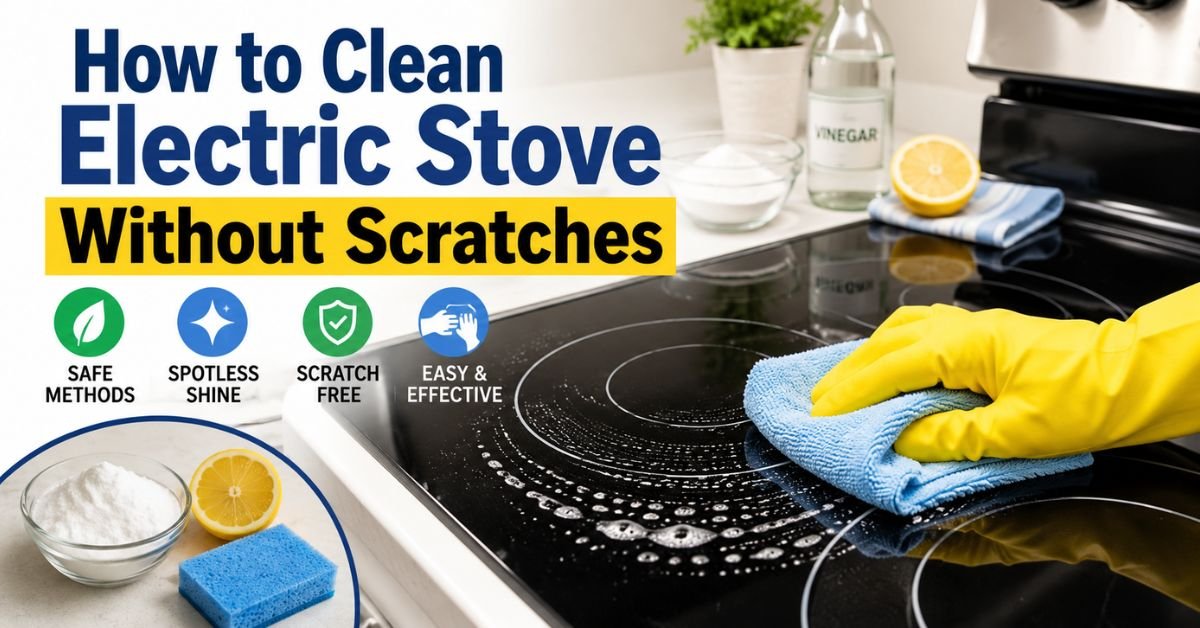
Introduction
A spotless electric stove makes everyday cooking feel easier. It also helps your kitchen look cleaner and prevents burnt food from creating unpleasant smells.
After years of cooking at home, I’ve learned that the easiest way to keep an electric stove clean is to wipe it regularly instead of waiting until grease and spills become stubborn stains.
If you’re wondering how to clean electric stove surfaces without scratching them, you’re in the right place. At Clean Home Craft, we regularly test simple household cleaning methods that are safe, affordable, and effective.
Whether you have a traditional coil stove or a smooth glass-top electric stove, the techniques below will help restore its shine using common household supplies.
Why You Should Clean Your Electric Stove Regularly
Cleaning your stove isn’t just about appearance. A dirty cooking surface can affect performance and even create safety concerns.
Regular cleaning helps you:
- Prevent burnt food buildup.
- Reduce smoke while cooking.
- Remove grease that attracts dust.
- Extend the stove’s lifespan.
- Keep your kitchen smelling fresh.
- Maintain better cooking efficiency.
Even five minutes after dinner can save you from a difficult deep-cleaning session later.
Understanding Different Types of Electric Stoves
Before learning how to clean electric stove surfaces, identify which type you own.
| Electric Stove Type | Cleaning Method | Things to Avoid |
| Coil Electric Stove | Remove coils and clean drip pans separately | Never soak electrical parts |
| Smooth Glass Cooktop | Use soft microfiber cloth and non-abrasive cleaner | Avoid steel wool |
| Ceramic Electric Stove | Gentle scraper for burnt spots | Don’t use harsh chemicals |
| Radiant Electric Stove | Soft sponge and mild soap | Avoid excessive water |
Knowing your stove type prevents accidental damage.
Supplies You’ll Need
Fortunately, you probably already have most cleaning supplies at home.
Gather:
- Warm water
- Dish soap
- Baking soda
- White vinegar
- Microfiber cloth
- Soft sponge
- Plastic scraper
- Old toothbrush
- Spray bottle
- Paper towels
Avoid abrasive scrubbers unless the manufacturer specifically recommends them.
How to Clean Electric Stove Step by Step
Step 1: Turn Off and Cool the Stove
Safety always comes first.
Turn off the stove completely and wait until every surface feels cool. Cleaning a hot stove can cause burns and may bake cleaning products onto the surface.
Step 2: Remove Loose Crumbs
Use a dry microfiber cloth or paper towel.
Sweep away:
- Food crumbs
- Rice grains
- Salt
- Flour
- Loose grease
Removing dry debris first prevents scratches while wiping.
Step 3: Prepare a Gentle Cleaning Solution
Mix:
- 2 cups warm water
- A few drops of dish soap
For greasy spots, sprinkle baking soda before spraying white vinegar.
The mixture will fizz gently and loosen stubborn residue.
Step 4: Wipe the Surface
Dip a soft sponge into the cleaning solution.
Clean using circular motions.
Don’t flood the stove with water.
Instead, work section by section.
Afterward, wipe again with clean water to remove soap residue.
Step 5: Remove Burnt-On Food
Some stains need extra attention.
Sprinkle baking soda directly onto burnt areas.
Spray white vinegar.
Let it sit for 10–15 minutes.
Use a plastic scraper held at a shallow angle.
Lift the residue carefully rather than forcing it.
Repeat if necessary.
Step 6: Dry Completely
Moisture can leave streaks.
Use a dry microfiber towel to buff the entire cooking surface.
This simple step leaves the stove looking polished.
How to Clean Electric Stove Coils
Many older electric stoves use removable heating coils.
Never immerse the coils in water.
Instead:
- Disconnect the coils carefully.
- Wipe them with a damp cloth.
- Remove burnt residue using a soft brush.
- Dry completely.
- Reinstall once fully dry.
If food has burned onto the coils, heat them briefly after cleaning to evaporate remaining moisture.
Cleaning Drip Pans
Drip pans collect grease quickly.
Remove them and soak in hot water mixed with dish soap for 20 minutes.
For stubborn stains:
- Sprinkle baking soda.
- Add vinegar.
- Wait 15 minutes.
- Scrub gently with a non-scratch sponge.
Rinse thoroughly before replacing them.
Cleaning a Glass-Top Electric Stove
Many homeowners ask how to clean electric stove glass tops without leaving scratches.
The secret is patience.
Never use:
- Steel wool
- Metal brushes
- Abrasive powders
Instead:
- Spray vinegar.
- Sprinkle baking soda.
- Lay a warm damp towel over the surface.
- Wait 15 minutes.
- Wipe gently.
Dry and polish the surface with a microfiber cloth.
The glass will regain its shine without damage.
Removing Grease Around Stove Edges
Grease often hides where the cooktop meets the countertop.
Use an old toothbrush dipped in soapy water.
Work along:
- Corners
- Edges
- Control panel
- Knobs
These small details make the entire stove look much newer.
Natural Cleaning Solutions That Really Work
Over the years, I’ve found that simple ingredients often outperform expensive cleaners.
Some favorites include:
Baking Soda Paste
Mix:
- 3 tablespoons baking soda
- Small amount of water
Apply to stubborn stains.
Leave for 20 minutes.
Wipe clean.
White Vinegar Spray
Excellent for:
- Grease
- Water spots
- Daily maintenance
Lemon Juice
Natural acid helps loosen light grease while leaving a pleasant scent.
Common Mistakes to Avoid
Many stove surfaces become scratched because of simple mistakes.
Avoid:
- Cleaning while hot
- Using bleach excessively
- Pouring water directly onto electrical parts
- Using metal scrapers
- Forgetting to dry the surface
- Scrubbing too aggressively
Gentle cleaning almost always produces better long-term results.
What is the best way to clean an electric stove?
A simple routine works best.
Daily:
- Wipe spills immediately.
Weekly:
- Clean the entire surface.
Monthly:
- Deep clean burners, drip pans, and surrounding areas.
Following this schedule keeps heavy buildup from forming.
Tips That Keep Your Stove Cleaner Longer
At Clean Home Craft, one practical habit we often recommend is cleaning fresh spills as soon as the stove cools. This small routine saves much more effort later.
Other helpful habits include:
- Use lids while cooking.
- Wipe grease after each meal.
- Avoid overflowing pots.
- Clean sugary spills immediately.
- Dry the stove after every cleaning.
- Polish glass surfaces weekly.
These habits reduce deep-cleaning time significantly.
Safe Products You Can Use
Choose cleaners designed for kitchen appliances whenever possible.
Good options include:
- Mild dish soap
- Baking soda
- White vinegar
- Glass cooktop cleaner
- Microfiber cloths
Avoid products containing harsh abrasives unless approved by your stove manufacturer.
When Professional Cleaning May Help
Sometimes stains remain despite repeated cleaning.
Professional cleaning may be worthwhile if:
- Burn marks won’t come off.
- Electrical parts need repair.
- Rust appears around components.
- The stove produces smoke even after cleaning.
Cleaning should never require dismantling electrical connections unless performed by a qualified technician.
Conclusion
Learning how to clean electric stove surfaces doesn’t require expensive products or complicated techniques. Regular wiping, gentle cleaners, and quick attention to spills can keep your stove looking almost new for years.
A little maintenance after each meal prevents stubborn grease and burnt food from becoming major cleaning challenges. For more practical home cleaning advice, easy maintenance tips, and step-by-step household guides, visit CleanHomeCraft.com. Clean Home Craft is dedicated to sharing simple solutions that help every kitchen stay cleaner with less effort.
Yes. Baking soda is generally safe for coil, ceramic, and glass-top electric stoves when used with a soft sponge or microfiber cloth.
No. White vinegar is usually safe for glass cooktops. However, avoid leaving it on the surface for extended periods.
Apply baking soda, spray vinegar, let it sit for 15–20 minutes, then gently scrape with a plastic scraper before wiping clean.
No. Steel wool easily scratches glass and ceramic surfaces. Always choose non-abrasive cleaning tools.
A monthly deep cleaning is sufficient for most households. Daily wipe-downs prevent heavy buildup.
No. Remove them only during deep cleaning or when food spills underneath.

Muhammad Ahad — Passionate writer sharing informative, engaging, and easy-to-read articles across different topics. Focused on delivering valuable content that helps readers learn, explore, and stay inspired every day.
1 thought on “How to Clean Electric Stove Without Scratches”