


Introduction
A greasy range hood can make your entire kitchen feel dirty, even when your counters and floors are spotless. how to clean your range hood Over time, cooking oil, smoke, dust, and food particles collect on the hood, filters, and fan. If you leave this buildup for too long, it becomes sticky and much harder to remove.
I have found that cleaning a range hood regularly makes a big difference in keeping a kitchen fresh. You do not need expensive products or special equipment to get good results. A few basic supplies and the right cleaning method can remove stubborn grease.
At Clean Home Craft, the goal is to make everyday household cleaning easier with practical methods that work. Learning how to clean your range hood can help you maintain a cleaner cooking space and keep your kitchen appliances looking their best.
Why Should You Clean Your Range Hood Regularly?
Regular range hood cleaning helps maintain proper airflow, reduce grease buildup, and keep your kitchen fresh and hygienic. Here are some important reasons to clean it regularly:
- Reduce Grease Buildup: Old cooking oil and grease can create a thick, sticky layer on the hood and its filters.
- Improve Airflow: Dirty filters can restrict airflow and reduce the range hood’s ability to remove smoke, steam, and cooking odors.
- Reduce Unpleasant Odors: Trapped grease and food particles can produce lingering smells that make your kitchen less fresh.
- Keep Your Kitchen Cleaner: A clean range hood collects less visible dirt and helps maintain a neat, well-kept kitchen.
- Support Safer Maintenance: Grease buildup can increase fire risk, particularly around cooking equipment, so regular cleaning is important.
Cleaning Tip: Check your range hood filters every month if you cook frequently. If you regularly prepare fried foods, you may need to clean them more often to prevent heavy grease buildup.
What Supplies Do You Need to Clean a Range Hood?
Before starting, collect everything you need. Having your supplies ready makes the job quicker and prevents unnecessary interruptions.
Most of these items are already available in a typical home.
- Warm water
- Dish soap or a grease-cutting dishwashing liquid
- Baking soda
- White vinegar (for suitable surfaces)
- Microfiber cloths
- A soft cleaning brush or old toothbrush
- A non-scratch sponge
- A large bowl or sink
- Rubber cleaning gloves
- A dry towel
Avoid steel wool, rough scrubbers, and harsh chemicals unless the appliance manufacturer specifically allows them. Finishes may be scratched or damaged by these products.
How to Clean Your Range Hood Step by Step
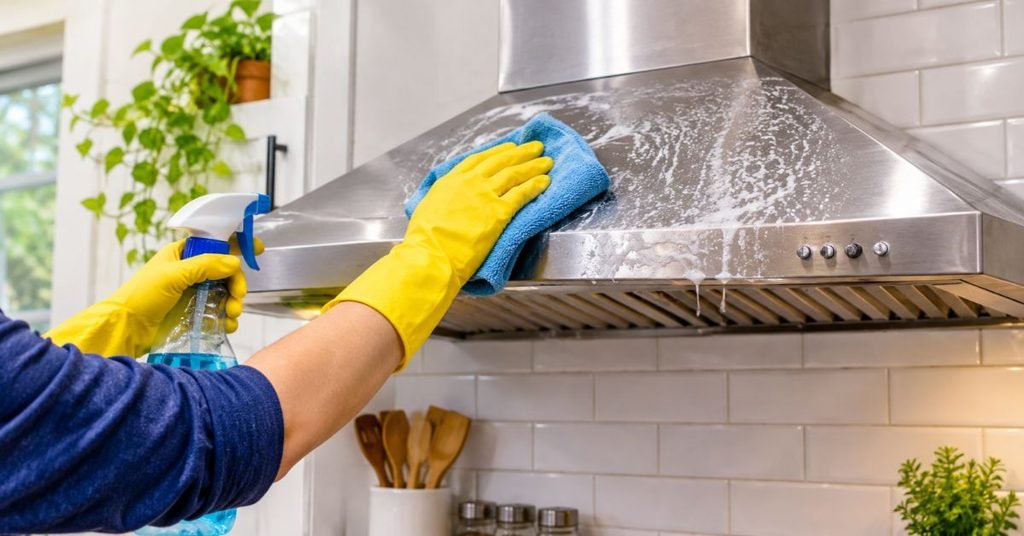
The best way to clean a range hood is to work from the outside toward the removable parts. This helps prevent grease from spreading onto surfaces you have already cleaned.
Step 1: Turn Off the Range Hood
Safety should always come first. Before cleaning the range hood, turn off the power. If possible, unplug the appliance or switch off its dedicated circuit.
After the stove and hood have cooled completely, remove them. Electrical components should never be cleaned while the appliance is plugged in.
Step 2: Remove the Range Hood Filters
Most range hoods have removable metal mesh or baffle filters. These filters collect grease as cooking air passes through them.
Check your manufacturer’s instructions before removing anything. Carefully slide or release the filters using their clips or handles.
Place them in a sink or large basin. If the filters are disposable charcoal filters, do not wash them unless the manufacturer says they are washable.
Step 3: Soak the Filters in Warm, Soapy Water
Fill your sink with warm water and add a generous amount of grease-cutting dish soap. Place the removable metal filters into the water and allow them to soak for 15–20 minutes.
This gives the soap time to loosen the sticky grease. For stubborn buildup, use a soft brush to gently clean between the filter layers.
Avoid using boiling water or strong chemicals. Some filters have protective coatings that can be damaged by excessive heat or unsuitable cleaning products.
Step 4: Scrub and Rinse the Filters
After soaking, take a soft brush or non-scratch sponge and gently scrub both sides of each filter.
Pay extra attention to corners and edges because grease often collects in these areas.
Next:
- Rinse each filter under warm running water.
- Check for any remaining greasy spots.
- Repeat the cleaning process if necessary.
- Shake off excess water.
- Let the filters dry completely on a clean towel.
Never reinstall wet filters. Moisture can affect the appliance and attract more dust.
Step 5: Clean the Outside of the Range Hood
Now focus on the visible surface. Spray a small amount of mild dish soap mixed with warm water onto a microfiber cloth.
Wipe the hood gently, following the direction of the finish whenever possible. This is especially helpful when cleaning stainless steel.
For stubborn grease, hold the damp cloth against the area for a few seconds before wiping. This softens the buildup without requiring hard scrubbing.
Avoid spraying liquid directly into buttons, switches, vents, or electrical openings.
Step 6: Remove Stubborn Grease From the Surface
Sometimes ordinary dish soap is not enough to remove older grease. In that situation, a little extra cleaning time can help.
For suitable surfaces, try this method:
- Mix warm water with a few drops of dish soap.
- Dip a microfiber cloth into the solution.
- Apply it to the greasy area.
- Let it sit briefly.
- Wipe gently until the grease disappears.
- Use a clean, damp cloth to remove soap residue.
Do not use baking soda paste on delicate stainless steel or polished finishes without checking the manufacturer’s care instructions. It can leave scratches.
Step 7: Clean the Buttons and Edges
The buttons, control panel, and edges of a range hood are easy to overlook. However, cooking grease can collect around these areas.
Wipe the controls with a slightly damp microfiber cloth. For narrow gaps, use a soft toothbrush with very little moisture.
Never allow water to enter the control panel or electrical openings. Using a dry cloth, wipe the surface clean.
Step 8: Reinstall the Dry Filters
Once the filters are completely dry, carefully put them back into their original positions.
Make sure every clip or locking mechanism is secure. Loose filters may vibrate when the fan operates.
Restore the power and test the appliance. Check that the fan and lights work normally.
How to Clean Your Range Hood With Baking Soda
Baking soda is a common household cleaning ingredient. It can help loosen certain types of greasy residue, but it should only be used on surfaces that can tolerate mild abrasion.
For suitable removable metal filters, follow these steps:
- Fill a basin with warm water.
- Add dish soap and a small amount of baking soda.
- Soak the filters for approximately 15 minutes.
- Gently scrub with a soft brush.
- Rinse thoroughly with clean water.
- Allow the filters to dry completely.
Do not mix baking soda with bleach or other cleaning chemicals. Also, avoid applying abrasive pastes to delicate finishes.
How to Clean a Range Hood Fan and Interior
The inside of your range hood can collect grease over time, especially around accessible surfaces near the filters.
However, cleaning the fan requires extra care. Not every component is designed for homeowner cleaning.
Start by switching off the power completely. Remove the filters and inspect the accessible interior with a flashlight.
Use a dry or slightly damp microfiber cloth to remove surface dust and grease from accessible non-electrical areas. Follow the manufacturer’s instructions when cleaning fan covers or removable components.
Keep water away from:
- Motor housing
- Electrical wiring
- Fan connections
- Switches and control boards
If grease has reached the motor or internal electrical parts, contact a qualified appliance technician instead of attempting to take the unit apart.
How Often Should You Clean Your Range Hood?
The cleaning schedule depends on how often you cook and the type of food you prepare.
For example, regular frying creates more airborne grease than occasional boiling or steaming. Therefore, some kitchens need more frequent filter cleaning.
Here is a simple maintenance schedule:
| Range Hood Part | Recommended Cleaning Frequency | Cleaning Method |
|---|---|---|
| Exterior Surface | Weekly | Mild soap and microfiber cloth |
| Metal Grease Filters | Every 1–2 months | Warm water and dish soap |
| Stainless Steel Finish | Weekly or as needed | Suitable surface cleaner |
| Accessible Interior | Every 3–6 months | Gentle surface cleaning |
| Charcoal Filters | According to manufacturer | Replace when required |
Note: These are general cleaning guidelines. Always follow your appliance manufacturer’s recommendations for proper cleaning and maintenance.
Common Mistakes to Avoid When Cleaning a Range Hood
Even simple cleaning tasks can cause problems if you use the wrong products or techniques. To protect your range hood from scratches, moisture damage, and unnecessary wear, it is important to follow the correct cleaning methods.
Here are some common mistakes you should avoid when cleaning a range hood:
- Using steel wool: Steel wool can scratch stainless steel surfaces and damage protective coatings. Use a soft microfiber cloth instead.
- Ignoring the filters: Cleaning only the exterior does not make the entire appliance clean. Always remove and clean the filters to eliminate built-up grease.
- Using too much water: Excess moisture can reach electrical components and potentially damage the appliance. Use a lightly dampened cloth instead.
- Reinstalling wet filters: Never put filters back while they are still damp. Allow them to dry completely before reinstalling them.
- Using harsh chemicals: Strong chemical cleaners can discolor or damage the range hood’s finish. Choose a gentle cleaner suitable for the surface.
- Forgetting to disconnect the power: Always turn off and disconnect the power before cleaning, following the manufacturer’s safety instructions.
- Scrubbing too aggressively: Applying too much pressure can leave scratches or damage delicate surfaces. Clean gently with a non-abrasive cloth.
At CleanHomeCraft.com, I recommend following a simple monthly maintenance routine instead of waiting until grease becomes difficult to remove. Regular care helps keep your range hood clean, efficient, and in good condition.
Easy Tips to Keep Your Range Hood Clean Longer
Once your range hood is clean, a few small habits can help prevent heavy grease buildup.
Try these practical tips:
- Wipe the outside after cooking once it has cooled.
- Turn on the hood before starting to cook.
- Use the correct fan speed for your cooking method.
- Clean metal filters regularly.
- Avoid letting cooking oil splatter onto nearby surfaces.
- Check your manufacturer’s instructions for filter replacement.
- Use a microfiber cloth for regular maintenance.
These habits take only a few minutes but can reduce the amount of deep cleaning needed later.
Conclusion
A clean range hood makes your kitchen look fresher and helps maintain proper airflow. The best approach is to clean the exterior regularly, wash removable metal filters, and remove grease before it becomes difficult to manage.
Once you understand how to clean your range hood, the entire process becomes much easier. You only need basic supplies, a little time, and a regular maintenance schedule.
Keep these simple steps in your cleaning routine, and your range hood will stay in better condition. For more practical home and kitchen cleaning ideas, visit Clean Home Craft and make everyday cleaning easier!
Warm water mixed with grease-cutting dish soap is a good starting point for most washable metal filters and many exterior surfaces. Always check the manufacturer’s instructions before choosing a cleaner.
Some metal range hood filters are dishwasher-safe, while others are not. Check your appliance manual before placing them in the dishwasher. Never put disposable charcoal filters in the dishwasher.
Apply warm soapy water with a microfiber cloth and allow it to soften the grease briefly. Repeat the process if necessary instead of using excessive pressure or abrasive scrubbers.
Vinegar may be suitable for some glass or compatible surfaces, but it is not appropriate for every range hood finish. Avoid using it on surfaces that the manufacturer says are acid-sensitive.
For many households, washing metal grease filters every one to two months is a reasonable starting point. If you fry food regularly, inspect and clean them more often.

Muhammad Ahad — Passionate writer sharing informative, engaging, and easy-to-read articles across different topics. Focused on delivering valuable content that helps readers learn, explore, and stay inspired every day.