

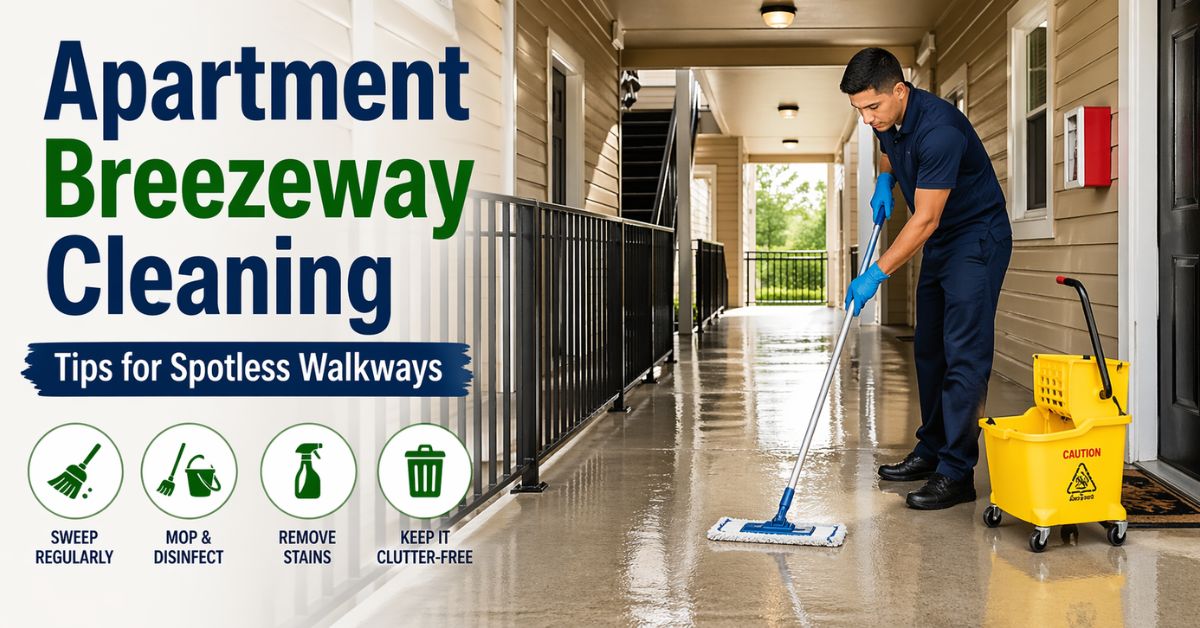
Introduction
The first time I handled apartment breezeway cleaning for a multi-unit building, I thought it would be simple just sweep, mop, and done. But within a week, the same dusty corners, gum spots, and mystery stains came back like they never left. That’s when I realized breezeways are not like normal hallways. They get constant foot traffic, outdoor dust, rainwater, and sometimes even trash dragged in from parking lots.
If you want your building to look clean, safe, and well-managed, apartment breezeway cleaning needs a proper method. In this guide, I’ll share the exact cleaning routine I use, including tools, stain tricks, and how to keep breezeways looking fresh for longer.
Why Apartment Breezeways Get Dirty So Fast
Breezeways are exposed walkways. Even if they have a roof, they still collect outdoor mess easily. Here’s what usually makes them dirty faster than expected:
- Wind blowing dust and sand inside
- Mud footprints after rain
- Spilled drinks and food stains
- Trash leaks from garbage bags
- Cigarette butts and ash buildup
- Pet hair and paw prints
- Pollen sticking to damp floors
The problem is, when these things stay too long, the breezeway starts smelling bad and looks neglected even if the apartments themselves are well-maintained.
Apartment Breezeway Cleaning Supplies You Actually Need
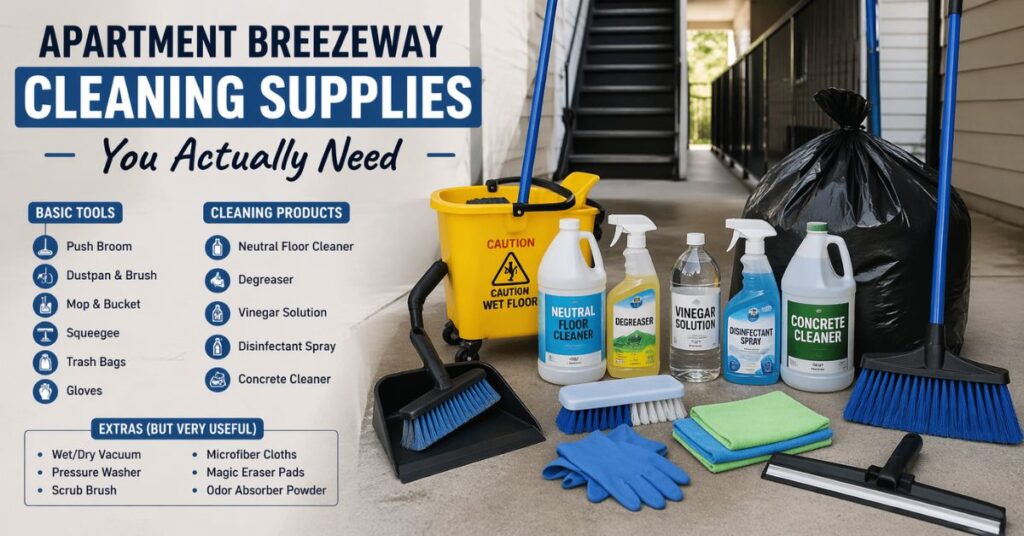
Before starting apartment breezeway cleaning, I always make sure I have the right equipment. Using the wrong tools wastes time and leaves streaks.
Basic Cleaning Tools
- Push broom (wide head works best)
- Dustpan and handheld brush
- Heavy-duty trash bags
- Microfiber mop and bucket
- Floor squeegee
- Scrub brush (stiff bristles)
- Gloves and safety glasses
Cleaning Products That Work Best
- Neutral floor cleaner (safe for most surfaces)
- Degreaser (for oily stains near stairwells)
- Vinegar solution (for light stains and odor)
- Disinfectant spray (especially around handrails)
- Concrete cleaner (if breezeways are bare cement)
Optional But Highly Useful
- Wet/dry vacuum
- Pressure washer (for deep seasonal cleaning)
- Magic eraser pads (for wall scuffs)
- Odor absorber powder (for urine smells)
When you have these ready, apartment breezeway cleaning becomes a smooth process instead of a stressful job.
Step-by-Step Apartment Breezeway Cleaning Routine (Professional Method)
This is the exact routine I follow. It works whether you’re cleaning one building or multiple breezeways.
Step 1: Remove Trash and Loose Debris First
Start by walking the entire breezeway slowly. Pick up everything you can see:
- Empty bottles
- Cigarette butts
- Flyers and paper scraps
- Food wrappers
- Leaves and twigs
If you skip this step, sweeping becomes messy and the mop water gets dirty instantly.
Step 2: Sweep the Breezeway the Right Way
Sweeping is not just pushing dirt around. I always sweep in sections:
- Start from the far end
- Sweep toward the stairs or exit
- Push debris into one collection pile
- Use a handheld brush for corners
Corners near doors are usually the dirtiest. That’s where dust hides.
Step 3: Dust the Walls, Lights, and Railings
Most people ignore this part, but it matters a lot. Breezeways look “old” when walls and railings are dusty.
Use a dry microfiber cloth or duster for:
- Handrails
- Light fixtures
- Door frames
- Fire extinguisher boxes
If you see spider webs, remove them before mopping. Otherwise, wet cleaning will smear them.
Step 4: Spot-Treat Stains Before Mopping
This is a big secret in apartment breezeway cleaning don’t mop first. If you mop over stains, they spread.
Here’s what I do:
- Spray degreaser on dark oily spots
- Use baking soda paste for sticky stains
- Use vinegar spray for mildew patches
- Scrub gum spots with warm water + scraper
Let the cleaner sit for 5–10 minutes before scrubbing. That saves your energy.
Step 5: Mop With Two-Bucket Method
If you use one bucket, your water turns brown quickly and you end up spreading dirt everywhere.
The two-bucket method works best:
- Bucket 1 = cleaning solution
- Bucket 2 = rinse water
Dip the mop in cleaning solution, mop the floor, then rinse the mop in the rinse bucket. Repeat.
This gives a brighter finish and reduces sticky residue.
Step 6: Rinse and Squeegee for a Cleaner Look
After mopping, I usually do a quick rinse with clean water if the surface is concrete or textured tile.
Then I use a squeegee to push water toward drains or edges. This prevents:
- Water stains
- Slippery puddles
- Dirt sticking again after drying
Step 7: Final Check for Smell and Details
Before leaving, walk the breezeway again. Look for:
- Missed trash near stairs
- Smudges on railings
- Wet corners that need drying
- Bad odor areas (pet accidents)
A 2-minute final check makes the whole job look professional.
Apartment Breezeway Cleaning Schedule (What Actually Works)
Cleaning breezeways once a month is not enough in most buildings. I’ve seen breezeways get dirty again within 3 days if residents are active.
Recommended Cleaning Frequency
- Daily: quick trash pickup + light sweeping
- Weekly: full sweep + mop + rail wipe
- Monthly: stain scrubbing + wall spot cleaning
- Every 3–6 months: deep wash or pressure cleaning
If your building is near a busy road or dusty area, you may need extra sweeping.
Deep Cleaning Apartment Breezeways With Pressure Washing
Pressure washing is not something you do weekly. But when you do it, the breezeway looks brand new.
When Pressure Washing Is Needed
- Concrete looks permanently dark
- Mold keeps returning
- Strong urine smell exists
- Heavy gum and sticky residue buildup
- Breezeway feels gritty even after mopping
Safe Pressure Washing Tips
- Use medium pressure (too strong can damage paint)
- Avoid spraying directly into door gaps
- Start from the top floor and move downward
- Use a surface cleaner attachment for even cleaning
A good pressure wash can reduce future dirt buildup for weeks.
Common Problems During Apartment Breezeway Cleaning (And Fixes)
Breezeways come with unique problems. Here are the ones I deal with most.
Grease and Oil Stains Near Stairwells
These stains usually come from shoes and parking lot residue.
Fix:
Use degreaser + stiff scrub brush, then rinse thoroughly.
Rust Marks From Railings or Metal Fixtures
Rust stains can spread quickly.
Fix:
Use lemon juice + baking soda paste, scrub gently, and rinse.
Mold or Mildew in Humid Areas
Breezeways that don’t get sunlight can develop greenish stains.
Fix:
Use vinegar + water solution or a mold cleaner and scrub well.
Pet Urine Smell That Won’t Leave
This is common in pet-friendly buildings.
Fix:
Use enzyme cleaner. Regular disinfectant will not fully remove odor.
Step-by-Step Cleaning Table (Quick Reference)
| Task | Best Tool | Best Cleaner | How Often |
| Trash pickup | Grabber + trash bag | None | Daily |
| Sweeping | Push broom | None | Daily/Weekly |
| Corner dust removal | Hand brush | None | Weekly |
| Rail and wall wiping | Microfiber cloth | Disinfectant spray | Weekly |
| Floor mopping | Mop + two buckets | Neutral floor cleaner | Weekly |
| Gum removal | Scraper | Warm water + degreaser | Monthly |
| Mold/mildew removal | Scrub brush | Vinegar or mold cleaner | Monthly |
| Deep pressure washing | Pressure washer | Concrete cleaner | Every 3–6 months |
This table makes apartment breezeway cleaning easier to plan, especially for property managers.
Best Tips to Keep Breezeways Cleaner Longer
Once you finish apartment breezeway cleaning, the goal is to keep it clean as long as possible.
Here are a few tricks that really help:
- Place heavy-duty doormats at breezeway entrances
- Install small trash bins near stairwells
- Put “No Littering” signs in problem spots
- Encourage residents to bag trash properly
- Use sealant on concrete floors if possible
- Sweep more often during windy seasons
In my experience, adding mats alone can reduce dirt by almost half.
Safety Tips for Breezeway Cleaning (Important)
Breezeways can become slippery, especially after mopping or rain. Always take safety seriously.
Safety Checklist
- Put “Wet Floor” signs at both ends
- Wear slip-resistant shoes
- Avoid harsh bleach fumes in closed areas
- Never block stairways with buckets or tools
- Use gloves when handling unknown spills
A clean breezeway is great, but a safe breezeway is even more important.
Conclusion
If you want your building to look well-maintained, apartment breezeway cleaning should never be treated like a “quick sweep job.” The real difference comes from doing it in the right order trash pickup, sweeping, stain treatment, mopping, and detail wiping.
When you stay consistent with a weekly routine and add deep cleaning every few months, breezeways stay brighter, safer, and more welcoming for residents and visitors.
If you manage an apartment building, start using this method today and you’ll quickly notice fewer complaints, less odor, and a cleaner overall property appearance.
It depends on size, but a standard breezeway usually takes 30–60 minutes for a full sweep and mop. Deep cleaning can take 2–3 hours.
A neutral floor cleaner is safest for most surfaces. For concrete, a concrete-safe cleaner works better because it lifts ground-in grime.
Soak the gum with warm water and degreaser, then scrape gently with a plastic scraper. Repeat until it lifts fully.
You can, but it’s not ideal. Bleach smells strong and can damage paint or metal over time. Enzyme cleaners and neutral cleaners are usually better.
Most buildings should pressure wash every 3–6 months. High-traffic apartments may need it more often.

Muhammad Ahad — Passionate writer sharing informative, engaging, and easy-to-read articles across different topics. Focused on delivering valuable content that helps readers learn, explore, and stay inspired every day.
1 thought on “Apartment Breezeway Cleaning Tips for Spotless Walkways”