

Introduction
A natural drain cleaner has become my go-to solution whenever I deal with slow sinks, smelly kitchen pipes, or bathroom clogs. Over the years, I noticed that chemical cleaners often give quick results but damage pipes, create harsh fumes, and sometimes even worsen the blockage in the long run. That’s when I started experimenting with safer, eco-friendly alternatives that actually work in real household conditions.
A DIY drain cleaner is not just about mixing kitchen ingredients; it’s about understanding how grease, soap, hair, and food particles behave inside pipes. Once you know that, clearing drains becomes easier, cheaper, and safer for your home. In this guide, I’m sharing practical methods I personally use in kitchens and bathrooms to keep drainage systems flowing smoothly without relying on toxic chemicals.
These methods are simple, budget-friendly, and suitable for almost every household. Whether it’s a slow kitchen sink or a blocked bathroom drain, a natural pipe cleaner approach can often solve the problem before calling a plumber.
Why Choose a Natural Drain Cleaner
A natural drain cleaner is becoming popular because people want safer homes and longer-lasting plumbing systems. Chemical cleaners might seem powerful, but they often eat away at pipe surfaces over time.
Safe for pipes and health
Harsh cleaners can weaken PVC or metal pipes. A DIY drain cleaner uses gentle ingredients like baking soda and vinegar, which clean without corrosion.
Eco-friendly solution
Unlike chemical-based solutions, a natural grease remover for drains does not release toxic fumes into the environment or water systems.
Budget-friendly option
Most ingredients for a safe drain cleaning solution are already available in your kitchen, making it a low-cost solution for regular maintenance.
Reduces long-term blockages
Regular use of a natural grease remover for drains helps prevent buildup instead of just reacting to clogs.
Common Causes of Clogged Drains
Before using a safe drain cleaning solution, it’s important to understand what causes blockages in the first place.
Kitchen drains
- Grease and oil buildup
- Food scraps
- Coffee residue
Bathroom drains
- Hair accumulation
- Soap scum
- Shampoo residue
Outdoor or utility drains
- Dirt and leaves
- Small debris
- Sand and mud
Understanding these causes helps you choose the right natural drain cleaner method for each situation.
DIY Natural Drain Cleaner Methods That Actually Work
Over time, I tested several home remedies, and some worked better than others. Below are the most effective methods of using a green drain cleaner solution.
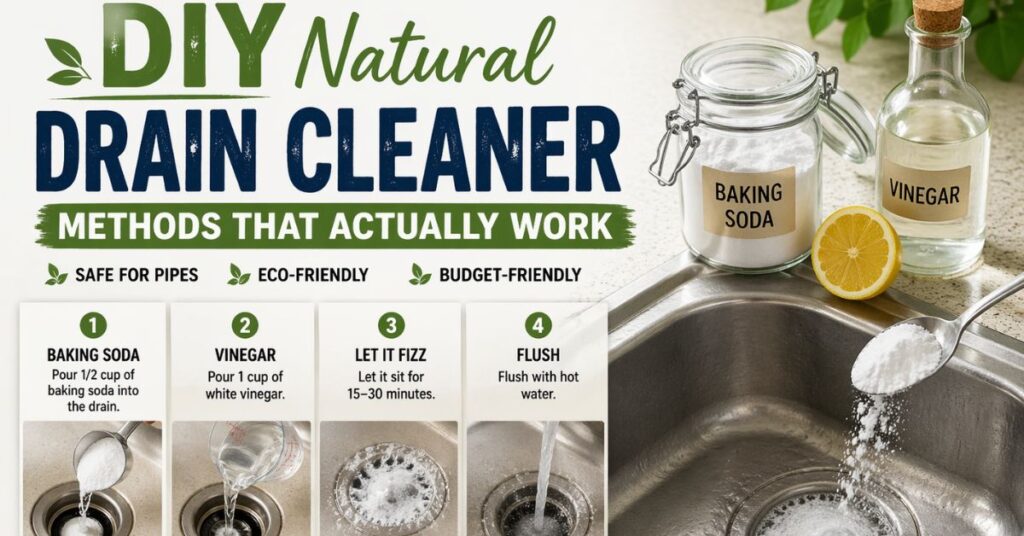
Baking soda and vinegar method
This is the most common and powerful organic drain cleaner method I use.
Steps:
- Pour half a cup of baking soda into the drain
- Add one cup of vinegar slowly
- Let it fizz for 15–20 minutes
- Flush with hot water
The reaction breaks down grease and loosens debris, making it one of the best green drain cleaner solution techniques.
Hot water and salt method
Another simple natural pipe cleaner trick involves salt and boiling water.
Steps:
- Add half cup salt into drain
- Pour boiling water slowly
- Repeat if needed
Salt acts as an abrasive, while hot water dissolves buildup.
Lemon juice flush
Lemon is a refreshing and effective natural pipe cleaner option.
Steps:
- Pour fresh lemon juice into the drain
- Leave it for 30 minutes
- Rinse with warm water
It removes odor and helps break mild grease.
Enzyme-based natural cleaners
Some biological products also work as a organic drain cleaner by using enzymes to break down organic waste. These are especially useful for heavy buildup.
Comparison of Natural Drain Cleaner Methods
| Method | Effectiveness | Best For | Time Required | Cost |
| Baking soda + vinegar | High | Kitchen & bathroom clogs | 20–30 min | Very low |
| Hot water + salt | Medium | Light blockages | 10–15 min | Very low |
| Lemon juice | Medium | Odor removal | 30 min | Low |
| Enzyme cleaner | High | Deep organic clogs | Several hours | Medium |
Each homemade drain cleaner method has its own purpose, and combining them occasionally gives even better results.
Preventing Drain Blockages Naturally
Using a chemical-free drain cleaner regularly is good, but prevention is even better.
Kitchen habits
- Avoid pouring oil into sink
- Use drain strainers
- Clean dishes before washing
Bathroom habits
- Remove hair from drain covers
- Use mesh screens
- Flush with hot water weekly
Weekly maintenance routine
A simple homemade drain cleaner routine once a week keeps pipes fresh and prevents buildup before it starts.
Conclusion
Using a natural drain cleaner is one of the simplest and safest ways to maintain healthy plumbing at home. Instead of relying on harsh chemicals, these methods protect your pipes, save money, and keep your kitchen and bathroom fresh.
From baking soda solutions to hot water flushing, every chemical-free drain cleaner method shared here can be used depending on the severity of the clog. The key is consistency regular maintenance prevents bigger problems.
If you start applying these techniques weekly, you’ll notice fewer blockages and smoother water flow in your home.
Try a homemade drain cleaner today and see how simple ingredients can make a big difference in your home cleaning routine.
Yes, a natural drain cleaner works well for mild to moderate clogs, especially grease and soap buildup.
Yes, gentle methods like hot water flushes can be used daily without harming pipes.
Most methods take between 10 to 30 minutes, depending on the blockage.
Yes, it is generally safe for PVC, metal, and household plumbing systems.
Baking soda and vinegar combination is considered the most powerful DIY natural drain cleaner.
Yes, ingredients like lemon and vinegar remove odors effectively while cleaning the drain.

Muhammad Ahad — Passionate writer sharing informative, engaging, and easy-to-read articles across different topics. Focused on delivering valuable content that helps readers learn, explore, and stay inspired every day.
1 thought on “Natural Drain Cleaner: Safe & Effective Ways to Unclog Your Home Pipes”