

Introduction
Keeping an apartment clean can feel difficult when you are new to managing your own space. apartment cleaning schedule for beginners Dust builds up, dishes pile up, and laundry seems to appear just when you finish cleaning. Without a simple plan, even a small apartment can become messy in just a few days.
I have found that the easiest way to manage household chores is to divide them into small daily tasks and a few deeper cleaning sessions each week. You do not need to spend hours cleaning every day or buy expensive products to maintain a fresh home.
This apartment cleaning schedule for beginners gives you a simple routine that works for studios, small apartments, and larger rental homes. At Clean Home Craft, the goal is to make household tasks easier to understand and follow, even if you have never created a cleaning routine before.
Let’s build a realistic schedule that fits your daily life and helps you keep your apartment tidy without feeling overwhelmed.
Why Every Beginner Needs a Cleaning Schedule
A cleaning schedule helps you remember important chores before they turn into bigger jobs. apartment cleaning schedule for beginners Instead of cleaning the entire apartment on Saturday, you can handle a few tasks each day.
For example, washing dishes after dinner takes less effort than dealing with a sink full of dirty plates the next morning. Similarly, wiping kitchen counters regularly prevents grease and food residue from building up.
A regular routine also helps you:
- Spend less time on household chores.
- Keep dust and dirt under control.
- Make your kitchen and bathroom easier to maintain.
- Avoid last-minute cleaning before guests arrive.
- Divide chores fairly if you share your apartment.
The best schedule is one you can follow consistently. Start with basic tasks, then add more detailed cleaning as you become comfortable with your routine.
Create an Apartment Cleaning Schedule for Beginners
Before you start, look at your apartment and decide which areas need attention most often. Most homes need regular care in the kitchen, bathroom, bedroom, living room, and entryway.
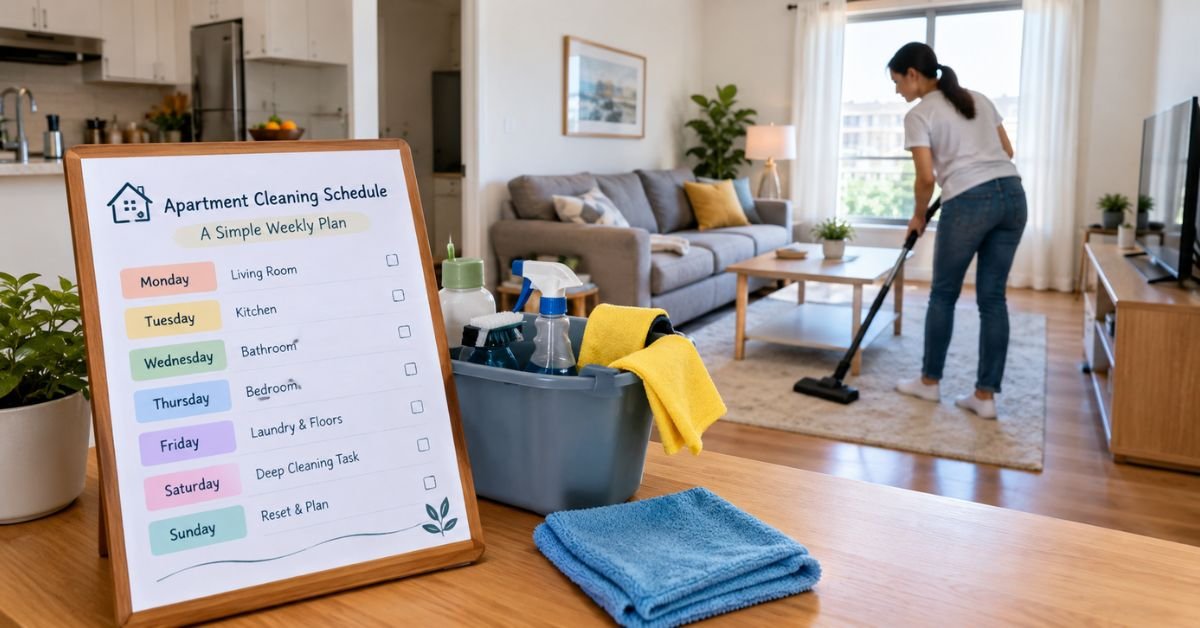
I recommend assigning one main cleaning task to each weekday. This approach keeps the workload manageable and leaves room for unexpected plans.
Monday: Refresh the Living Room
Start the week by tidying the area where you relax or welcome guests.
- Put books, shoes, and other items back in their places.
- Dust tables, shelves, and electronic surfaces with a suitable cloth.
- Wipe frequently touched surfaces.
- Vacuum rugs or sweep the floor.
If your living room looks tidy, the entire apartment often feels cleaner. Finish by folding blankets and arranging cushions.
Tuesday: Clean the Kitchen
The kitchen needs frequent attention because food spills and grease can collect quickly.
- Wash dirty dishes and clean the sink.
- Wipe countertops and the dining table.
- Clean the stovetop after it has cooled.
- Check the refrigerator for spoiled food.
- Sweep the floor around cooking and eating areas.
Use a cleaning product suitable for each surface, and never mix cleaning chemicals. A quick kitchen reset after cooking will make your next cleaning session much easier.
Wednesday: Refresh the Bathroom
Bathrooms can collect soap residue, moisture, and grime, so give them a dedicated day.
- Clean the toilet with an appropriate toilet cleaner.
- Wipe the bathroom sink and faucet.
- Clean the mirror with a suitable glass cleaner.
- Rinse the shower area and remove visible soap residue.
- Replace damp towels and empty the trash.
Allow wet areas to dry and run the exhaust fan when available. Regular ventilation helps control excess moisture.
Thursday: Tidy the Bedroom
A comfortable bedroom starts with clean bedding and clear surfaces.
- Make the bed and straighten pillows.
- Put away clothes and personal items.
- Dust bedside tables and other furniture.
- Empty the bedroom trash bin.
- Vacuum or sweep the floor.
Change your sheets regularly according to your needs. If you have pets or allergies, you may need to wash bedding more often.
Friday: Handle Laundry and Floors
Use Friday to finish chores that affect several rooms.
- Wash clothes and towels.
- Fold clean laundry and put it away.
- Vacuum carpets and rugs.
- Sweep hard floors before mopping.
- Clean visible marks from doors or walls when appropriate.
Check the floor care instructions before using a mop or cleaning solution. Some surfaces, especially unsealed wood, need special care.
Saturday: Complete One Deep-Cleaning Task
Saturday is a good time for a task that does not need daily attention. Choose just one or two jobs instead of trying to deep-clean everything.
Possible tasks include cleaning the refrigerator shelves, washing shower curtains, dusting ceiling fans, or wiping kitchen cabinet fronts.
You can rotate these tasks each week. For example, clean the refrigerator this Saturday and wash the shower curtain next Saturday.
Sunday: Reset and Prepare
Keep Sunday light so you can start the next week with less stress.
- Put away items left around the apartment.
- Check your cleaning supplies.
- Prepare fresh towels and bedding if needed.
- Make a short list of next week’s priorities.
At CleanHomeCraft.com, a practical household routine means working smarter, not spending every free day doing chores. Use Sunday to prepare, not to create another long list of jobs.
Daily Cleaning Habits That Take 10–15 Minutes

Weekly cleaning works best when you combine it with a few small daily habits. These tasks prevent ordinary messes from becoming difficult cleaning jobs.
Follow a Simple Morning Routine
Spend five minutes making the bed, putting away loose items, and opening windows when weather and outdoor conditions allow.
If you have time, wipe the bathroom sink after getting ready. Removing water droplets early can reduce visible residue.
Reset Your Kitchen Every Evening
After dinner, wash dishes or load the dishwasher, wipe the counters, and check the stovetop for spills.
Avoid leaving food scraps in the sink overnight. Empty kitchen trash when needed, especially if it contains food waste that may attract pests or cause odors.
Put Things Away Immediately
A useful rule is to return an item to its proper place after using it. Hang up your coat, put shoes on a rack, and return cleaning supplies to their storage area.
This habit takes only seconds but reduces clutter throughout the apartment.
A Practical Weekly Cleaning Schedule
Use this table as a starting point. Adjust the tasks to match your apartment size, household needs, and available time.
Weekly Cleaning Schedule
Follow this simple weekly cleaning routine to keep your home clean, organized, and comfortable.
| Day | Main Task | Estimated Time | Quick Result |
|---|---|---|---|
| Monday | Living Room Cleaning | 15–20 minutes | Tidy seating and surfaces |
| Tuesday | Kitchen Cleaning | 20–25 minutes | Cleaner counters and sink |
| Wednesday | Bathroom Cleaning | 20–30 minutes | Fresher bathroom |
| Thursday | Bedroom Cleaning | 15–20 minutes | Neater bed and furniture |
| Friday | Laundry and Floors | 25–40 minutes | Cleaner clothes and floors |
| Saturday | One Deep-Cleaning Task | 20–40 minutes | Less hidden dirt |
| Sunday | Light Reset and Planning | 10–15 minutes | Ready for the next week |
These times are estimates, not strict deadlines. A larger apartment, several occupants, or heavy buildup may require more time.
If you miss a day, do not try to complete every missed task at once. Move the most important chore to your next available day and continue with the schedule.
Essential Cleaning Supplies for Beginners
You can maintain a clean apartment with a small collection of useful supplies. Buying too many products often creates clutter and makes cleaning more confusing.
Start with these basics:
- Microfiber cloths for dusting and wiping.
- A broom and dustpan or a vacuum cleaner.
- A mop suitable for your floors.
- A general-purpose cleaner compatible with your surfaces.
- A bathroom cleaner and toilet brush.
- Dish soap and a sponge.
- Rubber cleaning gloves.
- Trash bags and a laundry basket.
Read product labels before use and follow the recommended contact time. Never combine bleach with ammonia, vinegar, acids, or other cleaning products, as dangerous gases or reactions may occur.
Keep chemicals in their original containers, away from children and pets. Store them according to label instructions.
How to Keep Your Schedule Realistic
The most common beginner mistake is creating a routine that requires too much effort. If your schedule demands an hour of cleaning every evening, you may stop following it after a few days.
Instead, use these simple strategies.
Start With the Messiest Areas
Choose two or three problem areas, such as the kitchen counter, bathroom sink, or bedroom floor. Once these areas stay under control, add other tasks.
Use a Timer
Set a timer for 10 or 15 minutes and focus on one room. Stop when the time is up, unless you are handling a task that needs to be completed safely.
A timer helps you avoid spending too long arranging one shelf while ignoring the rest of the apartment.
Adjust for Your Lifestyle
If you work long hours, keep weekday chores short and save a slightly longer task for the weekend. If you have pets, vacuum more frequently to manage hair and dirt.
People who live alone may need less laundry and dishwashing than families or roommates. Your cleaning plan should reflect how you actually use your home.
Make Cleaning Easier to Remember
Keep your schedule somewhere visible, such as on a refrigerator or inside a household planner. Check off each completed task instead of relying on memory.
Remember that consistency matters more than perfection. Missing one task will not ruin your routine.
Conclusion
A clean apartment does not require hours of work every day. With a simple weekly plan, short daily habits, and a little flexibility, you can keep your home comfortable without feeling overwhelmed.
Start with the kitchen, bathroom, bedroom, and living room, then add one deeper cleaning task each week. Use the table above to organize your chores, and adjust the schedule whenever your routine changes.
The key to an effective apartment cleaning schedule for beginners is choosing tasks you can repeat consistently. You do not need a perfect home; you need a routine that works for you.
Try this schedule for one week and notice which tasks feel easy and which need more time. For more practical household ideas, visit CleanHomeCraft.com and keep building a cleaning routine that suits your home. Happy cleaning!
Handle small tasks daily, clean key rooms throughout the week, and complete one deeper cleaning job each week. Adjust the frequency based on dirt, household size, and personal needs.
Start with 10–15 minutes of daily tidying. You may need extra time on days assigned to bathrooms, kitchens, laundry, or floors.
Start by collecting trash, putting away clutter, and gathering dirty dishes. Then clean surfaces and finish with the floors. This order prevents you from cleaning the same area twice.
A combination works best for most apartments. Daily maintenance prevents buildup, while weekly cleaning handles tasks that need more time and attention.
Many households benefit from one or two deeper cleaning tasks each week, with larger seasonal jobs handled less often. Clean appliances, vents, and other areas according to their condition and maintenance needs.

Muhammad Ahad — Passionate writer sharing informative, engaging, and easy-to-read articles across different topics. Focused on delivering valuable content that helps readers learn, explore, and stay inspired every day.