


Introduction
It is possible for a house to look clean but still smell unpleasant. Cooking odors may linger in the kitchen, damp towels can make a bathroom smell musty, and soft furniture can hold the scent of pets. natural ways to remove odors from home Opening a window may help, but some smells need more attention.
When I want to freshen a room, I start by finding the source instead of covering it with perfume. Simple items such as baking soda, white vinegar, fresh air, and mild soap can help with many everyday household odors.
At Clean Home Craft, the goal is to make home care easier with useful methods that fit everyday life. These natural ways to remove odors from home can help you freshen your living space while reducing your need for heavily scented products.
Why Does Your Home Smell Bad?
Before choosing a cleaning method, identify where the smell comes from. A room may smell unpleasant because of trapped moisture, food residue, dirty fabrics, poor airflow, or a hidden spill.
Common sources include:
- Food scraps in kitchen bins
- Grease and cooking residue on stovetops
- Damp towels and bath mats
- Dirty carpets, rugs, and upholstery
- Pet bedding and litter boxes
- Unwashed refrigerator shelves
- Standing water or buildup around drains
- Dust and moisture in poorly ventilated rooms
Try to notice when the smell is strongest. For example, a sour odor near the kitchen sink may point to trapped food residue, while a musty bedroom smell may suggest damp fabrics or excess moisture.
Important: If a smell resembles gas, burning wires, sewage, or strong chemicals, do not treat it as an ordinary household odor. Follow the appropriate safety steps and contact a qualified professional when needed.
10 Natural Ways to Remove Odors From Home

1. Open Windows to Improve Airflow
Fresh air is one of the simplest ways to reduce lingering household smells. Whenever outdoor conditions allow, open windows on opposite sides of your home to encourage cross-ventilation.
Even a short period of airflow can help clear cooking smells and stale indoor air. Use an exhaust fan while cooking or showering to remove moisture and odors near their source.
Keep windows closed when outdoor pollution, smoke, or pollen levels make ventilation unsuitable. If you use an air conditioner or ventilation system, maintain its filters according to the manufacturer’s instructions.
2. Use Baking Soda to Absorb Some Odors
Baking soda is useful for managing certain everyday odors, especially in enclosed spaces. natural ways to remove odors from home Place a small, open container on a high, stable shelf inside a refrigerator or near a suitable odor source, where children and pets cannot reach it.
You can also sprinkle baking soda on a dry, compatible carpet to help with some odors. Leave it for the period recommended by the carpet or product manufacturer, then vacuum it up completely.
Do not assume baking soda will solve every smell. It cannot repair water damage, remove all bacteria, or replace cleaning a dirty surface.
3. Clean With White Vinegar Where Appropriate
White vinegar can help remove some odor-causing residue from washable, vinegar-safe surfaces. For a basic cleaning solution, mix equal parts white vinegar and water in a spray bottle.
Apply the solution to a suitable hard surface, wipe it with a clean cloth, and allow the area to dry. Test it in a hidden spot first, especially on painted or delicate finishes.
Never use vinegar on natural stone such as marble or limestone, and avoid it on other acid-sensitive materials. Most importantly, never mix vinegar with bleach because the combination can release toxic chlorine gas.
4. Wash Kitchen Towels and Dishcloths
Kitchen fabrics often hold food particles, grease, and moisture. Even when a towel looks clean, it may develop a sour smell if it stays damp between uses.
Wash dishcloths, reusable cleaning cloths, and kitchen towels regularly using the hottest water allowed by their care labels and an appropriate detergent. Dry them fully before storing them.
If a cloth remains smelly after washing, inspect it for buildup or damage and replace it if necessary. Hang used towels where air can circulate rather than leaving them in a pile beside the sink.
5. Freshen Your Refrigerator Naturally
Old food, leaking containers, and small spills can make a refrigerator smell unpleasant. Start by checking expiration dates and removing spoiled food.
Next, unplug the appliance if required by its instructions, then remove suitable shelves and drawers. Wash removable parts with mild dish soap and warm water, rinse them, and dry them before putting them back.
Wipe the inside with a food-safe cleaning method recommended by the manufacturer. A small container of baking soda may help control some remaining odors, but it will not replace cleaning spills or removing spoiled food.
6. Clean Drains and the Area Around the Sink
Food particles, grease, and damp residue around a kitchen sink can create unpleasant smells. Begin by removing visible debris from the sink strainer and washing the basin with dish soap.
Clean the faucet base, drain opening, and nearby surfaces with a suitable brush or cloth. Rinse thoroughly and wipe away standing water.
Avoid pouring random mixtures into a drain. In particular, never add vinegar to a drain containing bleach or another chemical cleaner. If a sewer-like smell persists, or several drains smell bad at once, contact a plumber to investigate the cause.
7. Wash Pet Bedding and Clean Pet Areas
Pets can bring comfort to a home, but their bedding, toys, litter boxes, and feeding areas may hold strong odors. Regular cleaning helps keep these smells under control.
Wash pet bedding according to its care label and use a suitable detergent. Empty litter boxes regularly, clean feeding bowls, and remove accidents promptly with an appropriate pet-safe cleaner.
For urine or other organic stains, an enzyme-based cleaner labeled for the specific surface may work better than a homemade mixture. Follow the product directions and keep pets away until the area is safe to use.
8. Use Citrus Peels for a Light, Fresh Scent
Orange and lemon peels have a fresh scent that some people enjoy. You can place clean peels in a small bowl for a short time to add a mild citrus fragrance to a room.
However, citrus peels mainly provide scent rather than removing the source of a bad odor. Replace them before they become damp, moldy, or unpleasant.
Never leave peels where pets may chew them, and do not use citrus oils on surfaces unless the material can tolerate them. Some essential oils and concentrated citrus products can be harmful to pets.
9. Wash Curtains, Rugs, and Upholstery
Soft furnishings trap dust, smoke, cooking smells, and pet odors. When a room still smells stale after you clean the hard surfaces, check the curtains, cushion covers, rugs, and upholstered furniture.
Vacuum fabric surfaces using a suitable attachment. Wash removable covers according to their care labels, and clean spills quickly using a method approved for the material.
Avoid soaking upholstery or mattresses. Excess moisture can lead to mildew, which creates another odor problem. If the smell comes from deep inside a cushion or carpet, professional cleaning may be needed.
10. Control Moisture in Bathrooms and Bedrooms
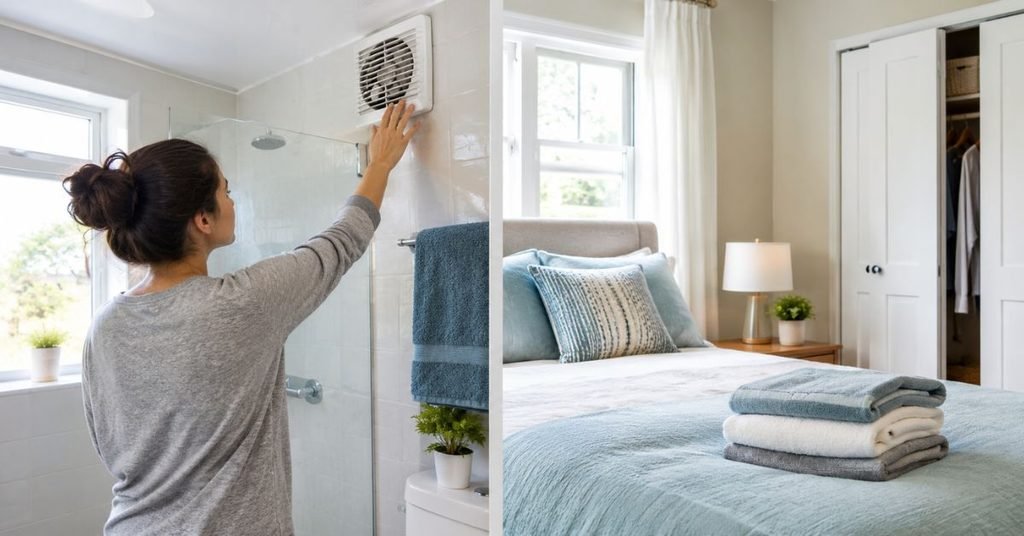
A musty smell often signals excess moisture. After a shower, run the exhaust fan, spread out wet towels, and allow bath mats to dry fully.
In bedrooms, avoid pushing damp laundry into closets or storing wet shoes in closed cupboards. Check window corners, walls, and areas behind furniture for condensation or visible signs of mold.
Fix leaks and improve ventilation instead of relying on fragrance. If you notice extensive mold, repeated damp patches, or a persistent musty odor, investigate the moisture problem and seek professional help when appropriate.
Natural Odor Removal Methods Compared
Different odors need different solutions. Use this table to choose a sensible starting point rather than trying every remedy in your home.
| Odor Source | Natural Method | How to Use It | Key Caution |
|---|---|---|---|
| Stale Indoor Air | Fresh Air and Ventilation | Open suitable windows to improve airflow. | Consider outdoor air quality before opening windows. |
| Refrigerator Odors | Mild Dish Soap and Baking Soda | Clean spills and place baking soda in an open container. | Remove spoiled food before deodorizing. |
| Kitchen Towels | Washing and Complete Drying | Wash according to the fabric care label and dry thoroughly. | Never store damp towels. |
| Suitable Hard Surfaces | Diluted White Vinegar | Test an inconspicuous area, wipe gently, and dry. | Avoid natural stone and other acid-sensitive surfaces. |
| Dry, Compatible Carpets | Baking Soda | Apply sparingly and vacuum thoroughly after use. | Check carpet care instructions and vacuum compatibility first. |
| Pet Bedding | Laundry Detergent | Wash and dry according to the care instructions. | Choose pet-safe products and rinse thoroughly. |
| Bathroom Mustiness | Ventilation and Moisture Control | Run an exhaust fan and dry wet surfaces regularly. | Investigate persistent dampness, leaks, or mold. |
| Upholstery Odors | Vacuuming and Suitable Fabric Cleaning | Vacuum regularly and follow the manufacturer’s cleaning guidance. | Avoid soaking fabric or using unapproved cleaning products. |
A Simple Daily Routine to Keep Your Home Smelling Fresh
You do not need to spend hours every day managing household odors. Small habits can prevent many smells from returning.
Try this short routine:
- Morning: Open suitable windows for ventilation and check for damp towels.
- After cooking: Wipe food spills, clean greasy splashes, and remove food scraps.
- After washing dishes: Clean the sink strainer and leave the basin dry.
- Evening: Empty smelly rubbish when needed and close food containers tightly.
- Before bed: Check pet areas and move damp laundry to a suitable drying space.
Once a week, inspect the refrigerator, wash kitchen cloths, vacuum rugs, and clean frequently used bins. These small jobs make it easier to catch odor sources before they become difficult to remove.
At CleanHomeCraft.com, practical home care starts with consistent habits rather than complicated cleaning routines. Choose a few tasks that fit your schedule and repeat them regularly.
Common Mistakes to Avoid When Removing Household Odors
- Covering Smells with Fragrance: Air fresheners may mask unpleasant smells without eliminating their source. Identify and address the underlying cause for longer-lasting freshness.
- Mixing Cleaning Products: Never mix bleach with vinegar, ammonia, or other incompatible cleaners, as dangerous fumes may develop. Always follow product label instructions.
- Ignoring Damp Materials: Wet towels, rugs, and upholstered furniture can develop musty odors and mildew if they are not dried thoroughly.
- Using Vinegar on Every Surface: Vinegar’s acidity can damage marble, limestone, and other acid-sensitive materials. Check surface care instructions before use.
- Leaving Natural Materials Too Long: Citrus peels and other damp organic materials can spoil over time and create unpleasant odors instead of eliminating them.
- Ignoring Persistent Smells: Recurring sewage, gas, burning, or musty odors may indicate an underlying problem that requires professional attention. If you smell gas or burning, leave the area when necessary and contact the appropriate emergency service.
A good rule is to clean first, dry thoroughly, and add a natural fragrance only if you want one.
Conclusion
Keeping your home fresh does not require a shelf full of scented sprays. Start by identifying the source, removing dirt and residue, improving airflow, and drying damp materials.
Baking soda, white vinegar, regular laundry, and simple cleaning habits can help with many everyday odors when used correctly. Remember that natural remedies are not a substitute for fixing leaks, removing spoiled food, or investigating persistent and potentially dangerous smells.
Try one or two of these natural ways to remove odors from home today and build a routine that works for your household. For more practical cleaning ideas, visit Clean Home Craft and make everyday home care a little easier.
The best method depends on the source. Ventilation helps with stale air, baking soda may help with some enclosed-space odors, and washing removes smells from fabrics. Always clean the source when possible.
Baking soda can help reduce some odors rather than simply adding fragrance. However, it cannot fix every odor problem, and it works best when combined with cleaning and moisture control.
Vinegar can help clean some suitable surfaces and remove certain odor-causing residues. It has its own strong smell, which usually fades as it dries, but it should not be used on acid-sensitive materials.
Use an exhaust fan while cooking, open suitable windows, wash greasy cookware, and wipe nearby surfaces. Clean the range hood filter according to its instructions, since trapped grease can hold lingering odors.
Wash bedding as needed, dry damp clothing, vacuum rugs, and improve airflow. Check windows, walls, closets, and furniture for moisture. If the smell persists, investigate possible leaks or mold instead of masking it.

Muhammad Ahad — Passionate writer sharing informative, engaging, and easy-to-read articles across different topics. Focused on delivering valuable content that helps readers learn, explore, and stay inspired every day.