

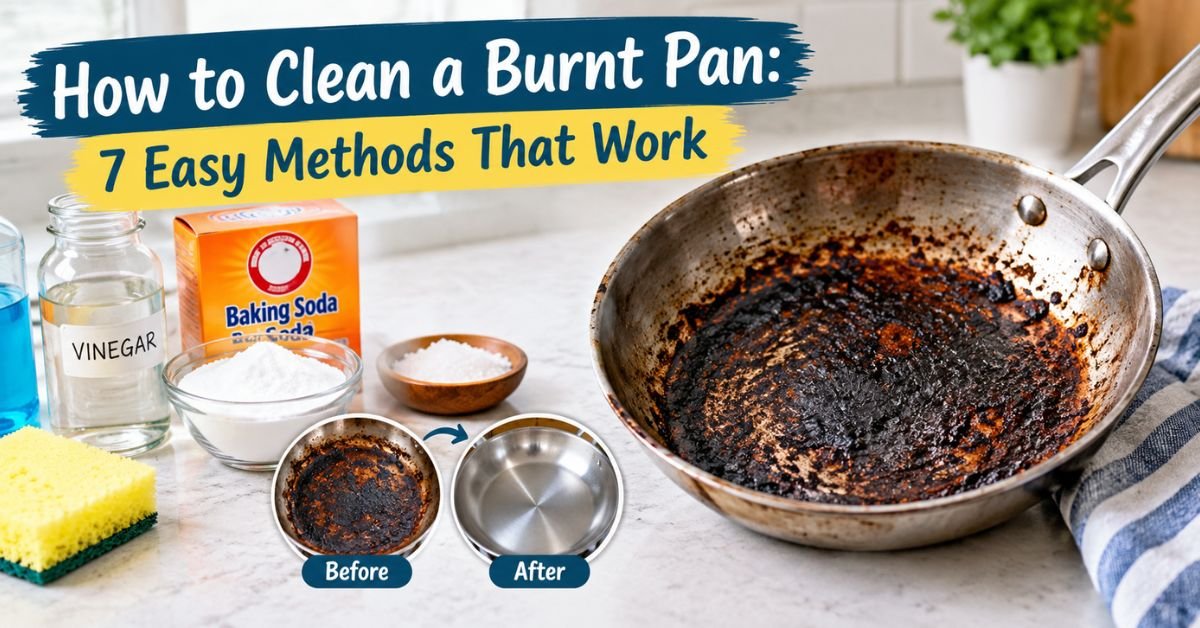
A badly scorched pan can look like it belongs in the trash, especially when the bottom is covered with black, hardened food. In most cases, you do not need expensive cleaners or hours of aggressive scrubbing. When you use the right technique, How to Clean a Burnt Pan becomes much simpler.
I have found that the biggest mistake people make is reaching for a rough scrubber immediately. That can scratch certain cookware surfaces and still leave stubborn burnt patches behind. Instead, soften the residue first and let household ingredients do most of the work.
At Clean Home Craft, we prefer practical cleaning methods that use items many homeowners already have. Salt, baking soda, vinegar, dish soap, and warm water can often turn a frustrating pan into a usable one again.
Before starting, check what your pan is made from. Stainless steel, cast iron, ceramic, and nonstick cookware need slightly different treatment.
How to Clean a Burnt Pan With Simple Ingredients
The easiest approach is to loosen the burnt layer before trying to remove it. Heat and soaking can soften food that has become almost cement-like.
To clean using a basic method, you will need:
- 1 cup of water
- 1 cup of white vinegar
- 2 tablespoons of baking soda
- 1 tablespoon of dish soap
- A soft sponge
- A wooden or silicone spatula
- Regular table salt
Do not pour everything into the pan at once. Baking soda and vinegar react quickly, producing foam. While the bubbling looks impressive, the real cleaning work comes from heat, soaking, and gentle abrasion.
Step 1: Remove Loose Food
If the pan is still hot, let it cool completely. Then scrape away loose pieces using a wooden or silicone utensil.
Avoid using a sharp knife. It may remove a little burnt food, but it can also leave scratches.
Step 2: Add Water and Vinegar
Fill the pan with enough water to cover the burnt areas. In the same proportion, add white vinegar.
Put the pan on the stove and simmer the liquid in it for a few minutes. Let it simmer for approximately five to ten minutes.
As the liquid heats, the hardened residue begins to loosen from the cooking surface.
Step 3: Let the Pan Cool
Let the mixture cool to a safe temperature before handling. Drain the liquid carefully.
Add baking soda to the remaining burnt areas. You will need a small amount of water to make a loose paste.
Leave the paste for about 10 to 20 minutes.
Step 4: Scrub Gently
Use a soft sponge or non-abrasive scrubber to work over the affected areas.
Do not rush. If the residue starts lifting but does not disappear completely, rinse the pan and repeat the process rather than applying excessive pressure.
How to Clean a Burnt Pan With Salt and Baking Soda
Salt can provide gentle physical scrubbing power, while baking soda helps loosen greasy and cooked-on residue. This combination is particularly useful when you have already soaked the pan but can still see dark patches.
Start by wetting the inside of the pan. Sprinkle a generous layer of regular salt over the burnt spots. Add a little baking soda and enough dish soap to make the surface slippery.
Leave the mixture for 15 minutes.
Then use a damp sponge to scrub in small circular movements. Focus on one section at a time instead of attacking the entire pan.
Put a damp cloth over the mixture and leave it for another 20 minutes if the area is extremely stubborn. By extending the contact time, the residue can be easier to remove.
Remember that cookware materials react differently. Avoid aggressive scrubbing on nonstick surfaces because damaging the coating can affect the pan’s performance and safety.
Choose the Right Method for Your Pan
Not every pan should be cleaned in exactly the same way. The following table provides a simple starting point.
| Pan Type | Recommended Method | What to Avoid |
| Stainless steel | Vinegar, baking soda, gentle scrubbing | Harsh scratching |
| Nonstick | Warm water, dish soap, soft sponge | Steel wool and sharp tools |
| Cast iron | Hot water, gentle scraping, drying | Long vinegar soaks |
| Ceramic | Warm water, baking soda paste | Abrasive scouring |
| Enameled cookware | Baking soda and warm water | Aggressive metal scrubbers |
If you are unsure about your cookware, choose the gentlest method first. You can always increase the cleaning effort gradually.
A Faster Method for Fresh Burnt Food
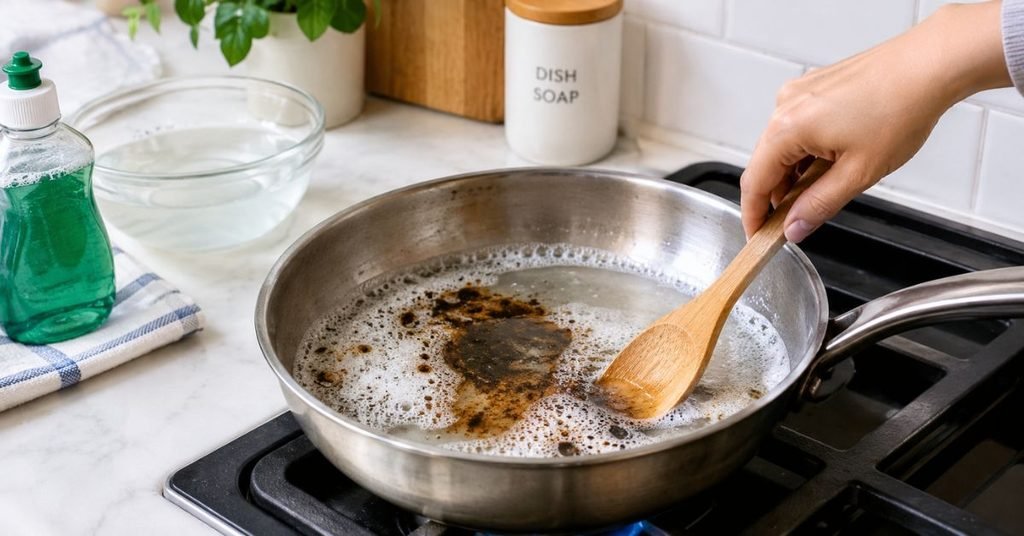
Freshly burnt food is much easier to remove than residue that has been sitting for several days.
If you notice the problem soon after cooking, allow the pan to cool. Afterwards, add warm water and dish soap.
After 15 to 30 minutes, let it sit.
Using a soft sponge, loosen the softened food. For stainless steel cookware, you can use a wooden spatula to carefully lift thicker pieces.
This simple habit can save considerable time. Instead of allowing burnt food to dry into a hard layer, deal with it while it is still relatively soft.
When Vinegar Is Not the Best Choice
Vinegar is useful for many cleaning jobs, but more is not always better.
Avoid long vinegar exposure on cast iron because acidity can interfere with the seasoning. For this type of cookware, use warm water and gentle scraping instead.
Likewise, never assume that every manufacturer’s cookware instructions are the same. Some finishes have special care requirements.
For more practical household ideas, Clean Home Craft focuses on simple techniques that help homeowners clean efficiently without unnecessarily harsh products.
How to Prevent a Pan From Burning Again
Cleaning a burnt pan is useful, but preventing another burnt mess is even better.
Small changes in cooking habits can make a significant difference:
- Keep the burner at the appropriate heat level.
- Stir food that tends to stick.
- Empty pans should not be left over high heat.
- Use enough cooking liquid when preparing sauces.
- Keep an eye on your food while it is being stirred frequently.
- Clean spills from the outside of the pan after it cools.
- Soak the pan soon after cooking when necessary.
High heat is not always the fastest way to cook. In many cases, moderate heat provides better control and reduces the chance of food sticking or scorching.
What to Do With Extremely Stubborn Burnt Spots
Sometimes a pan has a thick black layer that does not respond to one cleaning session. Do not assume it is impossible to save.
Repeat the soaking process instead of increasing the pressure.
For stainless steel cookware, you can simmer water with a small amount of dish soap, turn off the heat, and let the pan sit. Once the residue softens, gently scrape it with a suitable utensil.
If necessary, repeat the baking soda paste treatment.
However, there is an important exception: if a nonstick pan has a damaged, peeling, or deeply scratched coating, cleaning cannot restore the damaged surface. In that situation, replacing the cookware may be safer than trying increasingly aggressive methods.
Mistakes to Avoid When Cleaning Burnt Cookware
A few cleaning mistakes can turn a simple job into permanent cookware damage.
Do Not Scrub a Hot Pan With Cold Water
Sudden temperature changes can stress some cookware materials. Let the pan cool before adding cold water.
Do Not Mix Random Cleaning Products
Household cleaners should not be combined casually. In particular, never mix vinegar with chlorine bleach or products containing bleach.
Do Not Use Metal Tools on Delicate Coatings
Steel wool and sharp metal tools may scratch nonstick and some ceramic surfaces.
Do Not Expect One Scrub to Solve Everything
Burnt residue often needs time to soften. A patient soak is usually more effective than aggressive pressure.
A Simple Burnt Pan Cleaning Routine
When I have a pan with stubborn residue, I follow a basic sequence:
- Let the cookware cool.
- Remove loose food.
- Add warm water and dish soap.
- Soak for 15 to 30 minutes.
- Simmer water and vinegar only when appropriate for the cookware.
- Apply baking soda paste to remaining residue.
- Scrub gently with a suitable sponge.
- Rinse thoroughly.
- Dry the pan completely.
- Inspect the surface before using it again.
This routine keeps the process controlled. It also helps prevent accidental damage caused by trying several harsh methods at the same time.
Conclusion
Learning How to Clean a Burnt Pan does not have to involve expensive products or exhausting scrubbing. The key is to soften the burnt food first, choose ingredients that suit the cookware, and work patiently.
For most suitable pans, warm water, dish soap, baking soda, salt, or vinegar can provide useful cleaning options. However, always consider the pan’s material before choosing a method.
Most importantly, avoid sharp tools and aggressive scrubbing when dealing with nonstick or delicate surfaces. A few extra minutes of soaking can prevent unnecessary damage.
If you enjoy practical cleaning solutions, visit CleanHomeCraft.com for more simple home cleaning ideas, kitchen tips, and household solutions you can use every day
Yes. Baking soda is useful for loosening many types of burnt food residue. Make a paste with a small amount of water and allow it to sit before gently scrubbing.
Start with 15 to 30 minutes. If the residue is particularly hard, you can allow the pan to soak longer, provided the cookware material is suitable for soaking.
Vinegar can help loosen certain burnt residues, especially on suitable cookware such as stainless steel. Avoid prolonged vinegar exposure on cast iron.
Yes. Salt can provide mild abrasive action when combined with water or dish soap. Use gentle pressure, particularly on delicate surfaces.
Use warm water, dish soap, and a soft sponge. Avoid steel wool, knives, harsh abrasive cleaners, and aggressive scraping because they can damage the nonstick coating.

Muhammad Ahad — Passionate writer sharing informative, engaging, and easy-to-read articles across different topics. Focused on delivering valuable content that helps readers learn, explore, and stay inspired every day.