

Introduction
There are days when I look at my cleaning cupboard and realize I do not need another specialized bottle for every small household mess. clean with vinegar One ingredient I often reach for is plain white vinegar. When used correctly, it can help with everyday grime, light mineral buildup, and unpleasant smells on suitable surfaces.
If you want to clean with vinegar, the first thing to remember is that vinegar is useful but not universal. It works well for some jobs and can damage certain materials. Knowing that difference makes a homemade cleaning routine much safer.
At Clean Home Craft, we prefer practical cleaning ideas that use simple supplies without making household chores complicated. Vinegar is a good example because one inexpensive bottle can be useful in several areas of a home.
What Makes Vinegar Useful for Cleaning?
White distilled vinegar contains acetic acid. That acidity is responsible for its sharp smell and its ability to loosen certain types of residue.
It can be particularly helpful against mineral deposits left behind by hard water. It can also help loosen some everyday residue from compatible surfaces.
However, vinegar should not be considered a heavy-duty cleaner for every situation. Grease, baked-on food, mold, and serious stains may require different products or methods.
For regular household maintenance, though, vinegar can be a convenient option.
Choose the Right Vinegar
For cleaning purposes, plain white distilled vinegar is usually the easiest choice.
Avoid using:
- Colored vinegar
- Flavored vinegar
- Vinegar containing added ingredients
- Food mixtures intended for cooking
A basic cleaning bottle is easier to manage when the ingredients are simple and clearly labeled.
How to Prepare a Basic Vinegar Cleaning Solution
You do not need a complicated recipe for many household jobs.
For a basic diluted solution, combine:
- 1 cup of white distilled vinegar
- 1 cup of water
- One clean spray bottle
- A microfiber cloth
Pour the ingredients into the bottle and close it securely. Give the bottle a gentle shake before using it.
Do not assume this same mixture is appropriate for every material. Surface compatibility matters more than having a universal recipe.
Before treating an unfamiliar surface, test the solution on a small, hidden spot.
Kitchen Surfaces You Can Clean with Vinegar
The kitchen is one of the easiest places to find small cleaning jobs for vinegar.
After cooking, counters can collect water marks, food residue, and fingerprints. On suitable materials, a diluted vinegar solution can make routine wiping easier.
Spray the solution onto a microfiber cloth instead of flooding the countertop. Wipe the area gently, then use a clean damp cloth if needed.
Clean the Microwave Interior
Microwave splatters can become surprisingly stubborn when they dry.
Instead of immediately scrubbing the walls, use steam to soften the residue.
Put water and vinegar into a microwave-safe bowl. Heat it until steam develops. After turning off the microwave, leave the door closed for a few minutes.
The warm moisture can loosen dried food particles.
Carefully remove the bowl because it may be very hot. After that, wipe the inside with a clean cloth.
For stubborn spots, repeat the steaming process instead of attacking the surface with excessive force.
Freshen Suitable Kitchen Surfaces
Vinegar can also be useful for light residue around some kitchen surfaces.
However, never assume that every countertop can tolerate acidic cleaners. Marble, limestone, and other acid-sensitive stones should be treated with appropriate stone-safe products.
When in doubt, check the manufacturer’s instructions.
Use Vinegar for Glass and Mirrors
Fingerprints, light water marks, and everyday smudges can make mirrors and glass look dull.
A lightly diluted vinegar solution can be useful on suitable glass surfaces.
The trick is to avoid soaking the surface. Apply a small amount and wipe with a clean microfiber cloth.
If the glass still looks streaky, use less solution on the next pass. Too much liquid can leave additional residue and make the job take longer.
For mirrors, take extra care around edges where liquid could seep behind the surface.
Bathroom Cleaning with Vinegar
Bathrooms are another area where vinegar may be helpful, particularly when hard water leaves mineral deposits.
Faucets, shower fixtures, and other compatible surfaces can develop a cloudy layer over time. This buildup may become more noticeable in areas where water evaporates frequently.
Remove Light Mineral Deposits
For a suitable fixture, dampen a cloth with diluted vinegar and place it over the affected area.
Once it has sat for some time, wipe it gently.
If the deposit remains, repeat the process rather than using aggressive scrubbing.
Always check the finish first. Chrome, specialty coatings, natural stone, and other materials may have different care requirements.
Clean a Showerhead
A showerhead with mineral buildup may develop blocked spray holes or uneven water flow.
If the showerhead can safely be removed, follow its manufacturer’s instructions before taking it apart.
Suitable removable parts can sometimes be soaked in diluted vinegar to loosen mineral deposits. Afterward, rinse the parts thoroughly with clean water.
If you cannot remove the showerhead, place a vinegar-dampened cloth around the affected area instead.
Do not leave acidic solutions on delicate finishes longer than necessary.
Surfaces You Should Avoid Cleaning with Vinegar
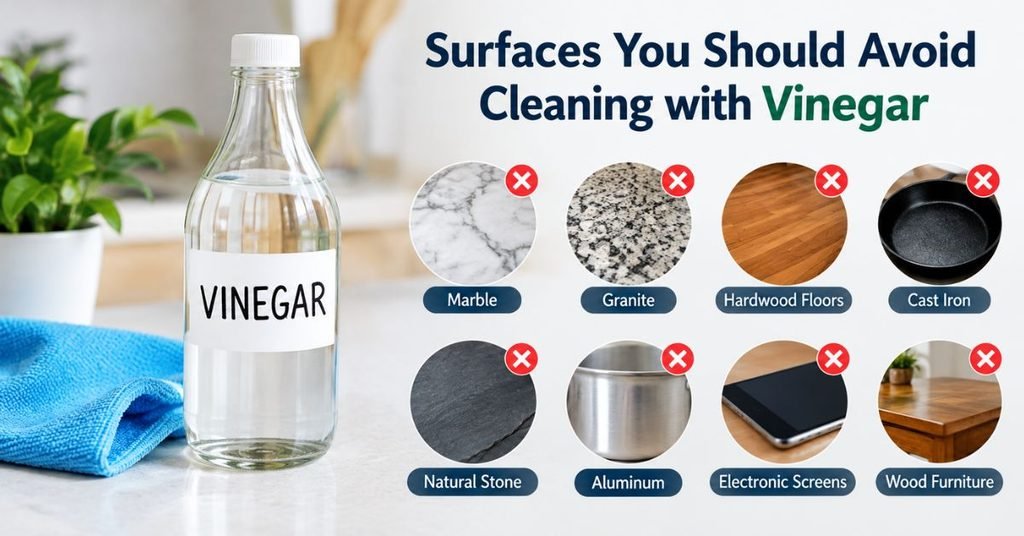
One of the most important lessons about vinegar cleaning is knowing when not to use it.
Avoid vinegar on acid-sensitive surfaces such as:
- Marble
- Limestone
- Certain natural stones
- Some unsealed or specialty finishes
- Waxed surfaces when the manufacturer advises against acidic cleaners
- Certain delicate coatings
- Electronics
- Electrical components
Natural stone deserves special attention. Acid can react with some stone surfaces and gradually dull or damage their finish.
Instead of experimenting, use a product specifically recommended for the material.
Never Mix Vinegar with Bleach
This is one cleaning rule that should never be ignored.
Never combine vinegar and bleach.
Mixing them can produce dangerous chlorine gas. clean with vinegar The same principle applies to experimenting with combinations of household chemicals simply because they are individually useful.
Keep your cleaning routine simple. One appropriate product at a time is safer than creating homemade chemical mixtures without knowing how they react.
A Quick Vinegar Cleaning Reference
| Cleaning Task | Suggested Approach | Important Reminder |
| Microwave | Steam water and vinegar | Handle the hot bowl carefully |
| Glass | Use a light diluted solution | Avoid excessive liquid |
| Faucet buildup | Apply diluted vinegar briefly | Check the finish first |
| Showerhead | Soak suitable removable parts | Rinse thoroughly afterward |
| Kitchen counters | Wipe compatible surfaces | Avoid acid-sensitive stone |
| Light mineral marks | Apply and wipe gently | Repeat instead of harsh scrubbing |
This table can help you decide where vinegar may fit into your routine. Still, the manufacturer’s surface-care instructions should always take priority.
Make Your Vinegar Routine More Effective
Cleaning routines do not require more products. It is about giving the right method enough time to work.
For example, if you immediately scrub a dry mineral deposit, you may spend several minutes fighting a problem that could have softened first.
Instead, try these habits:
- Let suitable cleaning solutions sit briefly when appropriate.
- Use microfiber cloths for everyday wiping.
- Avoid oversaturating surfaces.
- Rinse when the surface-care instructions recommend it.
- Keep bottles clearly labeled.
- Store cleaning products safely.
- Open a window when the vinegar smell becomes strong.
- Test new surfaces before cleaning the entire area.
These small changes can make routine cleaning much less frustrating.
Keep Your Cleaning Supplies Organized
I find that cleaning becomes easier when supplies are stored together.
Instead of searching through different cupboards, keep basic items in one cleaning basket or container. A practical setup might include microfiber cloths, suitable brushes, gloves, and your labeled vinegar solution.
You can also divide cleaning tasks into short sessions.
For example, wipe the kitchen counter after preparing dinner. clean with vinegar Deal with water marks around the faucet while the sink is already empty. Give the microwave a quick wipe after using it.
Small jobs prevent larger messes from building up.
For more straightforward household routines, Clean Home Craft focuses on cleaning methods that are realistic for everyday homes.
Common Mistakes When Using Vinegar
Treating Vinegar as a Universal Cleaner
Vinegar is useful, but it cannot safely clean everything.
The material you’re cleaning should always determine which product you choose.
Using Too Much Solution
It is not always the case that more liquid means better cleaning.
Excess moisture can make wiping harder and may damage surfaces that should not become wet.
Leaving It on Surfaces for Too Long
The longer the contact time, the less likely it is that it will be effective.
If a surface is sensitive to acids, prolonged exposure can create unnecessary damage.
Forgetting to Check Manufacturer Instructions
Furniture, countertops, appliances, and fixtures can have specific cleaning requirements.
A quick look at the care instructions can save you from an expensive mistake.
Mixing Cleaning Ingredients
Do not create random combinations of household cleaners.
In particular, never mix vinegar with bleach.
Conclusion
Learning to clean with vinegar can give you a simple option for several everyday household jobs. It can help loosen certain mineral deposits, freshen suitable surfaces, and make tasks such as microwave and glass cleaning easier.
The most important point is to use vinegar selectively. In certain cases, acidic cleaners can damage surfaces such as natural stones, and it is not suitable for every material.
Start with a small test area, use a reasonable amount, and follow the care instructions for the surface you are cleaning. clean with vinegar Most importantly, never mix vinegar with bleach or other incompatible cleaning chemicals.
If you enjoy practical household solutions, visit CleanHomeCraft.com for more simple cleaning ideas, kitchen tips, and easy routines that can help make everyday chores more manageable.
White distilled vinegar can be useful for selected everyday cleaning tasks, particularly on surfaces that tolerate mild acids. You shouldn’t use it as a general cleaner.
Vinegar can loosen some mineral deposits caused by hard water. The results depend on the type of deposit and the surface being cleaned.
It is generally better to avoid vinegar on granite and other natural stone unless the specific surface manufacturer confirms that it is safe. Acidic products can affect some stone finishes.
Vinegar should not be assumed to be a disinfectant. If your goal is disinfection, choose a product specifically labeled for that purpose and follow its directions.
Vinegar may help with some odors, but removing the source of the smell is usually more effective. Cleaning the affected area and improving ventilation can also help.
Dilution can make vinegar more practical for many household cleaning tasks. The correct ratio depends on the surface and purpose, so avoid assuming one mixture works everywhere.

Muhammad Ahad — Passionate writer sharing informative, engaging, and easy-to-read articles across different topics. Focused on delivering valuable content that helps readers learn, explore, and stay inspired every day.
1 thought on “Clean with Vinegar: Simple Ways to Freshen Your Home”