

Introduction
I used to reach for a different cleaner for almost every small mess around the house. Then I started testing simple vinegar cleaning swaps for everyday jobs. The difference was surprisingly practical: fewer bottles under the sink, simpler routines, and ingredients I already had at home.
At Clean Home Craft, we like cleaning methods that are easy to repeat rather than complicated recipes that sit unused in a cupboard. Vinegar can handle many everyday cleaning tasks because its mild acidity helps loosen mineral deposits, cut through some grime, and reduce unpleasant odors.
However, vinegar is not suitable for every surface. Knowing where to use it—and where to avoid it—is what makes these swaps genuinely useful.
What Are Vinegar Cleaning Swaps?
Vinegar cleaning swaps simply means replacing certain everyday cleaning products or cleaning steps with diluted white vinegar when it is an appropriate choice.
These swaps can be especially helpful for:
- Removing hard-water marks
- Freshening drains
- Cleaning glass
- Wiping some kitchen surfaces
- Deodorizing certain household areas
- Loosening soap residue
- Cleaning removable appliance parts
The key is to use plain white distilled vinegar appropriately and dilute it when necessary.
Vinegar is acidic, so it should never be treated as a universal cleaner. Natural stone, some metals, and delicate finishes can react badly to acids.
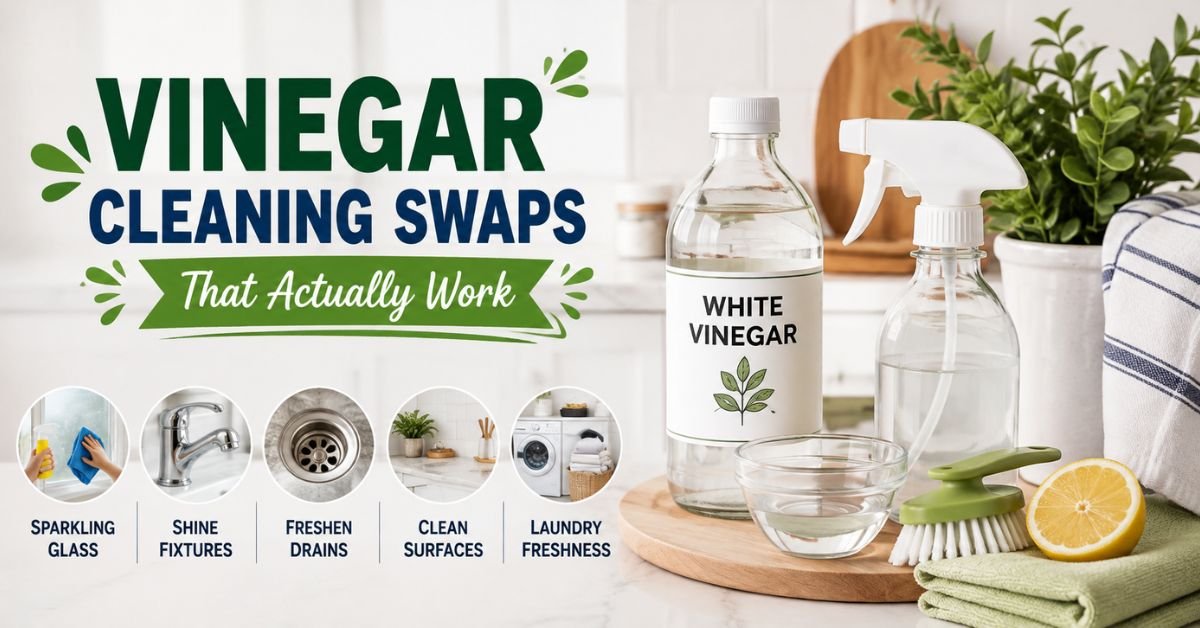
7 Vinegar Cleaning Swaps That Actually Work
1. Swap Glass Cleaner for Diluted Vinegar
For ordinary glass surfaces, diluted white vinegar can be a simple alternative to a dedicated glass cleaner.
Mix equal parts water and white vinegar in a spray bottle. Spray lightly onto the glass, then wipe with a clean microfiber cloth.
For better results, avoid soaking the surface. Too much liquid can leave streaks, especially around window frames.
I usually work from top to bottom and finish with a dry section of the cloth. This helps pick up remaining moisture instead of simply moving it around.
2. Swap Hard-Water Remover for Vinegar
Hard-water deposits often appear around faucets, shower doors, and fixtures. Their chalky appearance can make a recently cleaned bathroom look dirty.
For suitable acid-resistant surfaces, soak a cloth in diluted vinegar and place it over the deposit for several minutes. Then wipe gently and rinse thoroughly.
For stubborn buildup, repeat the process rather than aggressively scrubbing.
This method works particularly well when mineral residue has accumulated gradually.
3. Swap a Drain Freshener for a Simpler Routine
A drain can develop unpleasant smells when residue collects inside the opening.
Instead of constantly buying scented drain products, start with mechanical cleaning. Remove visible debris from the drain opening and rinse the area with hot water where appropriate.
A small amount of vinegar can help freshen the surrounding area afterward.
However, vinegar should not be mixed with commercial drain chemicals. Never combine cleaning products unless their labels specifically indicate that doing so is safe.
4. Swap Fabric Softener Carefully
Some homeowners use vinegar in the laundry as an alternative to traditional fabric softener. While vinegar can help remove detergent residue and soften the feel of some fabrics, it is not necessary for every wash.
If you choose to use it, add a modest amount to the washing machine’s fabric-softener compartment rather than pouring it directly onto clothing.
Do not combine vinegar with chlorine bleach. Mixing acids with bleach can release dangerous chlorine gas.
For delicate garments, always follow the care label first.
5. Swap a Basic Appliance Descaler
Mineral deposits can build up inside appliances that regularly use water. Depending on the appliance manufacturer’s instructions, vinegar may be suitable for removing light mineral buildup.
Before using it, check the manufacturer’s cleaning instructions. Some appliances contain materials that should not come into contact with vinegar.
For approved appliances, a vinegar-and-water cleaning cycle can help loosen deposits. Afterward, rinse thoroughly according to the appliance instructions.
This is one of the most useful vinegar cleaning swaps because it targets buildup at its source instead of simply wiping the outside.
6. Swap an Odor Neutralizer for Vinegar
Vinegar has a strong smell of its own, but that smell disappears as it dries.
For suitable washable surfaces, diluted vinegar can help freshen areas affected by mild household odors. Use it on surfaces that tolerate acidic cleaners, and allow the area to dry completely.
Do not use vinegar to cover up serious mold, sewage, smoke, or persistent moisture problems. Those situations require addressing the underlying source.
7. Swap Soap-Scum Cleaner in Suitable Areas
Soap residue can collect around bathroom fixtures and other washable, acid-safe surfaces.
A diluted vinegar solution can help loosen this film. Spray a small amount, let it sit briefly, and wipe with a microfiber cloth.
For heavy buildup, gentle agitation may be necessary.
Always rinse afterward, especially on surfaces that regularly come into contact with skin.
Simple Vinegar Cleaning Swaps for Everyday Jobs
The easiest way to build a vinegar-based routine is to match the method to the type of dirt.
| Cleaning job | Simple vinegar approach | Important note |
| Glass | Diluted vinegar + microfiber cloth | Avoid over-spraying |
| Hard-water marks | Diluted vinegar + short soak | Rinse afterward |
| Soap residue | Diluted vinegar + gentle wiping | Use only on acid-safe surfaces |
| Mild odors | Diluted vinegar wipe | Fix the odor source first |
| Appliance scale | Vinegar solution if manufacturer allows | Follow appliance instructions |
| Laundry residue | Small amount in dispenser | Never mix with bleach |
| Faucet buildup | Vinegar-soaked cloth | Avoid unsuitable finishes |
This table is a useful starting point, but the surface manufacturer’s instructions should always come first.
Where You Should Never Use Vinegar
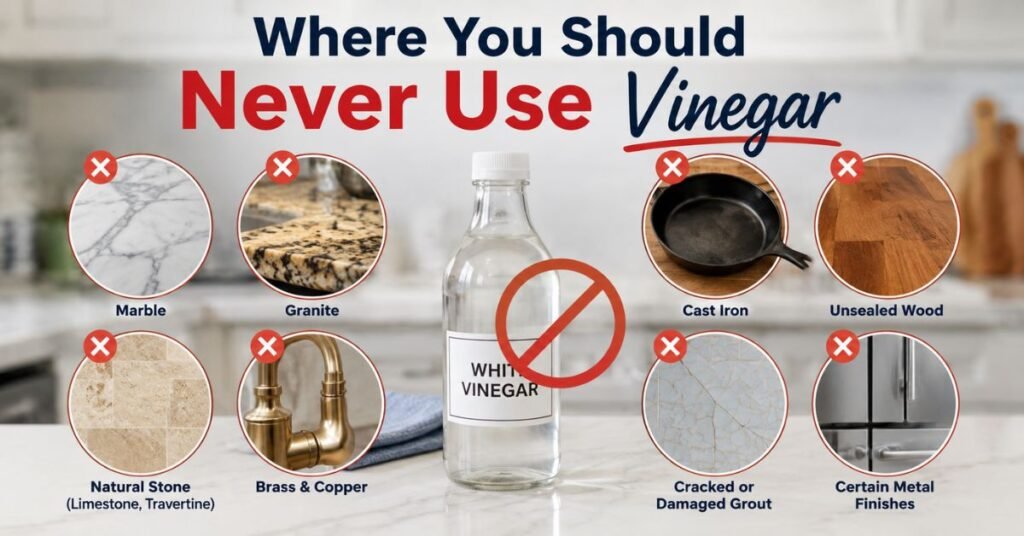
One of the biggest mistakes with natural cleaning is assuming that something gentle is automatically safe everywhere.
Vinegar should generally be avoided on:
- Marble
- Limestone
- Travertine
- Other calcareous natural stones
- Some delicate stone finishes
- Surfaces specifically labeled as acid-sensitive
Acid can damage or dull certain stone surfaces.
You should also be cautious with some metals and finishes. If you are unsure, test a tiny hidden area first or use the manufacturer’s recommended cleaner.
Most importantly, never mix vinegar with chlorine bleach. Also avoid mixing it with other chemical cleaners unless you have verified that the combination is safe.
How to Make Your Vinegar Routine More Effective
A few small habits make these swaps work much better.
Use the Right Vinegar
Choose plain white distilled vinegar rather than flavored or specialty vinegar. You want a simple cleaning ingredient without added sugars, colors, or fragrances.
Start With Dilution
There is no guarantee that vinegar will make your house cleaner.
For many everyday jobs, diluted vinegar is sufficient. Stronger solutions may be appropriate for certain mineral deposits, but surface compatibility matters more than strength.
Let Time Do Some of the Work
When dealing with mineral residue, give the solution a short contact time rather than immediately scrubbing.
The goal is to loosen the deposit first.
Use Microfiber Cloths
A good microfiber cloth makes a noticeable difference on glass, fixtures, and smooth surfaces.
Fold the cloth into sections so you can switch to a clean area as you wipe. Removing residue this way prevents it from spreading.
At Clean Home Craft, we recommend keeping a few dedicated microfiber cloths with your basic cleaning supplies. It makes quick cleaning swaps much easier to maintain.
Vinegar Cleaning Swaps vs. Store-Bought Cleaners
Vinegar can be convenient, inexpensive, and useful for certain jobs. However, it does not replace every specialized cleaner.
Commercial products may be better when you need a cleaner designed for a specific surface, heavy grease, disinfecting, or a particular type of stain.
Vinegar should be considered a tool rather than a replacement for all purposes.
A smart cleaning cabinet can contain a few dependable products plus simple ingredients such as vinegar. The goal is not to eliminate every commercial cleaner. Instead, it is to stop buying products for jobs that can be handled safely and effectively with something simpler.
Conclusion
The best vinegar cleaning swaps are not about replacing every cleaner in your home. They are about making smarter choices for simple jobs where vinegar is appropriate.
Use diluted white vinegar for suitable glass, mineral deposits, soap residue, and selected household cleaning tasks. At the same time, respect surface limitations and never mix vinegar with bleach or unknown chemicals.
Start with one or two swaps instead of changing your entire cleaning routine overnight. Once you know which surfaces respond well, these simple methods can save time, reduce clutter, and make everyday cleaning feel much less complicated.
For more practical home-cleaning ideas, visit Clean Home Craft and explore simple household tips you can actually use.
No. Vinegar works well for some household cleaning tasks, particularly mineral deposits and certain washable surfaces, but it is not suitable for every material.
No. Vinegar can damage marble and other acid-sensitive natural stones. Use a stone-safe cleaner instead.
Vinegar should not be treated as a substitute for a registered disinfectant when disinfection is required. Use an appropriate disinfectant according to its label.
They react immediately, producing fizzing. Although the reaction looks powerful, combining them largely neutralizes their acid and base properties. For many cleaning jobs, using the ingredients separately is more practical.
Absolutely not. Mixing vinegar with chlorine bleach can produce toxic chlorine gas. Keep these products completely separate.

Muhammad Ahad — Passionate writer sharing informative, engaging, and easy-to-read articles across different topics. Focused on delivering valuable content that helps readers learn, explore, and stay inspired every day.
1 thought on “Vinegar Cleaning Swaps That Actually Work”