

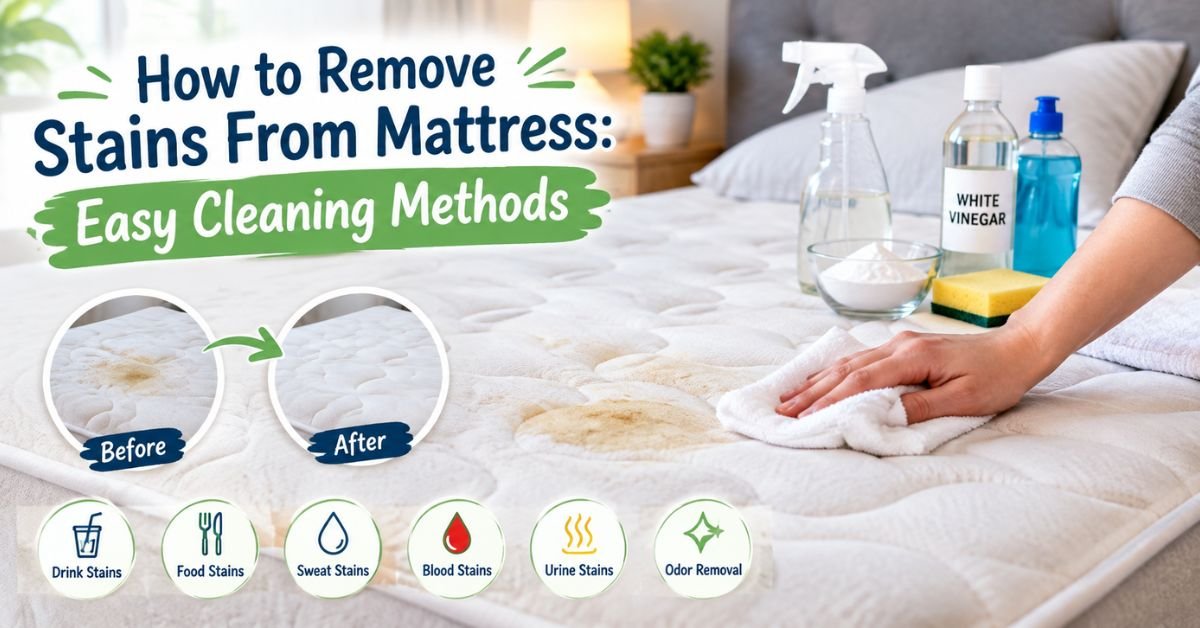
Introduction
Learning how to remove stains from mattress surfaces can save you from replacing a perfectly usable bed. Mattresses collect sweat, body oils, spilled drinks, food marks, makeup, and other everyday stains. Because the material is thick and absorbent, simply wiping the surface often leaves a shadow or unpleasant smell behind.
I have found that the best approach is to treat a mattress gently rather than soaking it. Too much water can move moisture deep into the filling and make drying difficult. At Clean Home Craft, we focus on practical household methods that use simple supplies and avoid unnecessary cleaning products.
The right method depends on the type of stain. Fresh spills usually need quick blotting, while older marks may require several gentle treatments. Before starting, always check the mattress manufacturer’s care instructions and test any cleaning solution on a hidden area.
What You Need Before Cleaning a Mattress
Gather your supplies before treating the stain. Having everything ready helps you work quickly, especially when the mark is still fresh.
You may need:
- Clean white cloths or microfiber towels
- A vacuum cleaner
- Mild liquid dish soap
- Baking soda
- Cold or lukewarm water
- A spray bottle
- A soft-bristled brush
- White vinegar for suitable washable surfaces
- A fan for faster drying
- Gloves if you prefer to protect your hands
Avoid using large amounts of liquid. A mattress should become slightly damp during spot cleaning, not wet enough to feel soaked.
How to Remove Stains From Mattress Step by Step
Cleaning becomes easier when you start at the outside and work your way towards the center. This reduces the chance of spreading the mark across a larger area.
Step 1: Remove Bedding and Inspect the Mattress
Take off sheets, blankets, mattress protectors, and other bedding. Wash those items separately according to their care labels.
Next, inspect the mattress in good lighting. how to remove stains from mattress Look for additional marks around the main stain. A small stain can sometimes have a larger damp area underneath the fabric.
Step 2: Vacuum the Surface
Run a vacuum over the entire mattress. Pay special attention to seams, edges, and areas where dust tends to collect.
First, vacuuming removes loose particles that could become muddy residue if they become damp.
Step 3: Blot Fresh Spills
You can gently press a clean towel against a fresh stain. Do not rub aggressively.
Move to a dry part of the towel as it absorbs moisture. In some cases, rubbing can push liquid deeper into the mattress fibers.
For a large spill, use several dry towels rather than trying to soak everything up with one cloth.
Step 4: Apply a Mild Cleaning Solution
Add a small amount of mild dish soap to water. You can dampen a cloth with the mixture instead of pouring it directly on the mattress.
Dab the stained area carefully. Work gradually and avoid saturating the fabric.
You can remove stubborn marks by blotting them away with a clean, slightly damp cloth after letting the mild solution sit for a few minutes.
Step 5: Treat Odors With Baking Soda
Once the visible stain has been treated, sprinkle a thin layer of baking soda over the affected area.
Leave it for several hours, or overnight when practical. It is useful for absorbing lingering odors and moisture from surfaces.
Vacuum the powder thoroughly when the mattress is completely dry.
Step 6: Dry the Mattress Completely
The drying process is an essential part of the manufacturing process. Open windows, turn on a fan, or position the mattress where there is good airflow.
Do not put clean bedding back on while the mattress is still damp. It is possible for trapped moisture to create an unpleasant environment inside fabrics.
Mattress Stain Cleaning Methods at a Glance
Different stains need slightly different approaches. Use this table as a quick reference.
| Stain Type | First Step | Suggested Treatment | Important Tip |
| Fresh drink | Blot immediately | Mild soap solution | Do not rub |
| Sweat marks | Vacuum first | Mild soap and water | Dry thoroughly |
| Food stain | Remove solid pieces | Mild cleaning solution | Work from edges inward |
| Makeup | Blot carefully | Mild soap solution | Avoid spreading oils |
| Blood | Blot with cold water | Gentle spot treatment | Avoid hot water |
| Urine | Absorb moisture | Appropriate enzyme cleaner | Follow product directions |
| Unknown stain | Vacuum area | Test mild solution | Patch-test first |
How to Remove Sweat and Body-Oil Stains
Sweat marks often appear yellowish or slightly gray, especially on mattresses that have been used for a long time.
Start by vacuuming the surface. Apply mild soap and water to a lightly damp cloth. Dab the area instead of scrubbing it.
For persistent odor, baking soda can be useful after the surface treatment. Before vacuuming, let it sit on the mattress for several hours.
Regularly washing sheets and using a washable mattress protector can also reduce the amount of body oil and sweat reaching the mattress.
How to Remove Food and Drink Stains
Food and drinks should be handled quickly. Remove any solid pieces with a spoon or clean edge first. Then blot liquid with a dry towel.
A mild soap solution should be prepared and applied with a cloth. Work around the outside of the mark before moving toward the center.
If the drink contained sugar, repeat the blotting process with a clean damp cloth. Sticky residue can attract more dirt if it remains in the fabric.
Vacuum the treated area after the mattress has dried completely.
How to Remove Blood Stains From a Mattress
Blood stains require gentle handling. The use of hot water can make the removal of protein-based stains more difficult. Instead, use cold water.
Blot the stain gently with a clean cloth dampened with cold water. Continue using clean sections of the cloth so you are not transferring the stain back onto the mattress.
For an older stain, a suitable commercial stain remover may be necessary. Always read the label and test the product on an inconspicuous area first.
Never soak the mattress while treating the stain.
How to Remove Urine Stains and Odors
Urine can be more challenging because the liquid may penetrate below the surface and leave an odor behind.
Begin by absorbing as much moisture as possible with clean towels. For deeper or older stains, an enzyme-based upholstery or mattress-safe cleaner can be more effective than repeatedly adding household liquids.
Follow the cleaner’s instructions carefully. Do not mix different cleaning products together.
After treatment, provide plenty of ventilation and allow the mattress to dry completely.
A Practical Tip From Clean Home Craft
At Clean Home Craft, one simple habit we recommend is dealing with stains as soon as you notice them. A fresh mark usually requires less effort than an old stain that has dried inside the fabric.
Keep a small cleaning kit nearby with white cloths, mild soap, baking soda, and a spray bottle. That way, you can respond quickly when a spill happens.
However, avoid treating every stain with the same homemade mixture. Mattress materials vary, and some covers or foams can react poorly to certain ingredients.
Mistakes to Avoid When Cleaning a Mattress
A few cleaning habits can make a stain worse instead of better.
Avoid these common mistakes:
- Do not soak the mattress.
- Do not scrub aggressively.
- Do not use very hot water on protein-based stains.
- Do not mix household cleaning chemicals.
- Do not ignore the manufacturer’s care instructions.
- Do not cover a damp mattress with clean bedding.
- Do not use strong products without patch-testing.
- Do not assume every mattress material can tolerate vinegar or other acidic cleaners.
Gentle treatment and thorough drying are usually more useful than using a powerful product.
How Often Should You Clean Your Mattress?
It is not necessary to clean your mattress every week. Instead, vacuum the mattress regularly and treat spills as soon as they occur.
A practical routine includes:
- Vacuuming every few weeks
- Washing bedding regularly
- Cleaning the mattress protector according to its label
- Treating visible stains immediately
- Rotating the mattress when the manufacturer recommends it
- Checking the mattress for odors or moisture
A mattress protector is especially useful because it creates a washable barrier between your bedding and the mattress surface.
Conclusion
Knowing how to remove stains from mattress surfaces does not require soaking the entire bed or using harsh chemicals. Start by removing bedding, vacuuming the surface, and blotting fresh stains quickly. Then use a small amount of a suitable cleaning solution and work gently from the outside toward the center.
Different stains need different treatments. how to remove stains from mattress Cold water can be useful for blood marks, mild soap can handle many everyday spots, and baking soda can help with surface odors. Most importantly, give the mattress enough airflow to dry completely.
With a little regular care, you can keep your sleeping surface fresher for longer. For more practical home cleaning ideas, visit CleanHomeCraft.com and explore more easy-to-follow household tips.
Yes, baking soda can be sprinkled lightly over the surface to help absorb odors. Leave it for several hours and vacuum it thoroughly afterward.
Vinegar may be suitable for some washable materials, but it is not appropriate for every mattress. Check the manufacturer’s instructions and test a small hidden area first.
Use a lightly damp cloth instead of pouring liquid directly onto the mattress. Blot the stained area gradually and use airflow to dry it.
Start by identifying the stain if possible. Vacuum the area, use a mild suitable cleaning solution, blot rather than scrub, and repeat carefully if needed.
It is better to avoid hot water when treating stains such as blood or other protein-based marks. Cold water is generally a safer starting point for these stains.

Muhammad Ahad — Passionate writer sharing informative, engaging, and easy-to-read articles across different topics. Focused on delivering valuable content that helps readers learn, explore, and stay inspired every day.
1 thought on “How to Remove Stains From Mattress: Easy Cleaning Methods”