

Introduction
When planning a new home, rearranging furniture, or buying a larger bed, understanding average bedroom dimensions can save both time and money. Bedroom size affects comfort, storage options, furniture placement, and even property value. A room that feels spacious for one person may feel crowded for another, especially when wardrobes, desks, and additional furniture are involved.
At Clean Home Craft, we often see homeowners focus on cleaning and decorating while overlooking the importance of room dimensions. Knowing the right measurements helps create a bedroom that feels balanced, functional, and comfortable.
Although bedroom sizes vary by country, building style, and personal preferences, there are common standards that provide a useful benchmark. Whether you are designing a master suite, a guest room, or a child’s bedroom, understanding typical dimensions can help you make smarter decisions.
Understanding Average Bedroom Dimensions
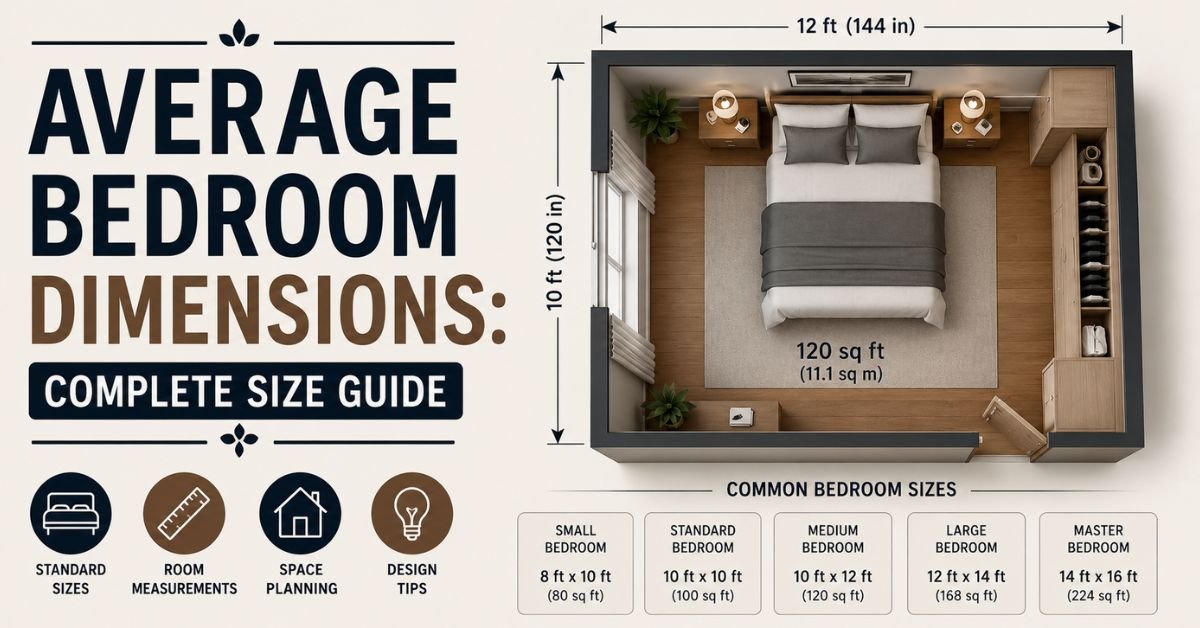
The term average bedroom dimensions refers to the typical width, length, and floor area of a standard bedroom. While exact measurements differ, most bedrooms fall within a predictable range.
A standard bedroom in many modern homes is often around:
- 100 square feet (10 feet by 10 feet)
- 10 ft × 12 ft (120 sq ft)
- 11 ft × 12 ft (132 sq ft)
- (12′ x 12′) (144’2)
These measurements generally provide enough space for a bed, small storage solutions, and basic movement around the room.
Why Bedroom Size Matters
Bedroom dimensions influence:
- Furniture arrangement
- Storage capacity
- Walking space
- Natural light distribution
- Cleaning efficiency
- Home resale appeal
Even a difference of a few feet can dramatically change how comfortable a room feels.
Average Bedroom Dimensions by Room Type
Different bedrooms serve different purposes. As a result, their dimensions often vary.
Small Bedroom
Small bedrooms are common in apartments and older homes.
Typical dimensions:
- 8 ft × 10 ft
- 9 ft × 10 ft
- 9 ft × 11 ft
These rooms usually accommodate:
- Twin bed
- Small dresser
- Compact desk
Storage solutions become especially important in smaller spaces.
Standard Bedroom
A standard bedroom is designed for everyday comfort.
Common sizes include:
- 10 ft × 10 ft
- 10 ft × 12 ft
- 11 ft × 12 ft
These dimensions provide enough room for:
- Full-size bed
- Nightstands
- Dresser
- Basic storage
Most homeowners consider this size practical and easy to maintain.
Master Bedroom
Master bedrooms are noticeably larger.
Typical dimensions:
- 12 ft × 14 ft
- 14 ft × 16 ft
- 15 ft × 18 ft
Master suites often include:
- King-size bed
- Seating area
- Large wardrobe
- Attached bathroom access
The additional space creates a more luxurious environment.
Guest Bedroom
Guest rooms generally fall between standard and small bedrooms.
Common measurements:
- 10 ft × 12 ft
- 11 ft × 12 ft
These dimensions comfortably fit occasional visitors without occupying excessive floor space.
Bedroom Size Comparison Table
| Bedroom Type | Typical Dimensions | Approximate Area |
| Small Bedroom | 8 ft × 10 ft | 80 sq ft |
| Compact Bedroom | 9 ft × 10 ft | 90 sq ft |
| Standard Bedroom | 10 ft × 10 ft | 100 sq ft |
| Medium Bedroom | 10 ft × 12 ft | 120 sq ft |
| Large Bedroom | 12 ft × 12 ft | 144 sq ft |
| Master Bedroom | 12 ft × 14 ft | 168 sq ft |
| Spacious Master Suite | 14 ft × 16 ft | 224 sq ft |
Average Bedroom Dimensions in Different Countries
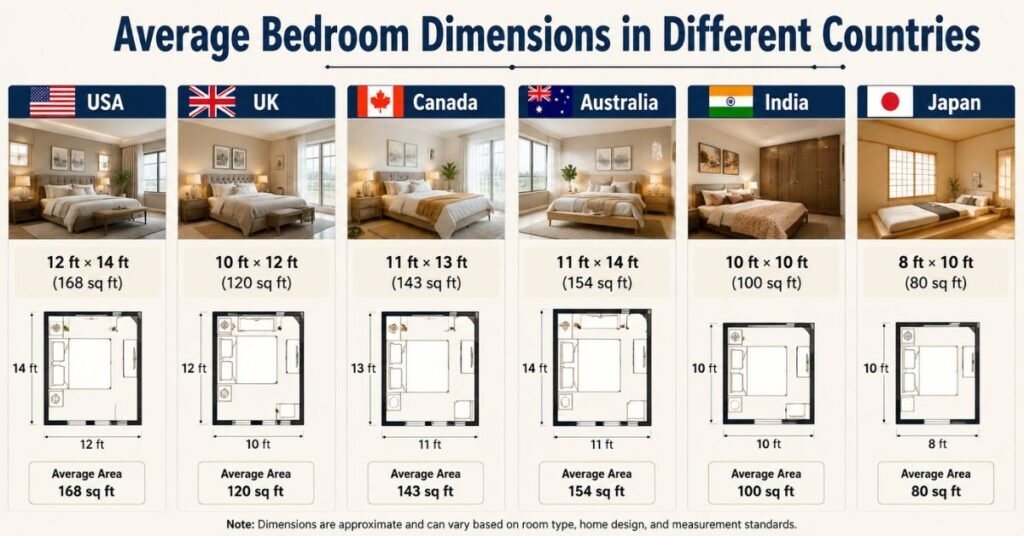
Bedroom sizes vary globally due to land availability, construction costs, and cultural preferences.
United States
American homes typically feature larger bedrooms.
Average sizes often range between:
- 120 to 200 square feet
Master bedrooms can exceed 250 square feet in newer homes.
United Kingdom
British homes generally have more compact bedrooms.
Average measurements often range from:
- 90 to 130 square feet
Space-efficient furniture is common.
Australia
Australian homes frequently include larger bedrooms.
Standard bedrooms often measure:
- 10 ft × 12 ft
- 11 ft × 12 ft
Master suites tend to be especially spacious.
Asia
Bedroom sizes vary significantly throughout Asia.
Urban apartments often feature:
- 80 to 120 square feet
Efficient storage solutions help maximize available space.
How Furniture Affects Bedroom Dimensions
A bedroom may technically be large enough, but poor furniture choices can make it feel cramped.
Bed Sizes and Space Requirements
Approximate bed dimensions:
- Twin Bed: 38 × 75 inches
- Full Bed: 54 × 75 inches
- Queen Bed: 60 × 80 inches
- King Bed: 76 × 80 inches
A queen bed typically works well in a room measuring at least 10 ft × 10 ft.
King beds generally require larger rooms.
Recommended Clearance Space
For comfortable movement, allow:
- 24–36 inches beside the bed
- 30 inches in front of dressers
- Adequate closet access
These clearances improve both comfort and functionality.
Designing Around Average Bedroom Dimensions
Understanding average bedroom dimensions makes decorating easier.
Use Vertical Storage
Tall shelving units maximize storage while preserving floor space.
Examples include:
- Wall-mounted shelves
- Vertical wardrobes
- Over-bed storage
Choose Proper Furniture Scale
Oversized furniture can overwhelm a room.
Instead:
- Match furniture to room size
- Avoid bulky pieces
- Prioritize functionality
Create Visual Space
Simple design tricks help bedrooms feel larger.
Consider:
- Light paint colors
- Large mirrors
- Minimal clutter
- Natural lighting
These adjustments improve the overall appearance without structural changes.
Cleaning Considerations Based on Bedroom Size
Room dimensions also influence cleaning routines.
Smaller bedrooms may accumulate visible clutter faster because every item occupies a larger percentage of the available space.
Larger bedrooms require more vacuuming and dusting but often feel cleaner because furniture can be spaced apart.
For more practical household organization ideas, readers of Clean Home Craft often prefer simple storage systems that reduce both clutter and cleaning time.
Best Cleaning Practices for Any Bedroom
- Vacuum weekly
- Dust surfaces regularly
- Organize storage areas monthly
- Rotate mattresses periodically
- Declutter seasonally
A well-maintained bedroom feels larger regardless of its dimensions.
Common Mistakes When Planning Bedroom Space
Many homeowners underestimate space requirements.
Buying Furniture Before Measuring
This mistake can create serious layout problems.
Always:
- Measure room dimensions.
- Measure furniture.
- Plan pathways.
Ignoring Closet Space
Closets consume valuable square footage.
Factor closet dimensions into your layout planning.
Overcrowding the Room
Too many decorative items reduce usability.
Focus on essentials first.
How to Measure a Bedroom Correctly
Accurate measurements are essential.
Step 1: Measure Length
Use a tape measure along the longest wall.
Step 2: Measure Width
Measure from one side wall to the opposite wall.
Step 3: Calculate Area
Multiply:
Length × Width = Square Footage
Example:
10 ft × 12 ft = 120 square feet
Step 4: Account for Obstacles
Include:
- Closets
- Alcoves
- Built-in furniture
- Window placement
These factors affect usable space.
Conclusion
Understanding average bedroom dimensions helps homeowners create rooms that are comfortable, functional, and visually appealing. From compact guest rooms to spacious master suites, the right dimensions influence furniture placement, storage options, cleaning routines, and overall livability.
Before purchasing furniture or planning renovations, measure carefully and consider how the room will be used daily. Even modest-sized bedrooms can feel spacious when designed thoughtfully.
For more home organization ideas, cleaning guides, and practical household tips, visit CleanHomeCraft.com and explore additional resources designed to make everyday living easier.
A standard bedroom is usually between 100 and 144 square feet, commonly measuring 10 ft × 10 ft or 10 ft × 12 ft.
Building codes vary by location, but many areas require at least 70 square feet with minimum width requirements.
A 10 × 10 room is generally considered a standard-sized bedroom rather than a small one.
A king bed may fit physically, but movement space will be limited. Larger rooms are recommended.
A room measuring at least 10 ft × 10 ft usually accommodates a queen bed comfortably.
Yes. Larger, functional bedrooms often increase buyer appeal and may positively influence property value.

Muhammad Ahad — Passionate writer sharing informative, engaging, and easy-to-read articles across different topics. Focused on delivering valuable content that helps readers learn, explore, and stay inspired every day.