
Introduction
I used to think every bathroom needed a cabinet full of sprays, powders, and fancy scrubbing gels. After years of testing products in my own home and helping relatives tackle stubborn stains, I realized one thing: the best bathroom cleaner is not always the most expensive bottle on the shelf. What matters is how well it cuts soap scum, handles hard water marks, and keeps surfaces fresh without making cleaning feel exhausting.
Bathrooms collect moisture fast. That moisture turns into grime around sinks, tubs, mirrors, and toilet bases. Some cleaners work great on tiles but leave streaks on glass. Others smell strong but barely remove buildup. Finding the right option can save both time and effort.
This guide shares practical advice, product types that actually help, and the methods I personally rely on when a bathroom starts looking dull. Whether you clean daily or once a week, choosing the best bathroom cleaner can completely change your routine.
What Makes a Bathroom Cleaner Truly Effective?
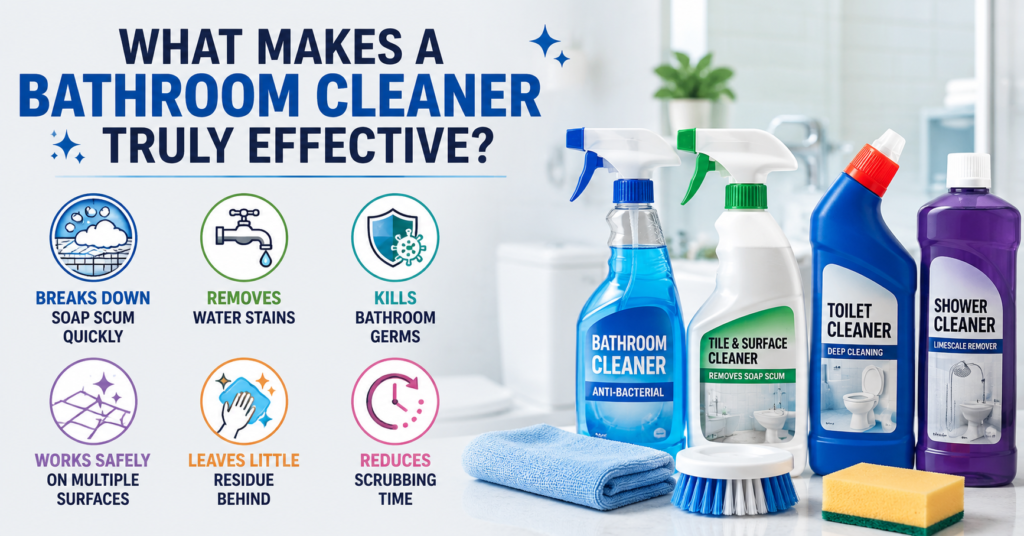
Not every cleaner works the same way. A product that shines chrome fixtures may fail on mildew. Over time, I learned to judge cleaners based on a few important points.
Strong Cleaning Power
A cleaner should break down:
- Soap residue
- Toothpaste splatter
- Hard water stains
- Mold spots
- Toilet discoloration
If you need endless scrubbing after spraying a product, it is probably not worth buying again.
Safe Surface Compatibility
Bathrooms include many surfaces:
- Ceramic tile
- Marble
- Glass
- Stainless steel
- Fiberglass
- Vinyl flooring
The best bathroom cleaner should clean effectively without damaging delicate finishes.
Easy Rinsing
Some products leave a sticky layer behind. That residue attracts dust and makes surfaces look dirty again quickly. A good cleaner wipes away cleanly.
Comfortable Smell
I avoid cleaners with overpowering chemical odors. Fresh scents feel better during long cleaning sessions, especially in small bathrooms with limited ventilation.
Different Types of Bathroom Cleaners
Every bathroom has different cleaning needs. I keep a few categories in mind before choosing products.
| Cleaner Type | Best For | Main Benefit | Possible Drawback |
| Spray Cleaners | Daily maintenance | Fast and convenient | May struggle with heavy buildup |
| Foam Cleaners | Tubs and tiles | Clings to surfaces longer | Sometimes harder to rinse |
| Disinfecting Cleaners | Germ-heavy areas | Kills bacteria effectively | Strong smell in some brands |
| Natural Cleaners | Eco-friendly cleaning | Gentle and safer around kids | Less powerful on deep stains |
| Toilet Bowl Cleaners | Toilet stains | Targets mineral buildup | Limited multi-surface use |
This simple comparison helped me stop wasting money on products that did not fit my cleaning style.
My Personal Approach to Bathroom Cleaning
I stopped deep-cleaning everything in one exhausting day. Instead, I divide the bathroom into smaller zones.
Sink Area
The sink collects toothpaste, soap, and water spots every day. I spray cleaner first and let it sit for two minutes before wiping. That small waiting period makes scrubbing easier.
Shower Walls
Soap scum builds slowly. I use a foam cleaner here because it sticks longer to vertical surfaces.
Toilet Area
For toilets, I prefer a dedicated disinfecting cleaner. I focus carefully around the base and handle because those spots are touched most often.
Mirrors and Fixtures
Microfiber cloths matter more than people think. Even the best bathroom cleaner can leave streaks if the cloth is poor quality.
Ingredients That Actually Help
I started reading labels after noticing some cleaners worked much faster than others.
Citric Acid
It is excellent for removing hard water stains and mineral deposits.
Hydrogen Peroxide
Helpful against mildew and light mold spots.
Baking Soda
Works well for gentle scrubbing without scratching surfaces.
Vinegar
Useful for natural cleaning routines, especially around faucets and shower glass.
Bleach
Very powerful for disinfecting, but I use it carefully because strong fumes can become unpleasant.
Natural vs Chemical Bathroom Cleaners
People often ask whether natural cleaners can truly compete with chemical products. In my experience, both have advantages.
Why Natural Cleaners Work Well
Natural products are useful for:
- Light weekly cleaning
- Homes with children
- Sensitive skin
- Smaller bathrooms with poor ventilation
I often use vinegar-based cleaners for mirrors and faucets.
When Chemical Cleaners Perform Better
Heavy mildew, deep toilet stains, and thick soap buildup usually need stronger ingredients.
The trick is balance. I use gentler cleaners for maintenance and stronger products only when necessary.
Common Bathroom Cleaning Mistakes
I made many of these mistakes myself before improving my routine.
Spraying and Wiping Immediately
Most cleaners need time to loosen grime. Waiting even two minutes improves results.
Using Too Much Product
More cleaner does not always mean more cleaning power. Excess product often creates residue.
Ignoring Ventilation
Bathrooms stay damp after cleaning. Opening windows or using an exhaust fan helps prevent mold growth.
Forgetting Small Areas
People often skip:
- Door handles
- Light switches
- Faucet bases
- Shower corners
These areas collect bacteria and dirt surprisingly fast.
How Often Should You Clean a Bathroom?
Cleaning schedules depend on how many people use the bathroom. In my house, this routine works best.
Daily Tasks
- Wipe sink
- Dry shower glass
- Quick toilet wipe
Weekly Tasks
- Clean toilet thoroughly
- Scrub shower walls
- Mop floor
- Clean mirrors
Monthly Tasks
- Deep-clean grout
- Wash shower curtain
- Remove mineral buildup
- Check hidden mold spots
Consistent small cleaning sessions are easier than waiting for the bathroom to become overwhelming.
Choosing the Best Cleaner for Specific Problems
Different messes need different solutions.
Best Bathroom Cleaner for Hard Water Stains
Look for products containing citric acid or vinegar-based formulas. These dissolve mineral deposits more effectively.
Best Bathroom Cleaner for Mold and Mildew
Hydrogen peroxide or bleach-based cleaners work best in damp corners and grout lines.
Best Bathroom Cleaner for Daily Maintenance
A gentle multi-surface spray keeps surfaces fresh without damaging finishes.
Best Bathroom Cleaner for Families
I recommend products with lighter scents and fewer harsh fumes, especially in homes with kids or pets.
Tools That Improve Cleaning Results
A cleaner alone is not enough. Some simple tools save a huge amount of effort.
Microfiber Cloths
They trap dirt better and reduce streaks.
Soft Scrub Brush
Useful for grout without scratching tile.
Extendable Cleaning Wand
Makes shower wall cleaning less tiring.
Rubber Gloves
They protect skin from strong ingredients and hot water.
I noticed my bathroom stayed cleaner longer once I upgraded these small tools.
Signs You Are Using the Wrong Cleaner
Some warning signs are easy to spot.
- Surfaces look dull after cleaning
- Strong residue remains
- You need heavy scrubbing every time
- Grout discoloration keeps returning
- Metal fixtures lose shine
The best bathroom cleaner should make cleaning easier, not harder.
Budget-Friendly Bathroom Cleaning Tips
Keeping a bathroom clean does not require expensive products.
Buy Multi-Surface Cleaners
One versatile product often works better than buying several specialized sprays.
Use Concentrated Formulas
Concentrates last longer and reduce plastic waste.
Maintain Surfaces Regularly
Light cleaning prevents expensive deep-cleaning situations later.
Keep Cleaning Supplies Nearby
When products are easy to reach, quick touch-ups become more likely.
Conclusion
Finding the best bathroom cleaner becomes much easier once you understand your bathroom’s real problems. Some homes struggle with hard water, while others battle soap scum or mildew. The right cleaner should match those needs without turning every cleaning session into hard labor.
Over the years, I learned that consistency matters more than expensive products. A simple routine, the right tools, and a reliable cleaner can keep bathrooms fresh with far less effort. Small habits like wiping moisture quickly and cleaning weekly make a huge difference over time.
If you are tired of wasting money on products that barely work, start by choosing a cleaner based on your bathroom surfaces and biggest cleaning challenges. A smart routine will always outperform random scrubbing.
Foam cleaners and products with citric acid usually remove soap scum effectively because they cling to surfaces longer.
Some natural cleaners help reduce dirt and grime, but they may not disinfect as strongly as chemical disinfectants.
Reduce moisture by improving ventilation, drying wet surfaces, and cleaning damp areas regularly.
Bleach works well for disinfecting, but it should be used carefully with proper ventilation and never mixed with other chemicals.
Toilets should receive a quick wipe daily and a deeper cleaning at least once a week.
Microfiber cloths usually provide the best results because they absorb dirt and reduce streaks.

Muhammad Ahad — Passionate writer sharing informative, engaging, and easy-to-read articles across different topics. Focused on delivering valuable content that helps readers learn, explore, and stay inspired every day.
1 thought on “Best Bathroom Cleaner for a Spotless Bathroom”