

Introduction
I learned the hard way that dirty bathroom tiles never look clean again with a quick wipe. Soap scum hides in corners, hard water stains stick to shiny surfaces, and grout slowly turns gray without anyone noticing. After trying dozens of sprays and homemade mixes over the years, I finally built a simple routine that keeps bathroom tiles looking fresh without wasting hours scrubbing.
The good news is that how to clean bathroom tiles does not need expensive products or harsh chemicals. Most stains come off with the right method, proper timing, and a little patience. Some tile surfaces need gentle care, while others can handle deeper scrubbing. Once you know the difference, the whole process becomes easier.
In my own home, I noticed that cleaning tiles weekly prevents the heavy buildup that usually turns a 15-minute task into a half-day project. A few simple habits made the biggest difference.
Why Bathroom Tiles Get Dirty So Quickly
Bathroom tiles deal with moisture almost every day. Steam, shampoo residue, body oils, soap splashes, and hard water minerals slowly build layers on the surface.
The most common problems include:
- Soap scum
- Mold spots
- Hard water stains
- Yellow grout lines
- Mildew smell
- Dull tile surfaces
Tiles near showers usually collect the most grime because water sits there longer. Floor tiles also trap dust and hair inside grout lines.
Supplies I Usually Keep Ready
Before starting, I gather everything in one place so I do not keep walking back and forth.
Basic Cleaning Supplies
- Warm water
- White vinegar
- Baking soda
- Dish soap
- Spray bottle
- Soft microfiber cloth
- Old toothbrush
- Soft scrub brush
- Mop
- Rubber gloves
Optional Deep Cleaning Products
Some stubborn stains need stronger solutions.
- Hydrogen peroxide
- Tile-safe cleaner
- Steam cleaner
- Grout cleaner
I avoid steel wool because it scratches glossy tiles very easily.
Quick Comparison of Tile Cleaning Methods
| Cleaning Method | Best For | Time Needed | Safe for Most Tiles |
| Vinegar and water | Daily cleaning | 10 minutes | Yes (except natural stone) |
| Baking soda paste | Grout stains | 15 minutes | Yes |
| Steam cleaning | Deep sanitizing | 20 minutes | Yes |
| Dish soap solution | Grease and soap scum | 10 minutes | Yes |
| Hydrogen peroxide | Mold spots | 15 minutes | Usually |
| Commercial tile cleaner | Heavy buildup | 20 minutes | Depends on product |
Preparing the Bathroom Before Cleaning
One mistake I used to make was spraying cleaner everywhere without preparation. That only spread dirt around.
Now I always do these small steps first:
- Remove bath mats
- Open windows or turn on ventilation
- Sweep loose dirt and hair
- Rinse tiles lightly with warm water
Warm water softens grime and helps cleaners work faster.
How to Clean Bathroom Tiles With Vinegar
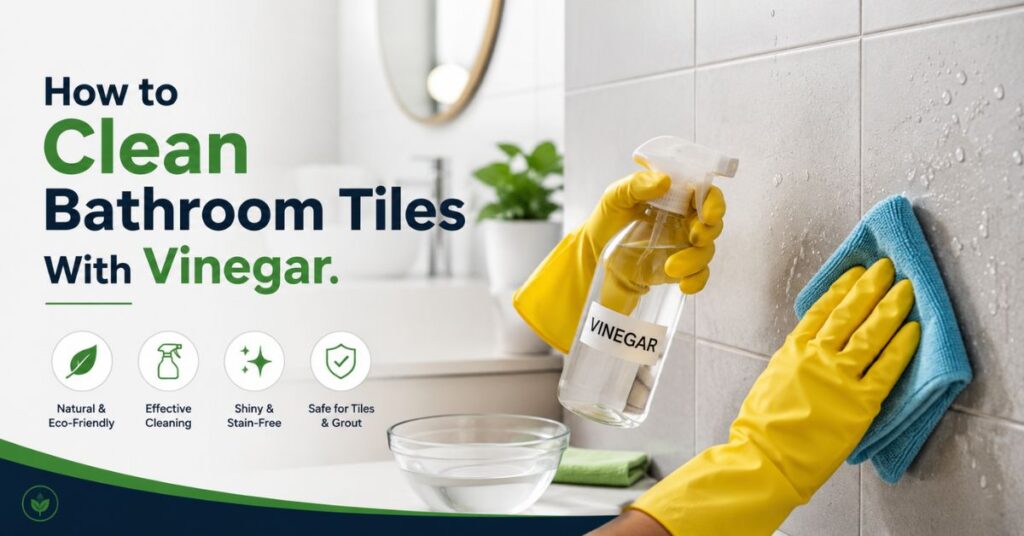
This is still my favorite method for weekly cleaning because it is affordable and simple.
Vinegar Cleaning Mix
I mix:
- Equal parts white vinegar and warm water
- A few drops of dish soap
My next step is to pour it into a spray bottle.
How I Use It
- Spray tiles generously
- Leave for 5 minutes
- Scrub gently with a brush
- Rinse with warm water
- Dry with microfiber cloth
The drying step matters more than most people think. Water spots disappear when tiles are dried properly.
Important Warning
I never use vinegar on:
- Marble
- Travertine
- Natural stone tiles
Acid can damage those surfaces permanently.
Removing Soap Scum From Shower Tiles
Soap scum becomes thick and cloudy over time. Sometimes normal wiping barely changes it.
When buildup gets stubborn, I use baking soda paste.
Baking Soda Paste Method
Mix:
- 3 tablespoons baking soda
- Small amount of water
The paste should feel thick, not runny.
Spread it on dirty areas and leave it for 10 minutes. After that, scrub gently using circular motions.
This works especially well around shower corners and faucets.
Deep Cleaning Grout Lines
Grout absorbs dirt faster than tiles themselves. Light-colored grout becomes dingy quickly.
My Go-To Grout Cleaning Routine
I sprinkle baking soda directly onto grout lines first. Then I spray hydrogen peroxide over it.
The bubbling reaction helps loosen dark stains naturally.
After waiting 10 minutes:
- Scrub using an old toothbrush
- Wipe with damp cloth
- Rinse thoroughly
For very old grout stains, I sometimes repeat the process twice.
How to Clean Bathroom Tiles Without Harsh Chemicals
Some commercial sprays smell overpowering and irritate sensitive skin. I started using gentler methods years ago because strong cleaners gave me headaches in small bathrooms.
Natural Cleaning Combination
This mixture works surprisingly well:
- Warm water
- Mild dish soap
- Lemon juice
- Baking soda
It freshens the room while removing light grime naturally.
Why Natural Cleaning Helps
Natural methods:
- Reduce chemical fumes
- Protect glossy finishes
- Lower cleaning costs
- Feel safer around pets and children
For routine maintenance, gentle cleaning usually works better long term.
Handling Mold and Mildew Safely
Mold grows quickly in damp corners, especially near showers and ceilings.
I once ignored a tiny black spot behind the shower curtain for weeks. It spread faster than expected.
Simple Mold Removal Steps
- Spray hydrogen peroxide directly on affected area
- Leave for 10 minutes
- Scrub gently
- Dry completely
Ventilation matters just as much as cleaning.
Now I always:
- Keep the exhaust fan running
- Leave shower door slightly open
- Dry excess moisture after showers
Those habits reduced mold growth dramatically.
Cleaning Floor Tiles Properly
Bathroom floor tiles collect more hidden dirt than wall tiles.
My Usual Floor Cleaning Routine
First, I vacuum or sweep thoroughly. Tiny dust particles can scratch tile surfaces during mopping.
Then I mop using:
- Warm water
- Small amount of dish soap
Because grout weakens over time with excess water, I avoid soaking the floor.
Areas People Often Miss
I pay extra attention to:
- Around toilet base
- Behind bathroom door
- Corners near shower
- Tile edges beside cabinets
Those areas collect hidden grime surprisingly fast.
Steam Cleaning Bathroom Tiles
A steam cleaner changed my deep-cleaning routine completely.
It loosens grime without heavy scrubbing and works especially well for textured tiles.
Benefits of Steam Cleaning
- Kills bacteria naturally
- Removes stubborn buildup
- Cleans grout deeply
- Uses very little chemical cleaner
I usually steam clean every few months instead of every week.
Mistakes That Can Damage Bathroom Tiles
I made several cleaning mistakes before learning what actually protects tile surfaces.
Common Mistakes
Using Abrasive Brushes
Hard brushes scratch glossy finishes.
Leaving Cleaner Too Long
Some products leave dull marks if not rinsed properly.
Ignoring Grout Maintenance
A dirty grout line can make even a clean tile look old.
Mixing Chemicals
Bleach mixed with vinegar creates dangerous fumes.
I always keep cleaning solutions simple and separate.
Easy Weekly Maintenance Habits
The easiest way to avoid heavy scrubbing is regular upkeep.
Habits That Help Most
- Wipe shower walls after use
- Keep bathroom ventilated
- Clean spills quickly
- Mop weekly
- Dry tiles after cleaning
Small habits save huge amounts of effort later.
Best Homemade Tile Cleaner Recipe
Over time, this became my most reliable homemade cleaner.
Ingredients
- 2 cups warm water
- 1 cup white vinegar
- 1 teaspoon dish soap
Instructions
- Mix inside spray bottle
- Shake gently
- Spray directly onto tiles
- Leave for several minutes
- Wipe clean
It works well for everyday dirt and light soap residue.
When Professional Cleaning May Be Necessary
Sometimes home cleaning methods are not enough.
I usually consider professional help when:
- Grout stays black permanently
- Mold keeps returning
- Tiles smell musty
- Hard water stains become thick
- Tile surfaces lose shine completely
Professionals often use equipment that reaches deeper layers safely.
Conclusion
Learning how to clean bathroom tiles became much easier once I stopped relying on aggressive scrubbing and started focusing on consistent maintenance. A simple routine using warm water, baking soda, vinegar, and proper drying keeps most bathrooms looking fresh without expensive products.
The biggest difference comes from cleaning small messes before they become stubborn stains. Weekly upkeep saves time, protects grout, and keeps tiles brighter for much longer.
If your bathroom tiles have been looking dull lately, try one method from this guide this week and build from there. Even a quick 15-minute cleaning session can completely change how the entire bathroom feels
Yes, vinegar can damage natural stone tiles like marble and travertine. It is usually safe for ceramic and porcelain tiles.
Light cleaning once a week keeps buildup under control. Deep cleaning every month helps maintain grout and shine.
Baking soda combined with hydrogen peroxide works very well for yellow grout stains.
It is generally safe to steam clean ceramic and porcelain tiles. Always check manufacturer recommendations first.
Soap residue or hard water minerals may still be sitting on the surface. Drying tiles properly after rinsing also helps restore shine.
Bleach can disinfect tiles, but frequent use may weaken grout and create strong fumes in small bathrooms.

Muhammad Ahad — Passionate writer sharing informative, engaging, and easy-to-read articles across different topics. Focused on delivering valuable content that helps readers learn, explore, and stay inspired every day.
1 thought on “How to Clean Bathroom Tiles Naturally and Effectively”