
Introduction
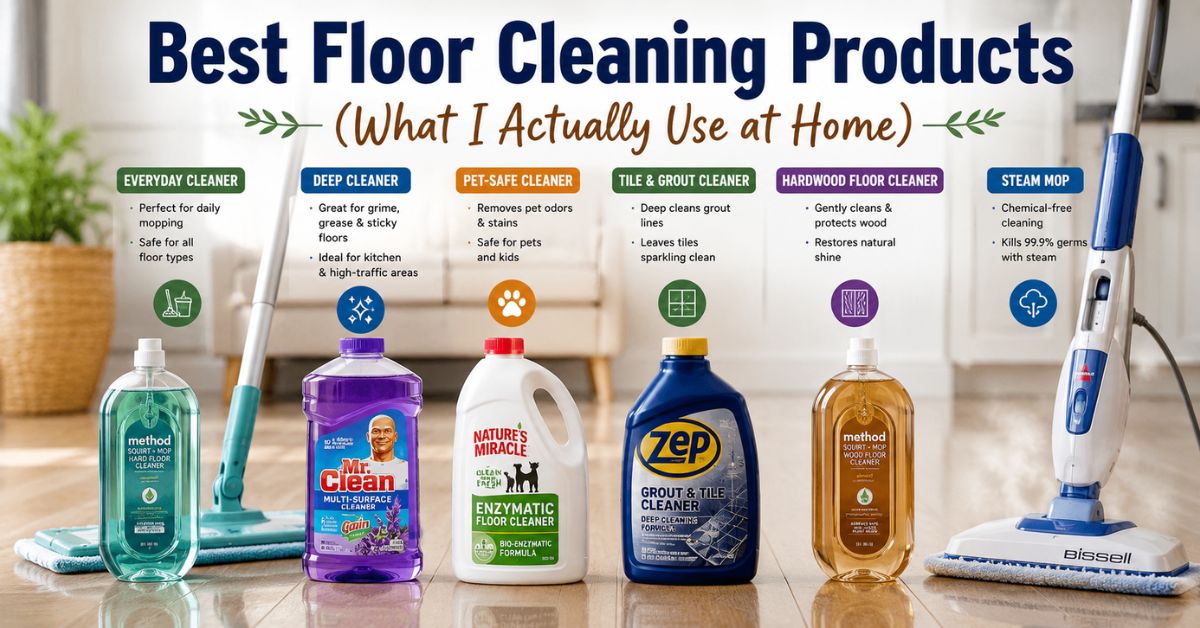
I used to think any mop and any bottle labeled “floor cleaner” would do the job. Then I moved into a home with mixed flooring tile in the kitchen, laminate in the hallway, and hardwood in the living room. Within a month, I had streaks, dull patches, and sticky corners that seemed impossible to fix. That’s when I started testing different cleaners until I found the best floor cleaning products that actually leave floors clean, not just “wet.”
Over the years, I’ve tried cheap supermarket solutions, DIY mixes, and professional-style cleaners. Some were great. Some left a weird film that attracted dirt faster. In this guide, I’m sharing the products and cleaning methods that work in real homes, with real messes.
What Makes a Floor Cleaner “Good” (Not Just Popular)
A product can be famous online and still perform badly in your house. I learned that the hard way after buying a trendy cleaner that smelled amazing but left my kitchen tiles slippery for hours.
Here’s what I personally look for when choosing the best floor cleaning products:
- Cleans without leaving a sticky residue
- Doesn’t dull shine on wood or laminate
- Safe for kids and pets (or at least low-fume)
- Works in hard water areas
- Removes grease around the stove zone
- Doesn’t require endless rinsing
- Smells fresh but not overpowering
If a cleaner fails even one of these, I don’t repurchase it.
Know Your Floor Type First (This Changes Everything)
The biggest mistake people make is using one cleaner for everything. Some floors can handle stronger formulas. Others get damaged quickly.
Hardwood Floors
Hardwood is beautiful but sensitive. Too much water or harsh chemicals can ruin the finish. Cleaning hardwood floors best with pH-neutral, fast-drying products is usually recommended.
Laminate Floors
Laminate hates excess moisture. If water seeps into seams, the boards swell.Fast-evaporating cleaners are needed.
Tile Floors
Tile is tougher, but grout is not. floors collect grease and dust in grout lines. A stronger cleaner is fine here, but it should not bleach the grout constantly.
Vinyl Floors
Vinyl is easy to clean but can turn cloudy if you use waxy products. Stick to gentle cleaners and avoid heavy oils.
Natural Stone (Marble, Granite, Travertine)
Stone is picky. Acidic cleaners (like vinegar) can etch the surface. Stone requires special formulas.
Best Floor Cleaning Products for Everyday Cleaning
For daily or regular cleaning, I prefer mild but effective products. These keep floors fresh without slowly damaging them.
Neutral Floor Cleaner (My #1 Choice for Most Homes)
A pH-neutral cleaner is the safest option for hardwood, laminate, vinyl, and even tile. It cleans without stripping finishes.
When I use one, my floors feel clean not slippery, not sticky.
Best for:
- hardwood
- laminate
- vinyl
- sealed stone
2. Concentrated Multi-Surface Cleaner
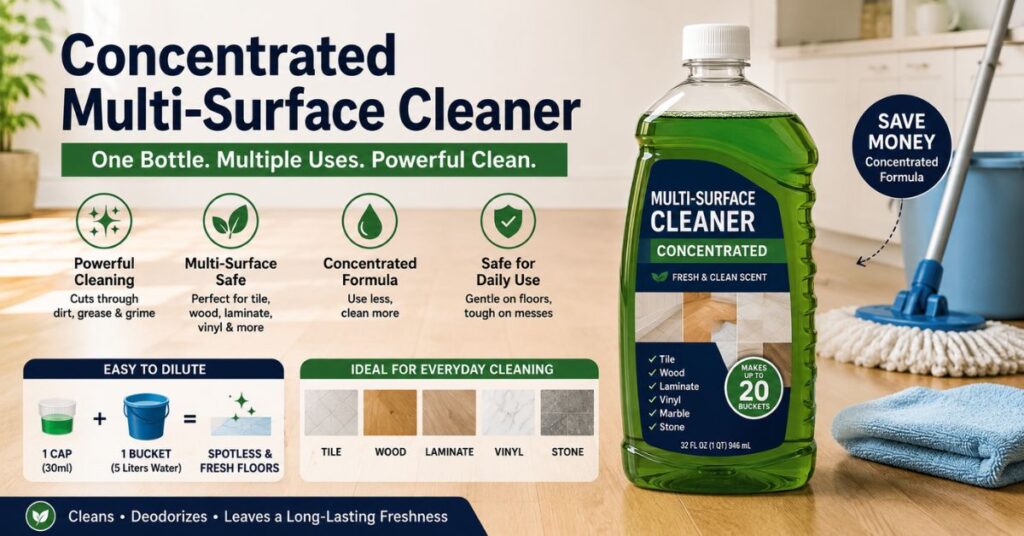
Concentrates are underrated. They save money and storage space. You dilute them, and they last forever.
However, you must measure properly. Too much concentrate causes residue, especially on laminate.
Best for:
- tile
- vinyl
- sealed wood
3. Mild Dish Soap (Yes, It Works If You Do It Right)
This is my “emergency cleaner” when I run out of products. A few drops of dish soap in warm water can clean greasy floors surprisingly well.
But don’t overdo it. Dish soap can leave a film if you use too much.
Best for:
- tile floors
- vinyl floors
- kitchen spills
Best Floor Cleaning Products for Deep Cleaning and Heavy Dirt
Sometimes you don’t need a gentle cleaner. You need something that attacks grime, especially in kitchens and entryways.
1. Degreasing Floor Cleaner (Kitchen Floor Hero)
If you cook often, your floor collects oil even if you can’t see it. A degreaser is one of the best floor cleaning products for kitchen tile.
I use it once every 2–3 weeks, especially near the stove and sink area.
Signs you need a degreaser:
- floor feels sticky after mopping
- footprints show up easily
- grout looks darker than usual
2. Enzyme Cleaner (For Pets and Funky Smells)
If you have pets, enzyme cleaners are a game changer. Regular cleaners remove surface dirt, but enzyme formulas break down odor-causing bacteria.
This is the only thing that truly removed the “wet dog smell” from my hallway after rainy season.
Best for:
- pet accidents
- urine smell
- entryway dirt
3. Steam Mop (Not a Liquid Product, But Worth Mentioning)
I avoided steam mops for years because I thought they were gimmicky. Then I tried one on tile floors. The results were honestly impressive.
Steam loosens dirt without chemicals, which is why it belongs in any list of the best floor cleaning products (even though it’s a tool).
Best for:
- tile
- grout
- sealed vinyl
Not ideal for:
- unsealed hardwood
- cheap laminate
My Personal Floor Cleaning Kit (What I Keep at Home Always)
If I had to build a simple cleaning kit for any home, this is what I’d keep:
- pH-neutral floor cleaner
- degreasing cleaner (for kitchens)
- enzyme cleaner (for pets and smells)
- microfiber mop pads (2–3)
- soft scrub brush for grout
- spray bottle for quick spot cleaning
This setup covers almost every floor situation without needing 20 different bottles.
The Mistake That Ruined My Floor Shine (Don’t Repeat It)
One winter, I used a “shine booster” product on my vinyl flooring. It looked great for two days. Then dust started sticking like glue. After a week, my floor looked worse than before.
That’s when I learned:
Shine products often leave a coating. Coatings trap dirt.
If you want clean floors, skip heavy wax-like formulas unless you know your floor needs them. The best floor cleaning products clean without building layers.
Comparison Table: Best Floor Cleaning Products by Floor Type
| Floor Type | Best Product Type | What It Solves | What to Avoid |
| Hardwood | pH-neutral wood floor cleaner | dullness, light dirt | vinegar, steam, soaking water |
| Laminate | fast-drying multi-surface cleaner | streaks, footprints | heavy soap, excess water |
| Tile | degreasing floor cleaner | grease, grout dirt | waxy cleaners |
| Vinyl | gentle floor cleaner or concentrate | cloudy buildup | polish coatings |
| Natural Stone | stone-safe neutral cleaner | stains, safe shine | vinegar, bleach |
| Pet Areas | enzyme cleaner | odor and bacteria | scented-only sprays |
How I Mop Floors Without Streaks (My Simple Trick)
I used to mop and wonder why my floors looked worse. The issue wasn’t the cleaner it was my method.
Here’s my streak-free method:
Step-by-Step Mop Routine
- Sweep or vacuum first (always)
- Use warm water, not hot water
- Dilute cleaner correctly
- Mop in small sections
- Rinse mop pad often
- Finish by drying high-traffic spots with a microfiber cloth
This works with almost all the best floor cleaning products and keeps the floor looking even.
Best Floor Cleaning Products for Homes With Kids
Kids drop everything. Juice, cereal milk, ketchup, crayons you name it. For kid homes, I avoid strong fumes.
What works best:
- mild pH-neutral cleaner
- fragrance-free concentrate
- microfiber mop system
I also keep a spray bottle of diluted cleaner ready for quick wipe-ups. That saves time and stops sticky messes from hardening.
Best Floor Cleaning Products for Homes With Pets
Pets bring in dirt and leave smells that normal cleaners don’t fix.
For pet homes, I always recommend:
- enzyme floor cleaner
- disinfecting cleaner (used occasionally)
- steam mop for tile areas
If you have pets, enzyme cleaner is one of the best floor cleaning products you can buy because it doesn’t just mask odor it breaks it down.
Natural vs Chemical Cleaners: What I Prefer (And Why)
I’m not against chemical cleaners, but I don’t use harsh ones daily.
When I Use Natural Cleaning
- quick daily mopping
- bedrooms
- living room floors
Examples:
- diluted pH-neutral concentrate
- small amount of dish soap
When I Use Stronger Cleaners
- kitchen tile deep cleaning
- pet accident cleanup
- bathroom floors
I treat strong cleaners like a “deep clean tool,” not an everyday habit. The best floor cleaning products are the ones you use wisely.
Conclusion
After years of trial and error, I’ve learned that the best floor cleaning products aren’t always the most expensive or the most popular. The real winners are pH-neutral cleaners for daily use, degreasers for kitchen deep cleaning, and enzyme cleaners for pet homes. When you match the right product to the right floor type, your floors stay clean longer and don’t lose their finish.
If you want better-looking floors with less effort, start by choosing one solid cleaner for everyday mopping and one strong product for deep cleaning days. And if you want more practical home cleaning tips like this, visit CleanHomeCraft.com for more real-life cleaning routines.
The best option is a pH-neutral hardwood floor cleaner designed to dry quickly. Avoid vinegar, bleach, or soaking the floor with water.
Vinegar works on some tile floors, but it can damage hardwood and natural stone. I personally avoid it unless I know the surface is safe.
A degreasing floor cleaner is best for kitchen floors. It cuts through oily buildup that normal soap leaves behind.
Some do, especially heavy degreasers. Most pH-neutral cleaners don’t require rinsing if diluted correctly. Always check the label.
Sticky floors usually mean too much product was used or the cleaner left residue. Try using less cleaner and rinsing your mop pad more often.

Muhammad Ahad — Passionate writer sharing informative, engaging, and easy-to-read articles across different topics. Focused on delivering valuable content that helps readers learn, explore, and stay inspired every day.
1 thought on “Best Floor Cleaning Products (What I Actually Use at Home)”