

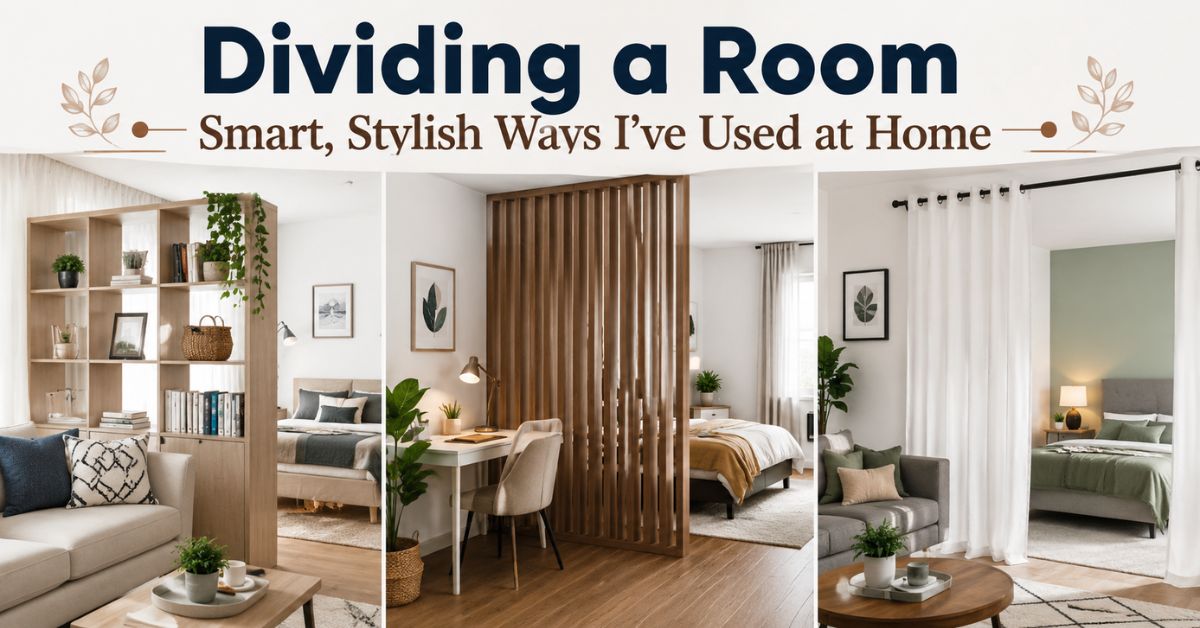
Introduction
The first time I tried dividing a room, I thought it would be expensive and complicated. I imagined I’d need construction work, drywall dust, and a huge budget. But after living in small apartments and working in homes where space is always a problem, I learned something surprising: you can create “new rooms” without actually building anything.
In real life, people divide rooms for practical reasons. Maybe you want a home office corner, a private sleeping space, or a play area for kids. Sometimes it’s about noise control. Other times it’s about making a messy storage corner disappear when guests come over.
In this guide, I’m sharing real methods I’ve used myself some cheap, some stylish, and some that work like magic in tiny spaces.
Why Dividing a Room Can Completely Change Your Home
When you do dividing a room the right way, the space feels more organized instantly. It also makes cleaning easier because each section has a purpose.
Here’s what I’ve personally noticed after dividing rooms in different homes:
- Less clutter spreads around the house
- Furniture looks more “intentional”
- Kids stop mixing toys with living room items
- The room feels bigger, not smaller
- It creates privacy without major renovation
The secret is choosing the right divider type for your room size and lifestyle.
Dividing a Room Without Construction (My Favorite No-Dust Options)
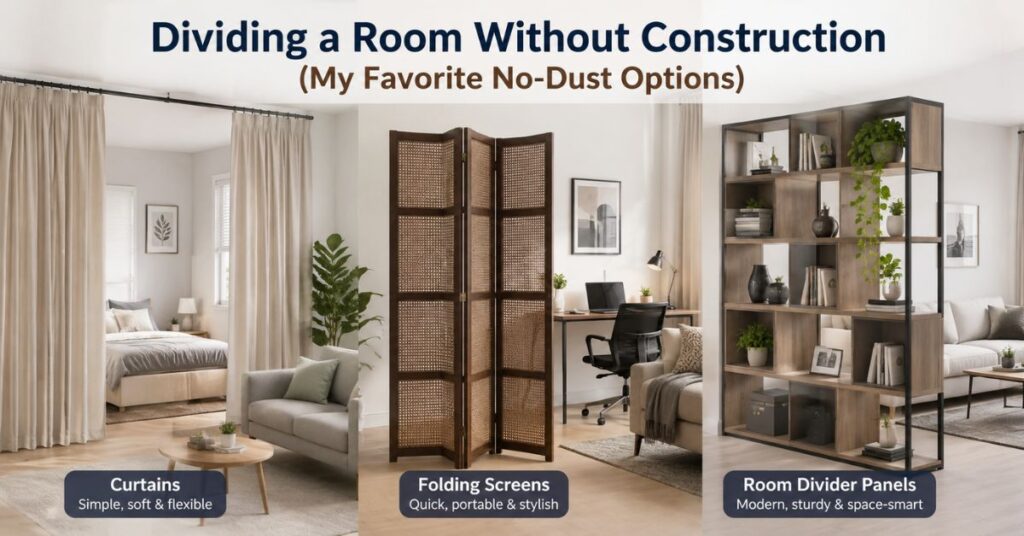
Not everyone wants permanent walls. Honestly, I prefer flexible solutions because they’re easy to move and clean.
Curtains: The Easiest Divider I’ve Ever Installed
Curtains are my go-to choice because they’re affordable and look soft and cozy.
Best for:
- Studio apartments
- Shared bedrooms
- Separating laundry/storage areas
My tip:
Use ceiling-mounted curtain tracks instead of rods. It looks cleaner and feels like a real wall.
Cleaning advantage:
Curtains collect dust quickly, so I wash them every 2–3 months or vacuum them weekly using a brush attachment.
Folding Screens: Instant Privacy in 2 Minutes
Folding screens are great when you want something fast and stylish.
Best for:
- Creating a private work corner
- Blocking a bed area
- Hiding clutter before guests arrive
The only downside is they can fall if bumped. If you have kids or pets, go for heavier wood screens.
Room Divider Panels: A More Modern Look
Divider panels are usually taller and more stable than folding screens. Some come with patterns that let light pass through, which keeps the room feeling open.
I’ve seen these work beautifully in modern homes where people want a clean, minimal vibe.
Dividing a Room With Furniture (The Most Natural Method)
If you want dividing a room to feel “built-in” without spending money, furniture placement is your best friend.
Use a Sofa as a Divider
This is one of the most common tricks, but it works because it’s simple.
Place the sofa with its back facing the “new zone” you want to separate.
Example:
- Sofa divides living room and dining area
- Sofa separates TV zone from reading zone
Pro tip from my own home:
Add a slim console table behind the sofa. It gives storage space and makes the division look professional.
Bookshelves as Dividers (My Favorite for Storage)
A bookshelf divider is perfect if you want function plus separation.
Best shelf types:
- Open back shelves (light passes through)
- Cube storage shelves (great for baskets)
I love cube shelves because you can hide clutter inside baskets and instantly make the room look cleaner.
Dining Table Placement Trick
Sometimes the dining table can act as a divider between kitchen and living space. It’s not a physical wall, but it creates a boundary naturally.
Add a rug under the dining table and suddenly the room looks “sectioned” in a clean way.
Dividing a Room for a Home Office Setup
A lot of people struggle with working from home because the space feels mixed up. Your brain doesn’t know if it’s “work mode” or “relax mode.”
My Practical Home Office Divider Setup
If I’m creating a home office corner, I usually do this:
- Put a desk facing a wall or window
- Place a bookshelf or screen behind the chair
- Add a small rug under the desk area
- Use a desk lamp with warm light
This setup makes the work zone feel separate even if the room is shared.
Noise Control Tip (Works Better Than You’d Think)
If noise is an issue, use:
- Thick curtains
- Fabric divider panels
- A tall bookshelf with baskets
Fabric absorbs sound better than wood or glass, so it’s surprisingly effective.
Dividing a Room for Kids (Without Making a Messy Look)
Kids zones can get chaotic fast. I’ve cleaned enough homes to know this is one of the biggest struggles.
The “Toy Zone” Divider Method I Recommend
To create a kid zone, I usually use:
- A cube shelf as a wall
- Storage bins labeled by category
- A washable rug
- A small table for crafts
This keeps toys from spreading across the entire room.
Extra cleaning tip:
Always choose storage bins with lids. Open baskets collect dust and look messy quickly.
Dividing a Room With Sliding Doors or Partitions (More Permanent Style)
If you own your home or plan to stay long-term, sliding doors can make your room feel like it has an extra room built in.
Sliding Glass Doors
Glass sliding doors are stylish and allow light through.
Best for:
- Home offices
- Modern living rooms
- Separating dining spaces
Downside? Fingerprints. If you have kids, expect daily wiping.
Wooden Sliding Doors
Wood doors give privacy and warmth. They also hide clutter completely, which is great for busy families.
Dividing a Room Using Rugs and Lighting (The Hidden Trick)
Sometimes you don’t need a physical divider at all.
The use of rugs and lighting in open rooms has been a common strategy for me to create “zones.”
Rug Zoning Method
Use different rugs for different areas:
- One rug under sofa area
- Another rug under dining table
- Small rug under desk
Even if the room is open, the brain sees separate zones.
Lighting Zoning Method
Lighting is powerful.
Try:
- Floor lamp for reading corner
- Pendant light above dining area
- Desk lamp for work zone
This makes the space feel professionally designed.
Best Materials to Use When Dividing a Room (Cleaning Matters Too)
Since my niche is home care, I always think about cleaning.
Here’s what I’ve learned from experience:
- Wood dividers: easy to wipe, low maintenance
- Fabric curtains: cozy but collect dust
- Glass partitions: modern but show fingerprints
- Metal frames: durable, easy to clean
- Plastic panels: cheap but can look less premium
If you want a divider that stays clean easily, go with sealed wood or metal.
Table: Best Options for Dividing a Room (Comparison Guide)
| Divider Type | Cost Level | Best For | Cleaning Effort | Privacy Level |
| Curtains | Low | Studio apartments, bedrooms | Medium (washing needed) | High |
| Folding Screen | Medium | Temporary separation | Low | Medium |
| Open Bookshelf | Medium | Storage + divider | Medium | Medium |
| Cube Storage Shelf | Medium | Kids zones, clutter control | Low | Medium |
| Sliding Glass Door | High | Office separation | High (fingerprints) | Medium |
| Wooden Partition Wall | High | Long-term home design | Low | High |
| Rugs + Lighting | Low | Visual zoning | Low | Low |
Mistakes People Make When Dividing a Room (I’ve Seen This Too Often)
If you’re planning dividing a room, avoid these mistakes:
Blocking Natural Light
The biggest mistake is putting a solid divider directly in front of a window. The room starts feeling dark and smaller.
Instead, use:
- open shelves
- sheer curtains
- slatted wood panels
Using a Divider That’s Too Short
If the divider is too low, it won’t feel like separation. It just looks like random furniture placement.
Ignoring Cleaning Access
I’ve seen people place dividers so tightly that they can’t vacuum behind them. Dust builds up fast.
Always leave enough space for:
- vacuum hose
- mop movement
- airflow
Making the Room Feel Cramped
If your room is small, keep the divider lightweight. Heavy dark furniture can make it feel like a storage unit.
Dividing a Room in Small Apartments (Space-Saving Tricks)
Small apartments need smarter solutions.
Here are methods I’ve used personally:
- Curtain dividers for sleeping space
- Cube shelf divider for storage + privacy
- Foldable screen that can be moved anytime
- Wall-mounted desk + divider behind it
- Mirrors to keep the room feeling open
My personal trick:
Use a tall mirror near the divider. It reflects light and stops the room from feeling boxed in.
Conclusion
If you’ve been thinking about dividing a room, don’t overthink it. Building a wall or spending a lot of money is not necessary.In most homes, the smartest approach is using curtains, shelving, screens, or furniture placement to create clear zones.
From my own experience, the best results come when you focus on two things: keeping the space bright and making sure the divider is easy to clean around. Once you do that, your home instantly feels more organized, calmer, and easier to manage.
If you want a quick win, start with a rug and a bookshelf divider this weekend. Your room will feel brand new with almost no effort.
The cheapest method is using curtains or a folding screen. Curtains are especially budget-friendly and look soft and stylish.
Not always. If you use open shelving, light colors, and proper lighting, the room can actually feel bigger and more organized.
Curtains, folding screens, and bookshelves are best because they don’t require drilling holes in walls (or only minimal drilling).
Yes. Use open shelves, slatted panels, glass partitions, or sheer curtains. These allow light to pass through.
Use cube storage shelves or curtains to create separate zones. Add rugs and separate toy bins so each child has their own area.
A tall bookshelf or a sliding partition works best. It creates privacy and reduces distractions while still keeping the room stylish.

Muhammad Ahad — Passionate writer sharing informative, engaging, and easy-to-read articles across different topics. Focused on delivering valuable content that helps readers learn, explore, and stay inspired every day.
1 thought on “Dividing a Room (Smart, Stylish Ways I’ve Used at Home)”