

Introduction
The first time I cleaned a natural stone shower, I made the classic mistake: I used a strong bathroom spray that worked great on ceramic tiles. Within days, the marble looked dull and slightly “cloudy,” and the grout lines started looking tired. That was my lesson natural stone is beautiful, but it’s also sensitive.
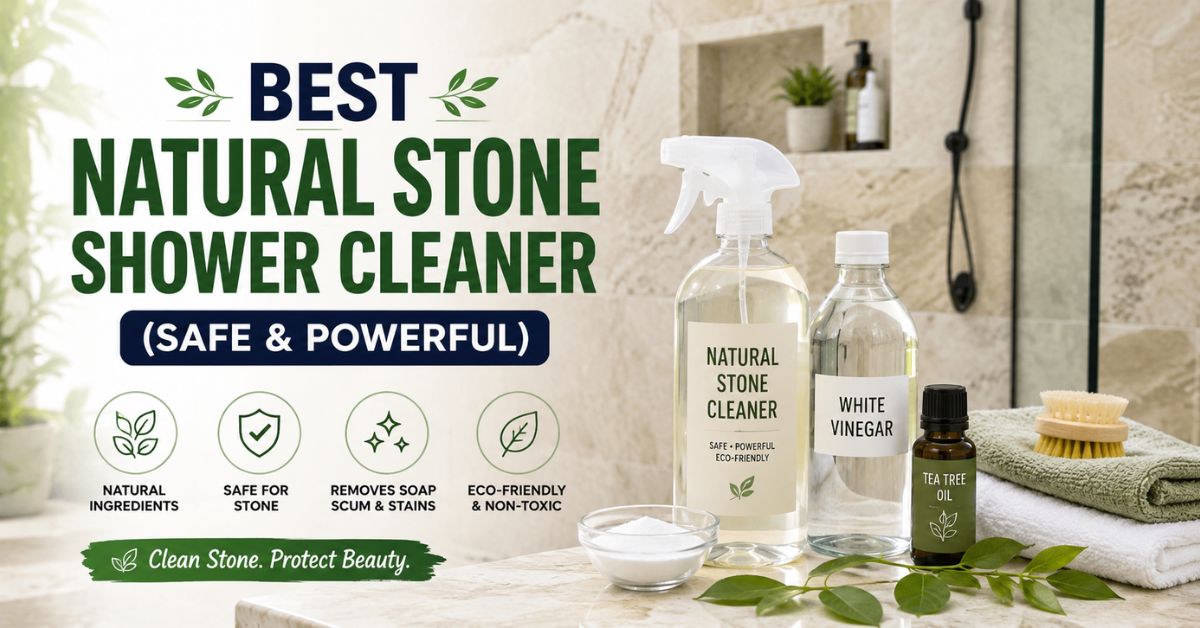
Since then, I’ve tested plenty of methods, and I now stick to a simple routine that keeps stone shiny without damaging the surface. If you’re searching for a natural stone shower cleaner that actually works and doesn’t ruin your marble, travertine, limestone, or slate, this is the exact method I use at home and recommend to others.
The goal isn’t just “clean.” The goal is clean without etching, discoloration, or stripping the sealant.
What Makes Natural Stone So Easy to Damage?
Natural stone isn’t like regular bathroom tile. It’s porous, meaning it can absorb moisture, soap residue, and even cleaning chemicals.
Here’s what I’ve learned after dealing with real stone showers:
- Marble and limestone are acid-sensitive
- Travertine absorbs grime easily
- Slate holds soap scum in its texture
- Sealed stone can still be damaged if the wrong cleaner is used repeatedly
So if your shower looks hazy, feels rough, or has stubborn white marks, it’s usually not “dirt.” It’s chemical reaction or soap buildup.
The Biggest Mistake People Make: Using Acid-Based Cleaners
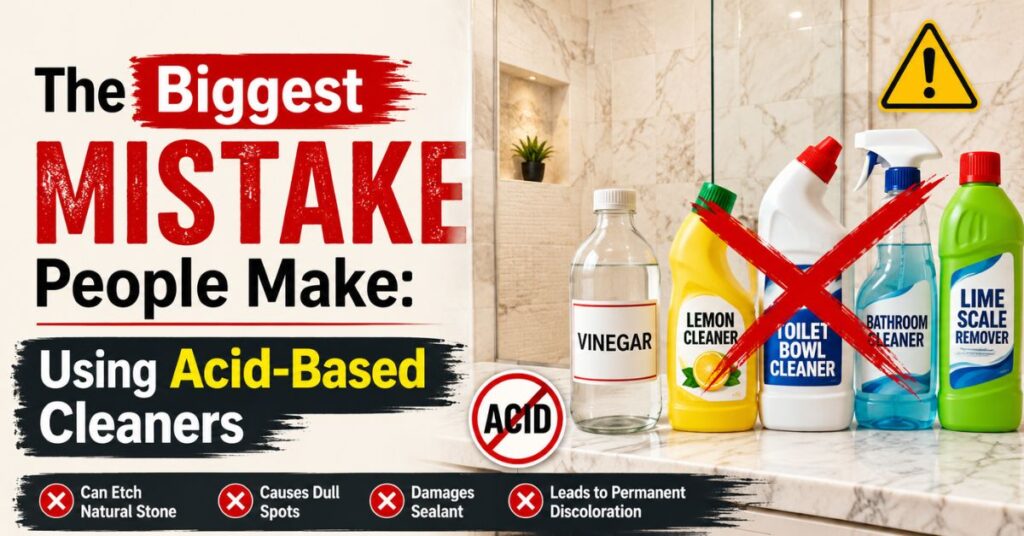
A lot of “natural” cleaners online recommend vinegar or lemon juice. That advice is fine for glass or stainless steel, but terrible for natural stone.
Never use these on stone:
- Vinegar
- Lemon juice
- CLR
- Bleach-heavy bathroom sprays
- Abrasive powders
- Rough scrub pads
These can cause etching (a dull, damaged spot) that no scrubbing will remove.
If you want a long-term solution, you need a natural stone shower cleaner that is pH-neutral and gentle.
My Golden Rule: pH-Neutral Always Wins
The best cleaner for natural stone is simple:
pH-neutral + non-abrasive + low residue
When I follow this rule, I don’t get streaks, dull spots, or chalky buildup. And the shower stays cleaner longer because the surface doesn’t get roughened up.
If your stone feels gritty after cleaning, that’s usually a sign your product is leaving residue or damaging the seal.
My Everyday Natural Stone Shower Cleaner Spray (Safe DIY)
This is the safest DIY formula I’ve used that still removes daily grime.
Ingredients (Simple and Cheap)
- 2 cups warm distilled water
- ½ teaspoon mild dish soap (clear, non-citrus is best)
- 1 tablespoon rubbing alcohol (helps drying and reduces streaks)
- Optional: 5 drops essential oil (tea tree or lavender)
Mix in a spray bottle and shake gently.
This works because dish soap breaks down body oils and soap scum, while rubbing alcohol speeds up evaporation.
This is my go-to natural stone shower cleaner for weekly cleaning.
How I Use It
- Spray lightly (don’t soak the stone)
- Let it sit for 2 minutes
- Wipe with a microfiber cloth
- Rinse with warm water
- Dry with a towel
Stone looks polished when it has been dried, not just when it has been cleaned.
Best Store-Bought Natural Stone Shower Cleaner (When You Want Zero Risk)
Sometimes you just want a ready-made product, especially if your shower is expensive marble or travertine.
When I buy one, I always look for:
- “pH-neutral” label
- “safe for marble, granite, travertine”
- no vinegar, no citric acid
- no bleach
If the product says “removes limescale,” I skip it. That usually means acid.
A good commercial natural stone shower cleaner is especially helpful for textured slate because DIY sprays may not lift deep soap residue as easily.
Step-by-Step: How I Clean a Natural Stone Shower (My Weekly Routine)
This routine takes me about 15 minutes, and it prevents buildup so I don’t have to deep scrub later.
Step 1: Rinse Everything First
I always rinse with warm water for about 30 seconds. This softens soap film and loosens hair and dust.
Step 2: Spray the Cleaner Lightly
I spray my natural stone shower cleaner on walls and floor, but I avoid flooding the grout.
Step 3: Use a Soft Brush (Not a Scrub Pad)
I use a soft nylon brush or microfiber sponge. Grout lines can be cleaned with a soft toothbrush.
Step 4: Rinse Again
I rinse thoroughly. Any soap left behind becomes tomorrow’s soap scum.
Step 5: Dry the Stone
This step is what most people skip. Towels or microfiber cloths are what I use.
When I dry the shower, I notice:
- less water spotting
- less mildew smell
- less hazy buildup
Quick Comparison Table: What Works and What Damages Stone
| Cleaner Type | Safe for Natural Stone? | Best For | Risk Level |
| pH-neutral stone cleaner | Yes | Weekly cleaning | Very Low |
| Mild dish soap + water | Yes | Light grime | Low |
| Vinegar + water | No | Glass only | Very High |
| Lemon-based sprays | No | Non-stone surfaces | Very High |
| Baking soda paste | Sometimes | Small stains | Medium |
| Bleach bathroom spray | No | Plastic/tile only | High |
| Hydrogen peroxide (spot use) | Yes (limited) | Mold spots | Medium |
If you remember one thing: vinegar is not a natural stone shower cleaner no matter how “natural” it sounds.
How I Remove Soap Scum Without Etching the Stone
Soap scum is the biggest stone shower problem. It forms a dull layer that makes marble look dirty even when it’s clean.
Here’s what I do:
- Use warm water rinse first
- Apply my cleaner spray
- Scrub gently with microfiber
- Rinse
- Dry immediately
If the soap scum is thick, I repeat the process instead of using harsh chemicals.
My Trick for Stubborn Soap Film
I add a few extra drops of dish soap into the spray bottle and let it sit 5 minutes.
Patience works better than aggression with stone.
How I Handle Mold and Mildew on Natural Stone
Mold in stone showers usually appears in grout corners or silicone edges.
For small mildew spots, I use:
- 3% hydrogen peroxide
- cotton pads or paper towel strips
What I Do
- Soak the paper towel in peroxide
- Press it onto the mildew area
- Leave it for 10 minutes
- Wipe and rinse
This avoids spraying chemicals everywhere.
Hydrogen peroxide is safer than bleach for many stone showers, but I still don’t overuse it. I treat it like a spot cleaner, not a daily product.
The Best Tools for Cleaning Stone (What I Actually Use)
I’ve tested dozens of tools, and these are the only ones I trust for stone:
- Microfiber cloths (non-negotiable)
- Soft nylon scrub brush
- Soft toothbrush for grout
- Squeegee for daily drying
- Spray bottle for DIY cleaner
Avoid:
- steel wool
- magic erasers (too abrasive over time)
- rough scouring pads
Stone scratches easily, and scratches trap dirt.
Daily Habits That Keep Your Stone Shower Clean Longer
The easiest cleaning is the one you don’t have to do later.
Here’s my realistic daily routine:
- Rinse walls quickly after showering
- Use a squeegee on glass and stone
- Leave the fan on for 20 minutes
- Keep the shower door open
This reduces moisture, and moisture is what feeds mildew and soap scum buildup.
When I do this, I only need my natural stone shower cleaner once a week instead of scrubbing every few days.
How to Know If Your Stone Shower Needs Resealing
If your stone is sealed properly, cleaning is easier.
Here’s the water test I do:
- Splash water on the stone
- Wait 10 minutes
If the water beads up, the seal is still good.
If it darkens the stone or absorbs quickly, it’s time to reseal.
A worn seal makes soap scum stick harder, and you’ll feel like your cleaner “isn’t working.”
Conclusion
A stone shower can look luxurious for years, but only if you clean it the right way. The biggest secret is staying gentle and consistent. I don’t chase “stronger” products anymore I stick with a safe routine, soft tools, and a pH-neutral natural stone shower cleaner that protects the surface instead of stripping it.
Quick recap of what works best:
- Avoid vinegar, lemon, and harsh sprays
- Use pH-neutral cleaners or mild soap solutions
- Scrub gently with microfiber
- Rinse well and dry every time
- Spot-treat mold with hydrogen peroxide
If you start using this method, your stone will stay smooth, shiny, and fresh-looking without constant deep cleaning. Try the routine once this week, and you’ll notice the difference immediately.
If you enjoyed this guide, check out more practical cleaning tips on CleanHomeCraft.com and keep your bathroom looking professionally maintained.
A pH-neutral stone cleaner is the safest option. If you want DIY, use mild dish soap and warm distilled water with a microfiber cloth.
Marble, limestone, and travertine can be etched by vinegar due to its acidity. It may cause dull spots that cannot be fixed with normal cleaning.
Baking soda is mildly abrasive. I only use it occasionally as a gentle paste on small stained spots, and I rinse it thoroughly afterward.
Avoid acidic limescale removers. Use a pH-neutral cleaner, gentle scrubbing, and dry the surface. If stains remain, you may need a stone-safe polishing product.
I recommend weekly cleaning with a natural stone shower cleaner, plus daily rinsing and drying. This prevents heavy buildup and keeps the stone glossy.

Muhammad Ahad — Passionate writer sharing informative, engaging, and easy-to-read articles across different topics. Focused on delivering valuable content that helps readers learn, explore, and stay inspired every day.
1 thought on “Best Natural Stone Shower Cleaner (Safe & Powerful)”