

Introduction
The first time I cleaned my oven properly, I made one mistake: I used a strong chemical spray without opening windows. Within minutes, my eyes were burning, and the smell stayed in the kitchen for hours. That day, I promised myself I’d find a safer and easier method.
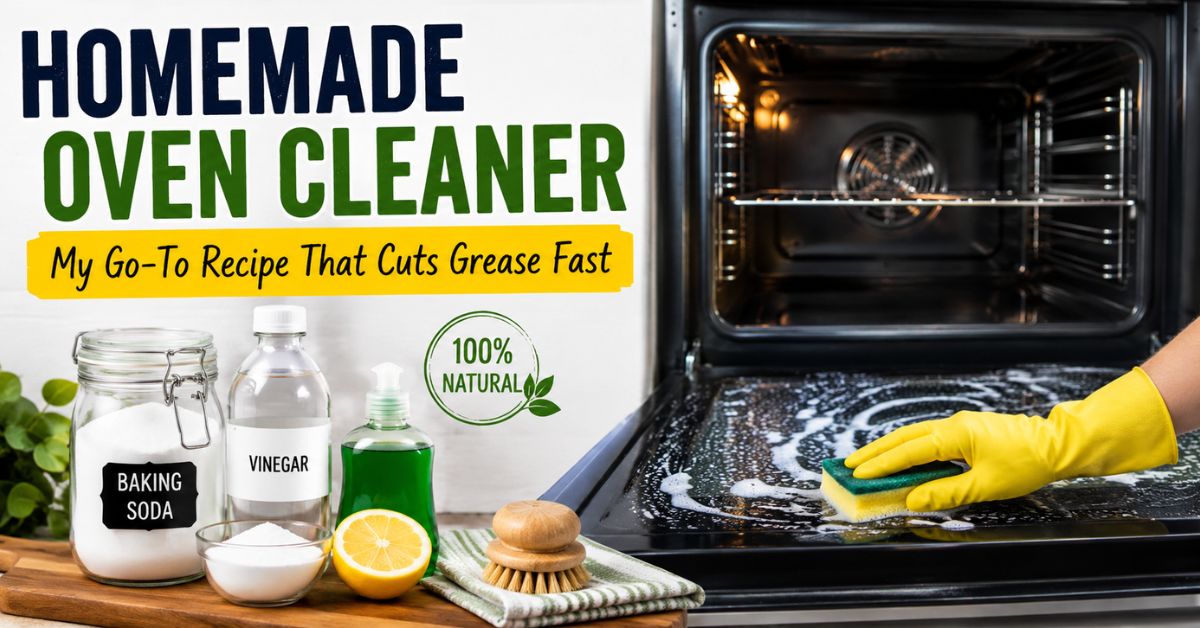
After testing different DIY mixes over the years, I found one homemade oven cleaner recipe that works almost every time. It’s cheap, it’s simple, and it doesn’t leave that harsh chemical smell behind. Even better, it uses ingredients most people already have in their kitchen.
If your oven has baked-on grease, dark stains, and burnt food marks, don’t worry. I’ll share the exact method I personally use, plus a few variations depending on how dirty your oven really is.
Why I Prefer a Homemade Oven Cleaner Over Store Products
I’m not completely against store-bought oven cleaners. Some of them work very well. However, most of them come with problems that annoy me every time.
Here’s why I keep going back to homemade solutions:
- No overpowering fumes
- Safer around kids and pets
- No sticky chemical residue
- Costs a fraction of branded sprays
- Ingredients are easy to find
- You can adjust the strength as needed
Also, I like knowing exactly what I’m spreading inside the same place where I cook food.
What Makes a Homemade Oven Cleaner Actually Work?
A good oven cleaner must do two jobs:
- Break down grease (fat and oil buildup)
- Loosen burnt food stains so they wipe away
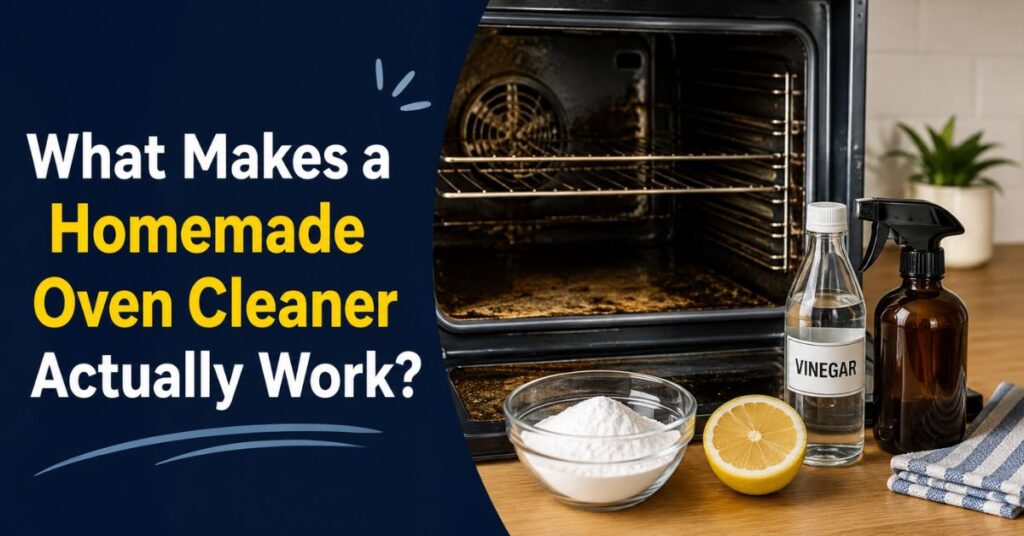
The best homemade cleaners rely on simple chemistry:
- Baking soda works like a gentle scrub and stain-lifter
- Vinegar helps dissolve grime and reacts with baking soda
- Dish soap cuts through grease
- Salt adds extra scrubbing power
- Lemon helps remove odor and adds natural acidity
When combined correctly, these ingredients can handle most oven messes without damaging surfaces.
My Best Homemade Oven Cleaner Recipe (The One I Always Use)
This is my personal favorite because it works on medium to heavy grease without requiring hard scrubbing.
Ingredients
- 1/2 cup baking soda
- 2–3 tablespoons dish soap (degreasing type works best)
- 3 tablespoons white vinegar
- Warm water (as needed)
How to Mix It
In a bowl, mix baking soda and dish soap first. Then add vinegar slowly. The mixture will fizz a little. Add a few drops of warm water until you get a thick paste (like frosting).
This paste is the heart of my homemade oven cleaner routine.
Step-by-Step: How I Clean My Oven Using This Paste
This is the exact process I follow at home, and it rarely fails.
Step 1: Remove the Oven Racks
Take the racks out and set them aside. If they’re greasy too, don’t worry we’ll clean them separately.
Step 2: Scrape Loose Crumbs
Use a dry cloth or plastic scraper to remove loose burnt food bits. This makes the paste work better.
Step 3: Apply the Paste Everywhere
Spread the paste on:
- Oven floor
- Side walls
- Back panel
- Oven door interior
Avoid heating elements. I usually apply a thick layer on the dirtiest areas.
Step 4: Let It Sit (This Part Matters Most)
Let the paste sit for at least:
- 2 hours for light dirt
- 6 hours for medium dirt
- Overnight for heavy stains
Scrubbing will be less necessary as it sits longer.
Step 5: Wipe It Out
Use a damp microfiber cloth and wipe the paste away. You’ll notice the grease lifting in chunks.
Step 6: Spray Vinegar for Final Cleanup
After wiping, spray plain vinegar over remaining residue. It reacts with leftover baking soda and helps loosen any stubborn patches.
Step 7: Final Wipe and Dry
Wipe again with clean water, then dry with a towel.
At this point, your oven should look and smell much fresher.
Homemade Oven Cleaner Table: Quick Method Comparison
| Cleaning Method | Best For | Ingredients Needed | Waiting Time | Scrubbing Level |
| Baking soda + dish soap paste | Medium to heavy grease | Baking soda, dish soap, vinegar | 6 hours/overnight | Low to medium |
| Vinegar + lemon steam | Light dirt + odor | Vinegar, lemon, water | 30 minutes | Low |
| Salt scrub method | Small burnt patches | Salt, water, sponge | 15 minutes | Medium |
| Baking soda + hydrogen peroxide paste | Very stubborn stains | Baking soda, peroxide | 2–4 hours | Medium |
| Dish soap soak (for racks) | Dirty oven racks | Dish soap, hot water | 2–6 hours | Low |
How I Clean Oven Racks Without Scrubbing Like Crazy
Oven racks can be worse than the oven itself. I used to scrub them until my arms hurt. Now I do it smarter.
My Rack-Soaking Method
- Make a hot bath or fill a large container with water
- Add 1/2 cup dish soap
- Add 1/2 cup baking soda
- Soak racks for 4–6 hours
After soaking, most grease wipes off easily. For stubborn spots, I use a non-scratch scrub pad.
If you don’t want to use your bathtub, a large plastic storage bin works great.
The Quick Steam Trick I Use for Light Cleaning Days
Sometimes my oven isn’t filthy it just smells like last week’s pizza. On those days, I don’t use heavy paste.
Lemon and Vinegar Steam Method
- Fill an oven-safe bowl with water
- Add 2 tablespoons vinegar
- Add lemon slices
- Heat the oven at 250°F (120°C) for 25–30 minutes
- Turn off oven and let it cool slightly
- Wipe with a cloth
This is not a deep cleaner, but it’s excellent for keeping your oven fresh between full cleanings.
Stronger Option: Homemade Oven Cleaner for Tough Burnt Stains
If your oven has thick black stains that laugh at baking soda paste, you need a stronger DIY mixture.
Ingredients
- 1/2 cup baking soda
- 3 tablespoons hydrogen peroxide
- 1 tablespoon dish soap
Mix into a thick paste and apply like normal. Let it sit 2–4 hours, then wipe away.
Hydrogen peroxide works well for deep stains, but I avoid using it too often because it’s more powerful than vinegar.
Common Mistakes People Make When Cleaning Ovens
I’ve made most of these mistakes myself, so learn from my experience.
1. Cleaning a Hot Oven
A warm oven might seem helpful, but it dries the paste too fast. Always clean when the oven is cool.
2. Using Metal Scrapers
Metal tools can scratch enamel surfaces. I always use plastic scrapers or old credit cards.
3. Skipping the Waiting Time
If you wipe too early, you’ll scrub twice as hard. Let the cleaner sit.
4. Forgetting the Oven Door Edges
Grease builds up around the door seal. I use a toothbrush for those corners.
5. Using Too Much Water Too Soon
Too much water turns the paste into a mess. I wipe slowly with a damp cloth instead.
How Often Should You Clean Your Oven?
This depends on how often you cook.
Here’s what I recommend based on real household use:
- Light cooking: every 2–3 months
- Regular family cooking: every 4–6 weeks
- Heavy baking/roasting: every 3–4 weeks
Even if you don’t deep clean often, wiping spills quickly makes your next cleaning session much easier.
Best Surfaces to Use a Homemade Oven Cleaner On
Most homemade mixtures are safe for common ovens, but I still follow basic rules.
Safe for:
- Glass oven doors
- Enamel interiors
- Stainless steel edges
- Oven racks
Be careful with:
- Heating elements
- Fan vents
- Self-cleaning oven sensors
If your oven is self-cleaning, avoid soaking the temperature sensor area.
Extra Tips to Keep Your Oven Cleaner Longer
Once you’ve cleaned your oven, it’s smart to maintain it so it doesn’t return to disaster mode.
Here’s what works for me:
- Place a baking tray under messy dishes
- Wipe fresh spills after the oven cools
- Do a quick vinegar wipe weekly
- Avoid sugary spills (they harden like glue)
- Don’t ignore smoky smells (they’re warning signs)
Small habits save hours later.
Conclusion
A dirty oven can feel impossible to clean, but it doesn’t have to be. With the right ingredients and enough sitting time, a homemade oven cleaner can break down grease, loosen burnt stains, and leave your kitchen smelling clean without harsh fumes.
If you want the easiest routine, stick with baking soda + dish soap paste, let it sit overnight, and wipe slowly the next day. That method has saved me hours of scrubbing.
Try this cleaning method once, and you’ll probably stop buying expensive oven sprays. If you found this guide helpful, check out more cleaning tips on CleanHomeCraft and keep your kitchen looking fresh year-round.
Yes, but avoid applying paste near sensors, vents, or heating elements. Use gentle methods and wipe carefully afterward.
Yes, but don’t mix them too early in large amounts. I apply baking soda paste first, then spray vinegar later for the fizzing reaction.
Use baking soda mixed with hydrogen peroxide. Take a few hours to let it sit, then wipe it off.Repeat if needed.
Yes. Dish soap is made to cut grease. When combined with baking soda, it becomes a powerful degreasing paste.
The key is soaking time. Apply the paste and leave it overnight. Most grime wipes away the next day with minimal effort.
Steam-cleaning with lemon and vinegar works well. It breaks odor particles and leaves the oven smelling fresh.

Muhammad Ahad — Passionate writer sharing informative, engaging, and easy-to-read articles across different topics. Focused on delivering valuable content that helps readers learn, explore, and stay inspired every day.
1 thought on “Homemade Oven Cleaner (My Go-To Recipe That Cuts Grease Fast)”