

Introduction
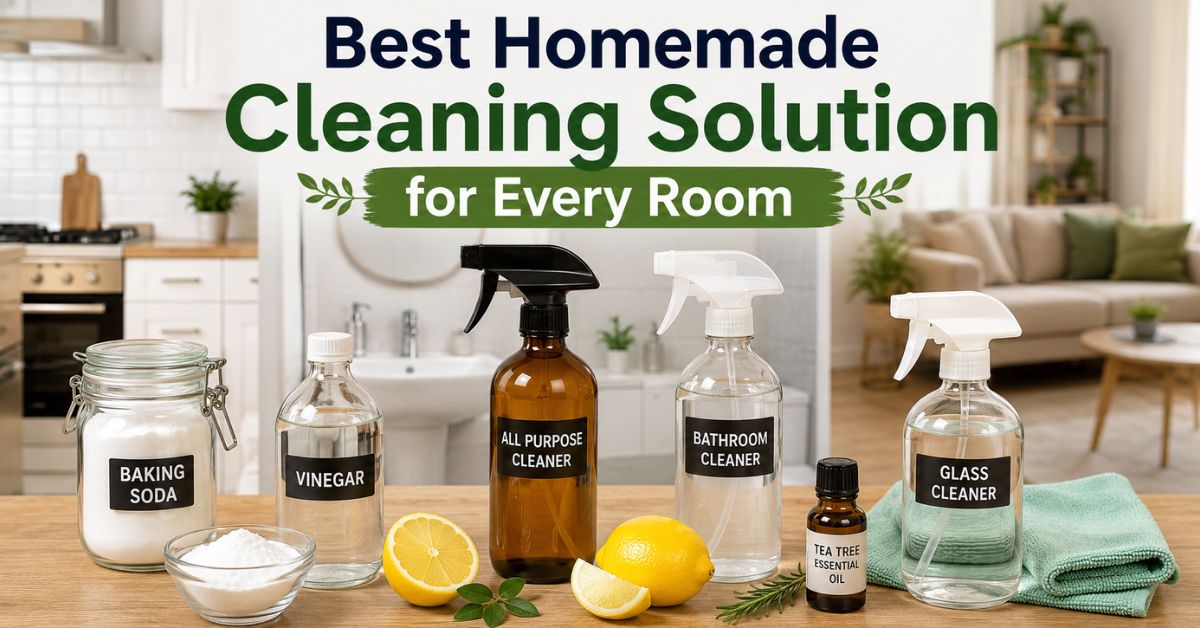
I started making my own homemade cleaning solution years ago after getting tired of buying expensive sprays that worked only halfway. Some left streaks on glass, while others had such a strong scent that I needed to open every window in the house. After testing simple ingredients from my kitchen, I realized the best cleaners were often the cheapest ones.
A good homemade cleaning solution can cut grease, remove odors, and freshen surfaces without filling your cabinets with plastic bottles. The trick is knowing which ingredients work well together and which ones should never mix.
Over time, I found that homemade cleaners are not just budget-friendly. They also make daily cleaning feel simpler. Instead of hunting for five different products, I keep a few basics ready and mix what I need in minutes.
In this article, I’ll share the mixtures I actually use at home, where they work best, and the mistakes that can ruin surfaces if you are not careful.
Why Homemade Cleaners Work So Well
Store-bought cleaners often rely on the same basic ingredients you probably already own. Vinegar cuts mineral buildup. Baking soda absorbs smells and lifts grime. Lemon helps break down grease. Dish soap removes oils from surfaces.
The difference is concentration and marketing.
When you create your own cleaner, you control:
- The strength
- The scent
- The ingredients
- The surface safety
- The overall cost
I also noticed that homemade mixes encourage quicker daily cleaning. When a spray bottle is easy to refill, I tend to wipe spills immediately instead of waiting for “deep cleaning day.”
The Core Ingredients I Always Keep at Home
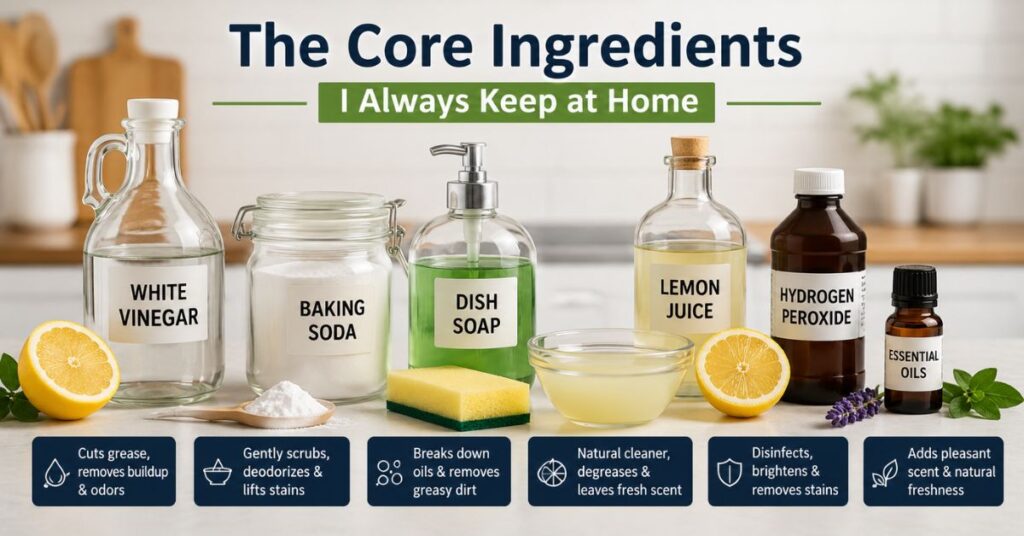
You do not need a huge collection of supplies. Most of my cleaning mixes come from six simple items.
White Vinegar
This is one of the most useful ingredients in a homemade cleaning solution. It dissolves soap scum, removes water spots, and helps with odors.
Best uses:
- Bathroom sinks
- Shower glass
- Kitchen counters
- Tile surfaces
Avoid using it on:
- Marble
- Granite
- Natural stone
Baking Soda
Baking soda works like a gentle scrub without scratching most surfaces.
I use it for:
- Oven spills
- Sink stains
- Refrigerator odors
- Greasy pans
Dish Soap
A few drops make a huge difference. Dish soap breaks apart grease faster than vinegar alone.
Lemon Juice
Fresh lemon leaves a cleaner smell and helps remove sticky residue.
Hydrogen Peroxide
This works well for disinfecting and brightening stained areas.
Essential Oils
These are optional, but they make homemade sprays smell better. Lemon and eucalyptus are my favorites.
My Favorite Homemade Cleaning Recipes
These are the recipes I use repeatedly because they save time and actually work.
All-Purpose Kitchen Spray
This is the cleaner I reach for every day.
Ingredients
| Ingredient | Amount | Purpose |
| White vinegar | 1 cup | Cuts grease and buildup |
| Warm water | 1 cup | Dilutes the mixture |
| Dish soap | 1 teaspoon | Removes oils |
| Lemon essential oil | 5 drops | Fresh scent |
How I Use It
I spray it on:
- Countertops
- Appliance doors
- Dining tables
- Cabinet handles
Then I wipe everything with a microfiber cloth.
This mix works especially well after cooking oily foods.
Heavy-Duty Sink Scrub
Sometimes sinks develop dull stains that regular sprays cannot remove.
What You Need
- 3 tablespoons baking soda
- 1 tablespoon dish soap
- Small splash of water
Mix until it forms a thick paste.
I spread it around the sink and leave it for five minutes before scrubbing gently. Stainless steel usually shines afterward.
Glass and Mirror Cleaner
I tested dozens of glass cleaners over the years. Most left streaks behind. This recipe finally solved that problem.
Recipe
- 1 cup distilled water
- 1 cup vinegar
- 1 tablespoon rubbing alcohol
The rubbing alcohol helps the surface dry faster, which prevents streaks.
I always wipe glass with a lint-free cloth instead of paper towels.
Bathroom Soap Scum Remover
Bathroom grime builds up slowly, so many people do not notice it until it becomes stubborn.
This spray handles most of it.
Ingredients
- 1 cup vinegar
- 1 tablespoon dish soap
Warm the vinegar slightly before mixing. Spray the shower walls and let the solution sit for 10 minutes.
The soap loosens greasy residue while vinegar breaks down mineral buildup.
The Cleaning Combinations You Should Never Mix
Homemade cleaning is useful, but safety matters.
Never combine:
- Vinegar + bleach
- Hydrogen peroxide + vinegar
- Bleach + ammonia
These combinations can create dangerous fumes.
I keep ingredients labeled clearly to avoid mistakes during fast cleaning sessions.
Best Surfaces for Homemade Cleaners
Not every surface reacts the same way.
Safe Surfaces
Most homemade sprays work well on:
- Ceramic tile
- Stainless steel
- Glass
- Plastic
- Painted walls
- Laminate
Surfaces That Need Extra Care
Natural stone can react badly to acidic cleaners.
Be careful with:
- Marble
- Granite
- Slate
- Hardwood floors
I learned this the hard way after dulling a marble tray with vinegar spray years ago.
How I Store Homemade Cleaning Products
Storage matters more than people realize.
I always use:
- Glass bottles for vinegar mixtures
- Labels with dates
- Cool storage areas
- Tight spray tops
I also avoid making huge batches. Fresh mixtures usually work better.
Why Homemade Cleaners Save More Money Than Expected
At first, I switched to homemade cleaners because I wanted fewer chemicals around the house. The savings became obvious later.
A single bottle of store cleaner may last only a few weeks. Basic ingredients like vinegar and baking soda can handle dozens of cleaning jobs for much less money.
Here’s what changed for me:
- Fewer shopping trips
- Less plastic waste
- Fewer half-used products
- Easier organization
Instead of storing ten different sprays, I keep a small cleaning basket with reusable ingredients.
Cleaning Habits That Make Homemade Solutions Work Better
Even the best cleaner struggles if dirt sits too long.
I noticed homemade sprays work best when paired with simple habits.
Wipe Spills Quickly
Grease and soap scum become harder to remove over time.
Use Microfiber Cloths
They trap dust and reduce streaks better than old rags.
Clean From Top to Bottom
Dust falls downward. Starting high prevents extra work later.
Do Small Daily Cleaning Sessions
Ten minutes daily usually prevents major messes.
Homemade Floor Cleaner Recipe
Floors collect more dirt than almost any surface in the home.
For tile floors, I use:
- 1 gallon warm water
- 1/4 cup vinegar
- Few drops dish soap
This leaves floors clean without sticky residue.
For hardwood, I skip vinegar completely and use a very mild soap mixture instead.
Odor Removal Tricks That Actually Help
One reason I rely on a homemade cleaning solution is odor control. Artificial fragrances often cover smells instead of removing them.
Refrigerator Smells
I place open baking soda containers inside the fridge.
Trash Can Odors
A small sprinkle of baking soda at the bottom helps a lot.
Microwave Smells
When lemon slices are heated in water for a few minutes, odors and splatters are loosening.
The Biggest Mistake People Make With Homemade Cleaners
Many people think stronger equals better.
That usually backfires.
Too much vinegar can damage surfaces. Excess soap leaves sticky residue. Overusing baking soda can create dull buildup.
I learned that balanced mixtures clean better than overly strong ones.
Seasonal Cleaning With Homemade Solutions
Different seasons create different cleaning problems.
Spring
I focus on windows, dust, and freshening fabrics.
Summer
Grease and outdoor dirt become more common.
Fall
This is when I clean baseboards and storage areas.
Winter
I use more disinfecting sprays during cold season.
Homemade recipes adapt easily to each season without requiring new products every few months.
Conclusion
Using a homemade cleaning solution changed the way I manage household cleaning. I spend less money, store fewer products, and still get cleaner surfaces throughout the house. The biggest benefit is simplicity. A few reliable ingredients can handle most daily messes without complicated routines.
Start with one recipe instead of changing everything at once. Try an all-purpose spray for your kitchen or a baking soda scrub for sinks. Small changes usually stick better than complete overhauls.
If you enjoy practical cleaning methods and realistic home tips, keep exploring more ideas on Clean Home Craft and build a cleaning routine that actually fits your daily life.
Some ingredients like hydrogen peroxide can help disinfect surfaces, but not every homemade mix kills germs completely. For high-risk areas, stronger disinfectants may still be necessary.
Most mixtures stay effective for about one month if stored properly in sealed containers.
No. Vinegar should not be used on marble, granite, or natural stone because it can damage the finish.
Many simple ingredients are safer than harsh chemicals, but essential oils should be used carefully around pets.
Too much soap or dirty cloths usually cause streaking. Using distilled water can also help.
In most cases, vinegar and water are the most affordable option for everyday cleaning.

Muhammad Ahad — Passionate writer sharing informative, engaging, and easy-to-read articles across different topics. Focused on delivering valuable content that helps readers learn, explore, and stay inspired every day.
1 thought on “Best Homemade Cleaning Solution for Every Room”