

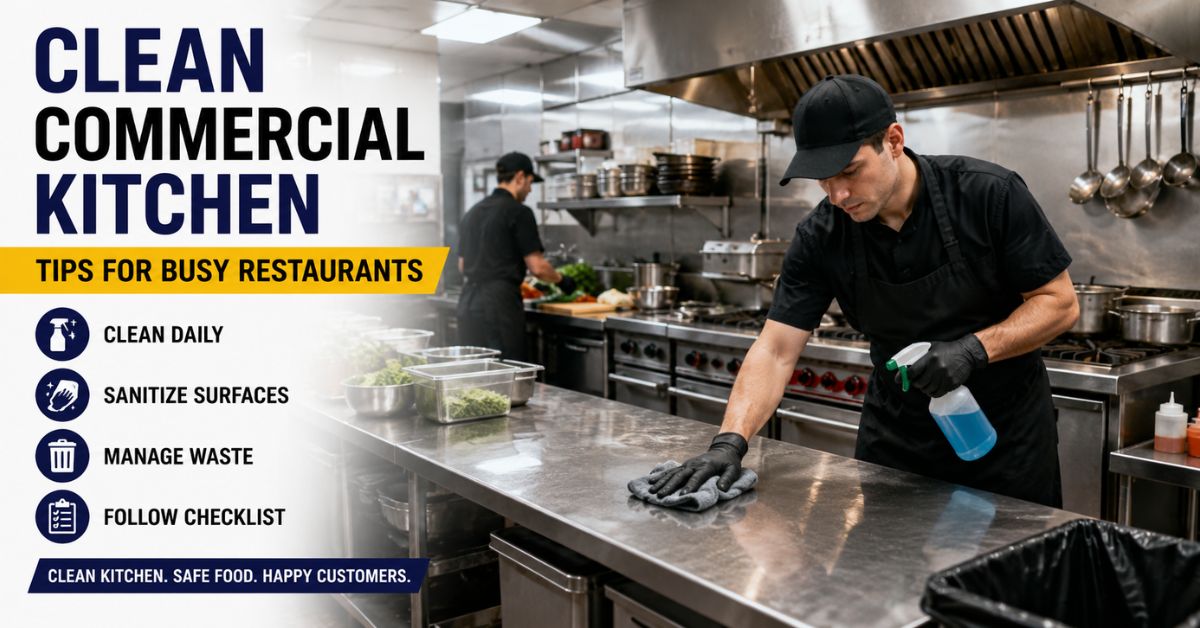
Introduction
I learned very quickly that a clean commercial kitchen is not only about appearance. A spotless counter means nothing if grease is hiding behind equipment or if prep surfaces carry old food residue. In busy kitchens, mess builds up fast. Steam, oil, spills, crumbs, and constant foot traffic create layers of dirt before you even notice them.
The best kitchens I have worked in never relied on deep cleaning once a month. Instead, they followed simple habits every single shift. That approach kept the space safer, easier to manage, and less stressful during inspections.
A properly maintained clean commercial kitchen also helps food taste better. When grills, fryers, and prep stations stay clean, cooking becomes smoother and odors stay under control. Staff work faster too because they are not fighting clutter or slippery floors.
This article shares practical methods that actually work in real kitchens without wasting time or supplies.
Why a Commercial Kitchen Gets Dirty So Fast
Commercial kitchens collect dirt differently than home kitchens. Heat, grease, and moisture combine all day long. Even if staff wipe surfaces often, hidden buildup still forms in places people ignore.
Some of the biggest trouble spots include:
- Fryer edges
- Hood filters
- Under refrigerators
- Floor drains
- Prep tables
- Storage shelves
- Door handles
- Ice machine areas
I once helped clean a small restaurant kitchen that looked decent at first glance. But after moving the equipment, we found thick grease layers mixed with dust behind the stove. That buildup had probably been sitting there for months.
Busy kitchens need structured cleaning routines because random cleaning usually misses the hidden areas.
The Daily Habits That Keep a Clean Commercial Kitchen
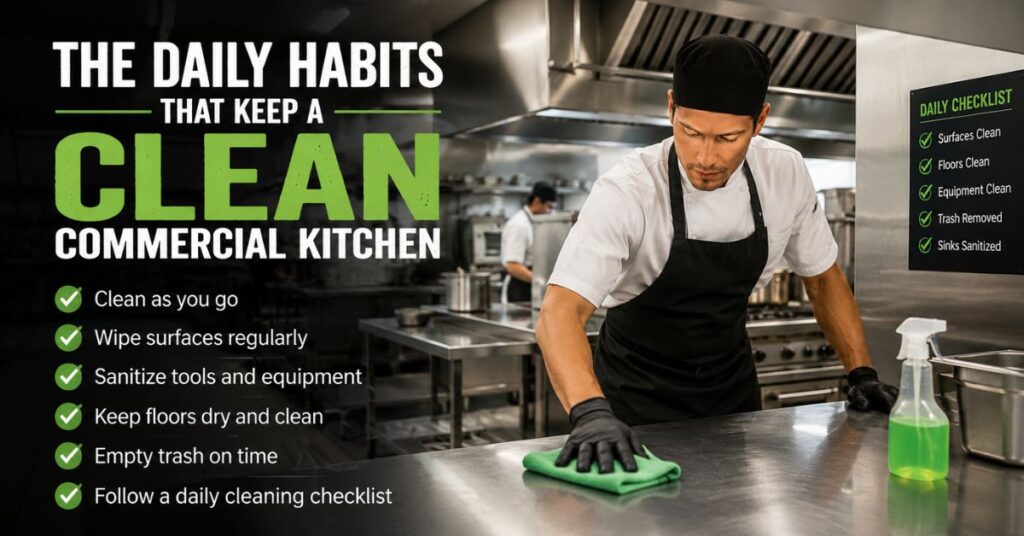
A truly clean commercial kitchen depends on consistency. Daily cleaning prevents giant messes later.
Wipe as You Work
The smartest kitchen workers clean during the shift instead of waiting until closing time.
Simple habits include:
- Wiping spills immediately
- Clearing prep boards after each task
- Emptying trash before overflow
- Sweeping around cooking stations
- Sanitizing tools between uses
This prevents chaos from building up during rush hours.
Separate Cleaning Cloths
Using one rag for everything spreads bacteria fast.
I prefer using different colored cloths for:
| Cloth Color | Purpose |
| Red | Raw meat areas |
| Blue | General counters |
| Green | Vegetable prep |
| Yellow | Sanitizing surfaces |
This simple system reduces cross-contamination and keeps staff organized.
Keep Floors Dry
Wet floors become dangerous quickly in commercial spaces.
The best approach is:
- Mop small sections at a time
- Use warning signs
- Dry greasy spots immediately
- Sweep before mopping
- Clean floor drains daily
Dry floors instantly make the kitchen feel cleaner and safer.
Cleaning Equipment the Right Way
Kitchen equipment collects more grease than most people realize. Surface wiping alone is never enough.
Grills and Flat Tops
Hot surfaces trap grease throughout the day.
My preferred method:
- Scrape debris while the surface is still warm
- Apply grill cleaner carefully
- Let it sit briefly
- Scrub using a grill pad
- Wipe clean with damp towels
Daily cleaning prevents carbon buildup that becomes extremely difficult later.
Fryers
Fryers create some of the nastiest grease in a commercial kitchen.
A weekly boil-out helps remove thick residue inside the fryer walls.
Important steps include:
- Turn equipment off completely
- Allow oil to cool
- Drain safely
- Remove food particles
- Use fryer-safe cleaner
- Rinse thoroughly
Skipping fryer cleaning often creates strong burnt smells that spread through the kitchen.
Refrigerators and Freezers
Cold storage still needs constant attention.
Focus on:
- Shelf spills
- Door seals
- Handles
- Drain pans
- Expired ingredients
One forgotten leak inside a cooler can create awful odors within days.
The Areas Most Teams Forget
Every kitchen has hidden trouble spots. These areas often fail inspections because staff rarely check them closely.
Behind Equipment
Grease and dust collect behind:
- Ovens
- Fryers
- Refrigerators
- Prep stations
Moving heavy equipment weekly makes a huge difference.
Vent Hoods and Filters
Dirty hood systems affect air quality fast.
When filters clog with grease:
- Smoke increases
- Odors spread
- Fire risk rises
- Airflow weakens
I recommend cleaning filters regularly instead of waiting until they look terrible.
Floor Drains
Drains quietly collect grease, food scraps, and bacteria.
To maintain cleaner drains:
- Flush with hot water
- Use drain-safe cleaners
- Scrub visible buildup
- Remove trapped debris
Ignoring drains usually leads to unpleasant smells first.
Building a Smart Cleaning Schedule
Without a schedule, cleaning becomes inconsistent.
The best commercial kitchens divide tasks into:
Daily Tasks
- Counter sanitizing
- Sweeping
- Mopping
- Trash removal
- Sink cleaning
- Dish station cleanup
Weekly Tasks
- Moving equipment
- Cleaning hood filters
- Deep scrubbing floors
- Organizing storage
- Cleaning drains
Monthly Tasks
- Deep appliance cleaning
- Wall washing
- Ceiling vent cleaning
- Inventory shelf cleaning
Written schedules reduce confusion and improve accountability.
Cleaning Products That Actually Help
Some kitchens waste money on overly harsh chemicals. Stronger does not always mean better.
For most kitchens, these basics work well:
- Degreaser
- Food-safe sanitizer
- Dish soap
- Floor cleaner
- Stainless steel cleaner
- Glass cleaner
I avoid mixing chemicals because that creates unnecessary risks. Staff should always understand exactly what products they use.
Choosing Safer Products
A few safer cleaning habits include:
- Using measured dilution
- Wearing gloves
- Labeling bottles clearly
- Storing chemicals away from food
- Ventilating the area properly
These habits protect both workers and food quality.
Storage Areas Need Attention Too
A clean commercial kitchen includes organized storage spaces. Dirty shelves and cluttered containers create confusion fast.
Dry Storage Tips
Good dry storage habits include:
- Rotating stock regularly
- Labeling containers clearly
- Sweeping corners weekly
- Keeping food off the floor
- Checking for expired items
I have seen kitchens waste huge amounts of food simply because shelves were disorganized.
Walk-In Cooler Organization
Cold storage becomes messy quickly during busy shifts.
Helpful practices include:
- Keeping raw meat separated
- Using airtight containers
- Cleaning spills immediately
- Labeling dates clearly
- Avoiding overcrowded shelves
Organized coolers save time during service and reduce contamination risks.
Staff Training Makes the Biggest Difference
Even the best cleaning plan fails without trained staff.
New workers should understand:
- Sanitizing basics
- Equipment cleaning rules
- Cross-contamination risks
- Chemical safety
- Cleaning schedules
One experienced cleaner can improve kitchen standards dramatically by teaching proper habits early.
Encourage Small Cleaning Habits
The strongest teams treat cleaning as part of cooking, not a separate job.
Simple reminders help:
- “Clean before moving stations.”
- “Never leave spills.”
- “Reset your prep area.”
- “Empty bins before overflow.”
These tiny habits prevent giant closing-time disasters.
Signs Your Kitchen Needs a Deep Clean
Sometimes daily cleaning is not enough. Certain warning signs show deeper cleaning is overdue.
Watch for:
- Sticky floors
- Grease smells
- Smoke buildup
- Slow drains
- Visible grime behind appliances
- Pest activity
- Mold near sinks
- Discolored grout
When these signs appear, surface cleaning will not solve the problem.
Common Cleaning Mistakes I See Often
Many kitchens accidentally create more problems while trying to clean quickly.
Using Too Much Water
Excess water spreads grease and increases slip hazards.
Skipping Air Drying
Sanitized surfaces should air dry properly instead of getting wiped immediately.
Dirty Mop Water
Mopping with filthy water simply spreads grime around.
Ignoring Cleaning Tools
Mops, brushes, and cloths need cleaning too. Dirty tools contaminate fresh surfaces.
Avoiding these mistakes improves kitchen cleanliness immediately.
How a Clean Commercial Kitchen Improves Business
Customers may never enter the kitchen, but they notice the results.
A cleaner kitchen often leads to:
- Better food consistency
- Faster service
- Fewer odors
- Safer working conditions
- Better inspection scores
- Reduced equipment damage
Staff morale improves too. People naturally work better in organized spaces.
I have noticed that kitchens staying consistently clean usually operate more calmly during busy hours.
Conclusion
Keeping a clean commercial kitchen does not require complicated systems or expensive supplies. The biggest difference comes from consistent habits, organized routines, and staff who understand the importance of cleanliness every single day.
The kitchens that stay safest are usually the ones that clean continuously instead of reacting to giant messes later. Simple tasks like wiping surfaces immediately, cleaning drains regularly, and maintaining equipment properly prevent most major problems before they start.
If you want a smoother kitchen operation, focus on small cleaning habits first. Over time, those habits build a safer, more efficient, and truly clean commercial kitchen that both staff and customers benefit from.
The best method is cleaning throughout the shift instead of waiting until closing time. Small daily habits prevent heavy buildup.
Floors should be swept continuously and mopped daily. Greasy kitchens may require multiple cleanings during one shift.
Common problem areas include floor drains, refrigerator seals, hood filters, and spaces behind equipment.
A commercial degreaser designed for food-service environments usually works best. Always follow label instructions carefully.
Regular drain cleaning, hood maintenance, trash removal, and fryer cleaning help reduce strong odors.

Muhammad Ahad — Passionate writer sharing informative, engaging, and easy-to-read articles across different topics. Focused on delivering valuable content that helps readers learn, explore, and stay inspired every day.
1 thought on “Clean Commercial Kitchen Tips for Busy Restaurants”