

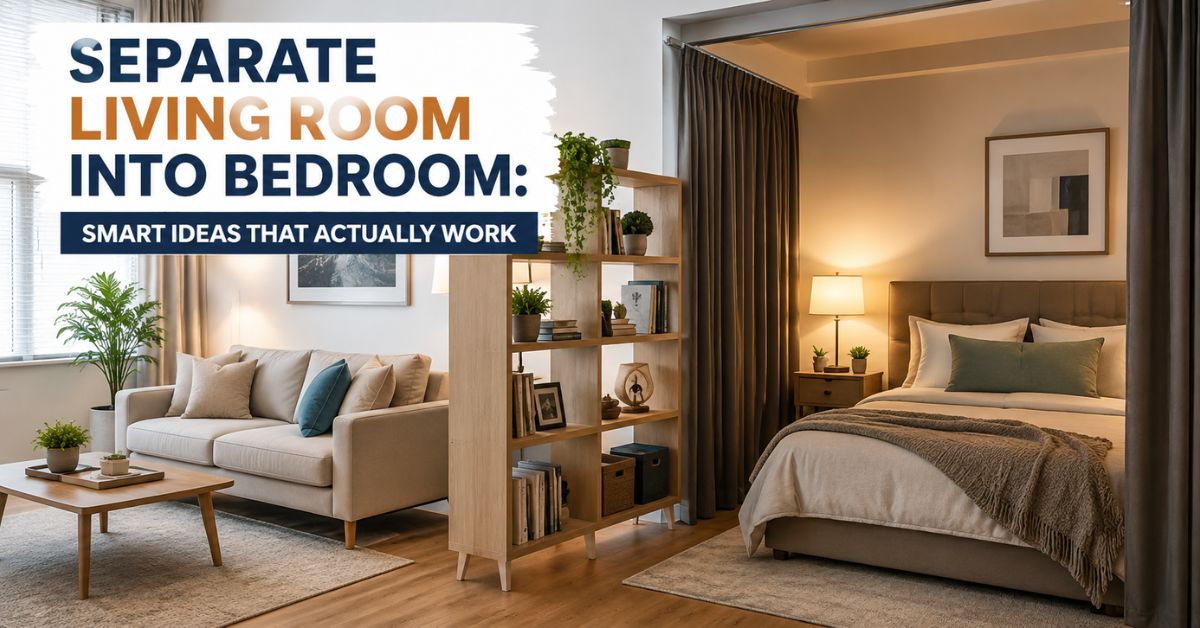
Introduction
I once lived in a small apartment where the living room had to become a sleeping space almost overnight. At first, I thought throwing up a curtain would solve everything. It did not. The room looked cramped, messy, and darker than before. After testing different layouts and divider ideas, I finally found practical ways to separate living room into bedroom without making the home feel boxed in.
The good news is that you do not need expensive remodeling or permanent walls to create a comfortable sleeping area. A few smart design choices can turn one room into two useful spaces while keeping the home stylish and functional.
Whether you live in a studio apartment, share a home, or simply need extra privacy, these ideas can help you build a bedroom area that feels intentional instead of temporary.
Why People Choose to Separate Living Room Into Bedroom
Housing costs continue to rise, and many people work with smaller spaces now. Because of that, finding creative ways to divide a room has become very common.
Here are a few reasons people decide to separate living room into bedroom spaces:
- Guests stay often
- Studio apartments need privacy
- Families need an extra sleeping area
- Remote workers need multipurpose rooms
- Renters cannot build permanent walls
- Small homes need better organization
In my experience, the best room divisions focus on comfort first and decoration second. If the sleeping space feels peaceful, the entire setup works better.
Planning Before You Divide the Space
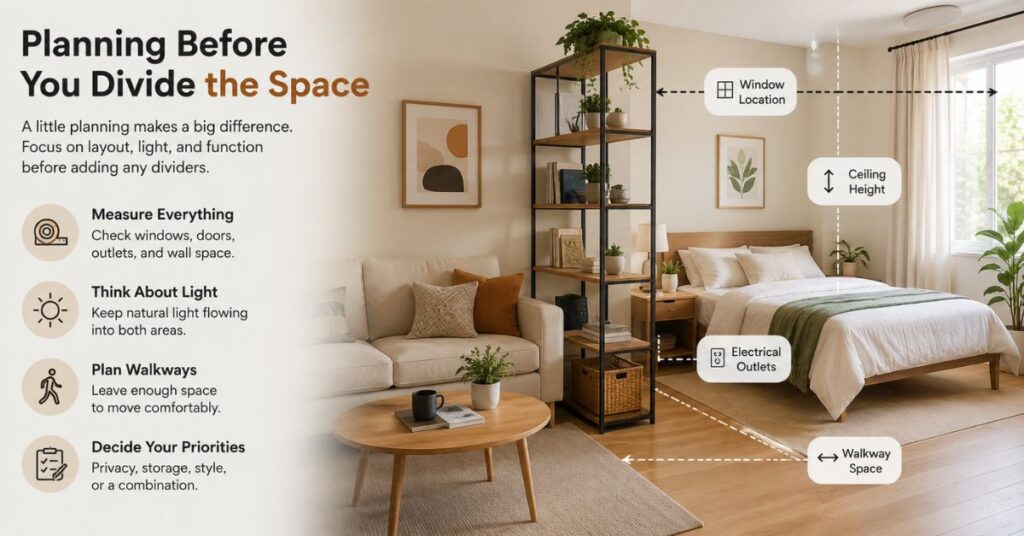
Before buying dividers or furniture, spend time understanding the room layout.
Measure Everything Carefully
I learned this lesson after buying a large bookshelf divider that barely fit through the doorway.
Measure:
- Window locations
- Door swing space
- Electrical outlets
- Ceiling height
- Walking pathways
A simple sketch on paper helps more than most people realize.
Think About Natural Light
One mistake people make when they separate living room into bedroom areas is blocking all sunlight.
Try to keep windows accessible to both zones whenever possible. Open dividers usually work better than solid walls in smaller rooms.
Decide What Matters Most
Ask yourself these questions:
- Do you need full privacy?
- Do you want sound reduction?
- Is storage important?
- Will the room still host guests?
- Do you need easy cleanup?
Your answers will guide the entire setup.
Best Ways to Separate Living Room Into Bedroom
There is no perfect solution for every home. Some methods work better for renters, while others suit long-term living arrangements.
Curtains and Ceiling Tracks
Curtains remain one of the easiest and cheapest ways to divide a room.
I used thick linen curtains in one apartment, and they softened the space instantly. The room looked warmer and more organized.
Benefits include:
- Affordable setup
- Easy installation
- Flexible privacy
- Soft appearance
- Simple removal for renters
However, thin curtains do not block noise very well. Choose heavier fabric if privacy matters.
Bookshelf Room Dividers
Bookshelves create separation while adding storage.
This method works especially well if you want the bedroom side to feel more permanent. Open shelving keeps airflow and light moving through the room.
I recommend using shelves that are not too deep. Oversized units can make small apartments feel crowded.
Folding Screens
Folding screens are perfect for temporary setups.
You can move them easily during the day and reposition them when guests visit. Decorative screens also add personality to plain rooms.
The downside is stability. Lightweight screens may wobble or shift frequently.
Sliding Panels
Sliding panels look cleaner and more modern than curtains.
Many renters use lightweight track systems that attach without major construction. Frosted panels allow light to pass through while still creating privacy.
This option usually costs more, but the finished look feels more polished.
Furniture Placement
Sometimes furniture alone can create enough separation.
A sofa placed strategically behind the bed can visually split the room into two areas.
I once used this method in a narrow apartment, and it worked surprisingly well without spending extra money.
Comparison Table for Room Divider Options
| Divider Type | Privacy Level | Budget Friendly | Best For | Drawback |
| Curtains | Medium | Yes | Renters | Limited sound blocking |
| Bookshelves | High | Medium | Storage lovers | Takes floor space |
| Folding Screens | Medium | Yes | Temporary setups | Less stable |
| Sliding Panels | High | No | Modern apartments | Higher cost |
| Furniture Layout | Low | Yes | Small budgets | Less separation |
Furniture Tips for Small Divided Spaces
When you separate living room into bedroom, furniture selection becomes extremely important.
Choose Multifunctional Pieces
Large furniture can overwhelm divided rooms quickly.
Useful options include:
- Storage ottomans
- Sofa beds
- Beds with drawers
- Folding desks
- Nesting tables
These pieces reduce clutter while improving functionality.
Avoid Bulky Items
Heavy furniture blocks movement and light.
Instead, choose:
- Raised-leg sofas
- Slim tables
- Light-colored finishes
- Open-frame shelving
Smaller visual weight makes the room feel larger.
Use Rugs to Define Areas
Rugs help separate spaces without walls.
One rug under the sofa and another beneath the bed instantly creates two distinct zones.
I personally prefer neutral rugs because they make mixed-use rooms feel calmer.
Privacy Tricks That Make a Big Difference
Many people worry that divided spaces still feel too open. Fortunately, small adjustments can improve privacy dramatically.
Add Layered Lighting
Using separate lighting for each area changes the atmosphere.
For example:
- Warm bedside lamps for the sleeping area
- Brighter lighting for the living zone
- Floor lamps near dividers
This creates a psychological separation even without solid walls.
Use White Noise
Noise travels easily in open spaces.
A small fan or white-noise machine helps reduce sound distractions, especially if multiple people use the room.
Position the Bed Carefully
Avoid placing the bed directly visible from the entrance if possible.
Even partial visual separation makes the bedroom feel more relaxing.
Decorating a Divided Room Without Clutter
Decorating divided rooms requires restraint.
Too many decorations make small spaces feel chaotic quickly.
Stick to One Color Palette
Using consistent colors across both zones creates flow.
I usually recommend:
- Soft beige
- Warm white
- Light gray
- Muted earth tones
These shades help rooms feel open and balanced.
Use Vertical Space
Wall-mounted shelves save floor space while adding storage.
Tall curtains also make ceilings appear higher, which helps divided rooms feel less cramped.
Keep Decorations Minimal
Don’t try to fill every corner, but focus on a few key elements:
- One framed print
- A floor plant
- Small bedside lamp
- Neutral throw blankets
Simple styling almost always works better in compact layouts.
Common Mistakes People Make
I have seen several room division ideas fail for the same reasons repeatedly.
Blocking All Natural Light
Solid dividers can turn one half of the room into a dark corner.
Always consider light flow before installation.
Ignoring Storage Needs
When people separate living room into bedroom, clutter often increases because items lose their proper place.
Include hidden storage from the beginning.
Choosing Oversized Beds
Large beds dominate small divided spaces.
In many apartments, a full-size bed works better than a king or queen.
Forgetting Walkways
Leave enough space to move comfortably.
Tight pathways make rooms feel stressful instead of cozy.
Budget-Friendly Ideas That Still Look Stylish
You do not need expensive renovations to create a functional divided room.
Affordable Divider Ideas
Some low-cost options include:
- Curtain rods from hardware stores
- IKEA shelving units
- Tension rod curtains
- Fabric panels
- Repurposed bookcases
I have even seen people use hanging plants creatively as visual dividers.
DIY Divider Projects
Simple DIY projects can look surprisingly elegant.
For example:
- Wooden slat partitions
- Rope dividers
- Pegboard walls
- Painted folding screens
These ideas add character without huge costs.
How to Make the Bedroom Area Feel Cozy
The sleeping zone should feel relaxing, not like an afterthought.
Add Soft Textures
Comfort matters more in open-concept sleeping spaces.
Try adding:
- Layered bedding
- Thick curtains
- Cushions
- Soft rugs
- Knit blankets
These textures absorb sound while improving comfort.
Create a Small Nighttime Routine Area
Even a tiny bedside table creates structure.
A lamp, water glass, and book help the space feel like a real bedroom instead of a temporary setup.
Keep the Sleeping Area Cleaner
Visual clutter feels more noticeable in divided rooms.
I try to keep surfaces clear because it instantly improves the atmosphere.
Conclusion
Finding the right way to separate living room into bedroom spaces takes a little creativity, but the results can completely change how a home feels. I learned that successful room division is less about expensive materials and more about thoughtful layout choices.
Curtains, shelves, furniture placement, and lighting can all work together to create a space that feels comfortable, private, and organized. The key is keeping the room functional without overcrowding it.
If your home feels too open or lacks sleeping privacy, start small. Even one smart divider can make a major difference. Test different layouts, adjust slowly, and create a setup that fits your daily routine naturally.
Yes. Curtains, bookshelves, screens, and furniture placement can divide a room effectively without permanent remodeling.
Curtains are usually the most affordable option. Tension rods and fabric panels cost very little while still creating privacy.
They can if you use bulky or dark dividers. Open shelving and light-colored curtains help maintain an airy feeling.
Sliding panels and tall bookshelves generally provide the best visual privacy in shared spaces.
Yes. Many renter-friendly options exist, including tension rods, freestanding shelves, and folding screens.

Muhammad Ahad — Passionate writer sharing informative, engaging, and easy-to-read articles across different topics. Focused on delivering valuable content that helps readers learn, explore, and stay inspired every day.
1 thought on “Separate Living Room Into Bedroom: Smart Ideas That Actually Work”