

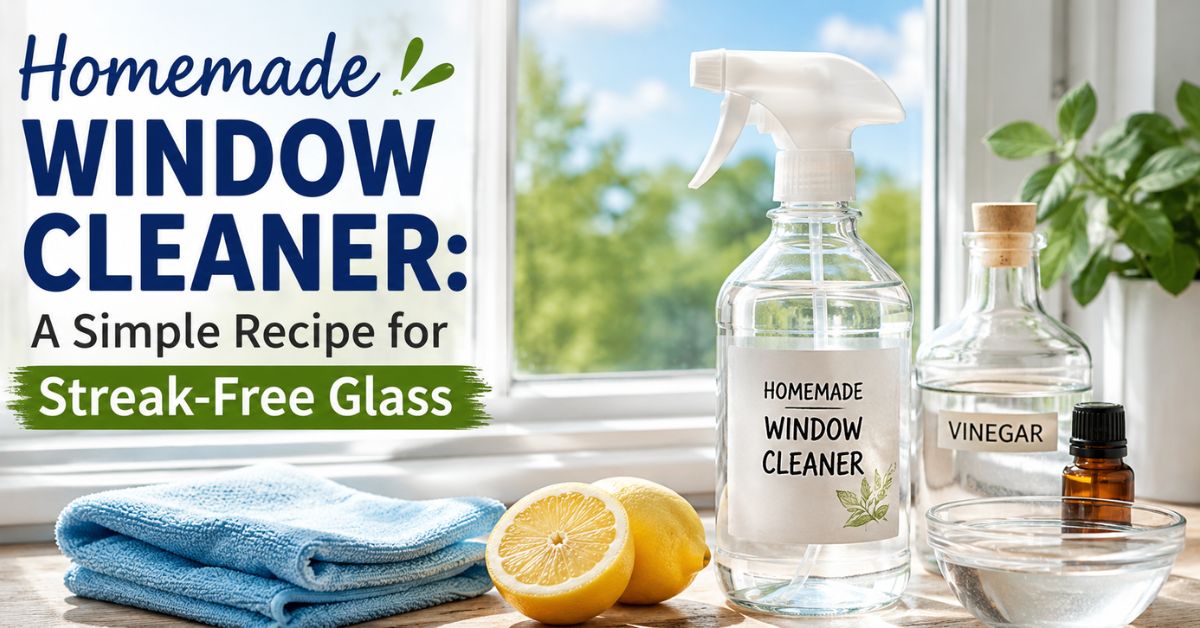
Introduction
I have tested many glass cleaning products over the years, but I keep returning to a reliable homemade window cleaner. Store-bought sprays can work well, yet some leave streaks behind or contain strong fragrances that linger for hours. With a homemade solution, you can control the ingredients and keep costs low.
One thing I noticed when cleaning windows in different seasons is that technique matters just as much as the cleaner itself. Even the best product can leave marks if applied incorrectly. That is why I combine a simple cleaning mixture with a few practical habits that consistently produce clear, sparkling glass.
Whether you’re cleaning living room windows, patio doors, mirrors, or glass tabletops, a well-made homemade window cleaner can deliver impressive results without breaking the bank.
Why Choose a Homemade Window Cleaner?
Many homeowners enjoy making their own cleaning products because the ingredients are easy to find and budget-friendly.
Benefits include:
- Lower cleaning costs
- Fewer unnecessary additives
- Adjustable recipes for different needs
- Quick preparation in minutes
- Useful for windows, mirrors, and glass doors
Another advantage is convenience. When fingerprints suddenly appear on glass or rain leaves spots behind, you can mix a fresh batch without making a trip to the store.
Homemade Window Cleaner Ingredients You Probably Already Have
The best recipes often rely on common household supplies.
Basic Ingredients
Most window cleaning mixtures use:
- White vinegar
- Distilled water
- Rubbing alcohol
- Dish soap
- Spray bottle
- Microfiber cloth
Each ingredient plays a role. Vinegar helps dissolve mineral residue, alcohol speeds up drying, and microfiber cloths reduce lint.
Simple Homemade Window Cleaner Recipe
My favorite recipe includes:
- 1 cup distilled water
- 1 cup white vinegar
- 1 tablespoon rubbing alcohol
Pour the ingredients into a spray bottle and shake gently.
This homemade window cleaner works well on everyday dust, fingerprints, and light grime.
Best Homemade Window Cleaner Recipes Compared
Different cleaning situations may require different mixtures.
| Cleaning Need | Ingredients | Best For |
| Everyday cleaning | Water + vinegar | Light dirt and fingerprints |
| Fast drying formula | Water + vinegar + rubbing alcohol | Large windows |
| Extra greasy glass | Water + dish soap + alcohol | Kitchen windows |
| Hard water spots | Vinegar-heavy mixture | Mineral deposits |
| Mirror cleaning | Water + alcohol | Bathroom mirrors |
I often switch between these recipes depending on the season and the amount of buildup on the glass.
How to Make Homemade Window Cleaner Step by Step
Creating your own cleaner takes only a few minutes.
Step 1: Choose a Clean Bottle
Always use a clean spray bottle. Residue from previous products may affect results.
Step 2: Measure Carefully
Accurate measurements help maintain consistent performance.
Step 3: Mix Ingredients
Add liquids slowly and secure the lid tightly before shaking.
Step 4: Label the Bottle
If you keep multiple cleaning solutions, labeling prevents confusion later.
Step 5: Store Properly
Keep the bottle in a cool location away from direct sunlight.
How I Use Homemade Window Cleaner for the Best Results
A good cleaning method can make a huge difference.
Remove Dust First
Before spraying, wipe loose dust from the window frame and glass surface.
This prevents dirt from turning into muddy streaks.
Spray Lightly
Many people use too much cleaner. A light mist is usually enough.
Wipe in One Direction
I wipe horizontally on one side of the glass and vertically on the other. If a streak remains, I can quickly identify which side needs attention.
Buff with a Dry Cloth
Finalize the cleaning process by polishing with a dry microfiber cloth.
This extra step often creates a noticeably clearer finish.
Common Window Cleaning Mistakes
Even a quality homemade window cleaner can struggle when these mistakes occur.
Cleaning in Direct Sunlight
Sunlight causes the solution to dry too quickly.
The result is often streaking and spotting.
Using Paper Towels
Paper towels may leave lint behind.
Microfiber cloths usually perform much better.
Skipping Frame Cleaning
It is possible for dirty frames to transfer grime back onto clean glass.
Always wipe surrounding areas first.
Using Dirty Cloths
A cloth filled with old dirt simply spreads residue around.
Wash microfiber cloths regularly for better results.
Homemade Window Cleaner for Different Areas of the Home
One reason I like homemade cleaners is their versatility.
Living Room Windows
These windows typically collect fingerprints and dust.
A vinegar-based formula usually handles both effectively.
Kitchen Windows
Kitchen glass often accumulates grease from cooking.
Adding a small drop of dish soap improves cleaning power.
Bathroom Mirrors
Bathroom mirrors benefit from alcohol-based formulas because they dry quickly and help reduce streaks.
Glass Doors
Patio doors receive frequent handprints.
Regular touch-ups keep them looking clear and bright.
Natural Alternatives for Homemade Window Cleaner
Some homeowners prefer experimenting with different ingredients.
Lemon Juice
Lemon juice provides mild cleaning power and a fresh scent.
Cornstarch
A small amount of cornstarch is sometimes added to reduce streaking.
Essential Oils
A few drops of essential oil can improve fragrance.
Popular choices include:
- Lemon
- Orange
- Lavender
- Peppermint
Use these sparingly to avoid leaving residue.
How Often Should Windows Be Cleaned?
The frequency of cleaning depends on the location and the environment.
General recommendations:
- Interior windows: Every 1–2 months
- Exterior windows: Every 2–3 months
- Kitchen glass: Monthly
- Bathroom mirrors: Weekly
- Glass doors: As needed
Homes near busy roads may require more frequent cleaning due to dust and pollution.
Is Homemade Window Cleaner Better Than Store-Bought Products?
In my experience, both options can produce good results.
Store products may offer convenience, but a properly mixed homemade window cleaner often delivers similar performance for routine cleaning.
The biggest advantage is flexibility. You can adjust the formula depending on the task while spending only a fraction of the cost.
For homeowners who clean glass regularly, the savings add up over time.
Conclusion
A reliable homemade window cleaner does not require complicated ingredients or expensive products. Simple combinations of vinegar, water, and rubbing alcohol can handle everyday fingerprints, dust, and light grime while helping glass stay bright and clear.
The key is pairing the right recipe with proper cleaning techniques. Use clean microfiber cloths, avoid direct sunlight, and apply only a light mist of solution. These small habits can dramatically improve results.
If you enjoy practical, budget-friendly household solutions, try making your own homemade window cleaner and see how well it works in your home. A few minutes of preparation can leave your windows looking noticeably cleaner and clearer.
A mixture of equal parts distilled water and white vinegar with a small amount of rubbing alcohol is one of the most effective recipes.
When used correctly and wiped with a microfiber cloth, vinegar generally does not leave streaks.
Yes. Most glass-cleaning recipes work well on mirrors.
Too much cleaner, dirty cloths, or cleaning in direct sunlight often causes streaking.
No, but it helps the solution dry faster and can improve results.
You can, but distilled water helps prevent mineral spots in areas with hard water.

Muhammad Ahad — Passionate writer sharing informative, engaging, and easy-to-read articles across different topics. Focused on delivering valuable content that helps readers learn, explore, and stay inspired every day.
1 thought on “Homemade Window Cleaner: A Simple Recipe for Streak-Free Glass”