

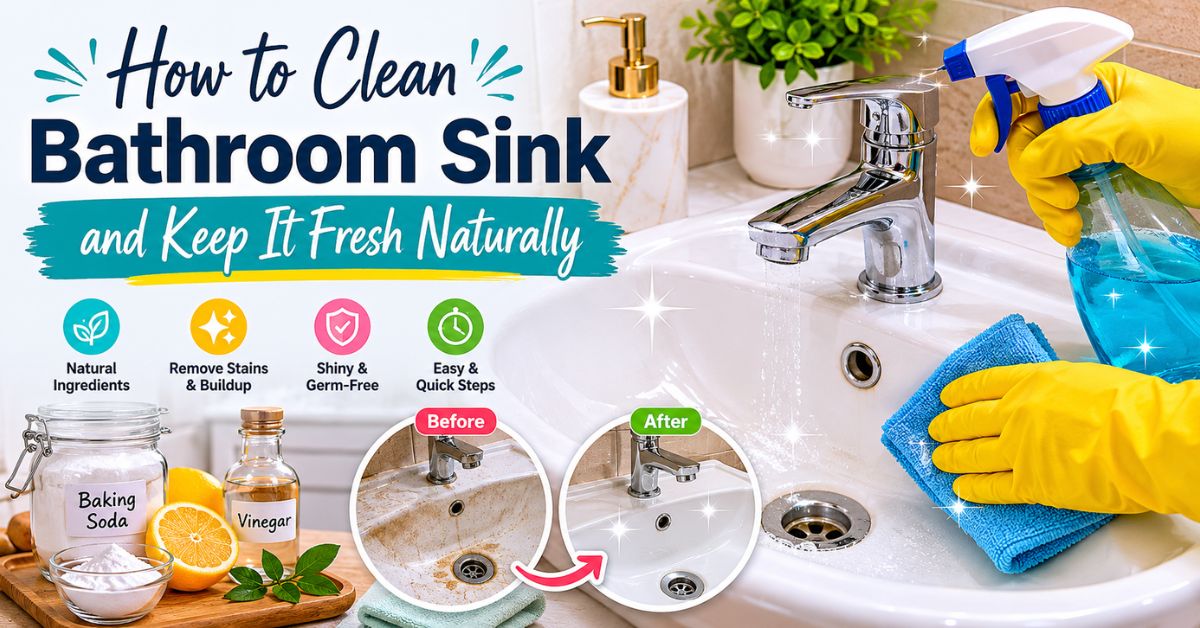
Introduction
I used to think a quick rinse was enough to keep a sink clean. Then I noticed water spots around the faucet, toothpaste stuck near the drain, and a strange smell that kept coming back. That was the moment I realized that learning how to clean bathroom sink surfaces properly makes a huge difference in how fresh the whole bathroom feels.
A bathroom sink gets dirty faster than most people expect. Soap residue, shaving cream, makeup stains, hair, and hard water buildup collect every day. If you clean it the right way and follow a simple routine, the sink stays shiny without needing heavy scrubbing every weekend.
The good news is that you do not need expensive supplies. Cleaning with simple household items is usually more effective than using harsh cleaners. I have tested different methods over the years, and the process below is the one I keep coming back to because it is quick, practical, and safe for most sink materials.
What You Need Before You Start
Before beginning the cleaning process, gather everything first. This saves time and keeps the job easy.
Basic Cleaning Supplies
- Microfiber cloth
- Soft sponge
- Old toothbrush
- Baking soda
- Dish soap
- White vinegar
- Warm water
- Paper towels
- Rubber gloves
Optional Supplies for Tough Stains
- Hydrogen peroxide
- Lemon juice
- Non-abrasive bathroom cleaner
- Drain brush
I prefer using microfiber cloths because they leave fewer streaks around chrome faucets and ceramic surfaces.
Common Bathroom Sink Problems
Every sink gets dirty differently depending on how often it is used and what products are used around it.
Toothpaste Residue
Toothpaste dries quickly and leaves white marks around the basin and faucet handles.
Hard Water Stains
If your water has minerals, you may notice cloudy spots or chalky buildup.
Soap Scum
Soap and water combine to create a dull film on the sink surface.
Hair and Drain Odors
Hair buildup inside the drain often causes slow drainage and unpleasant smells.
Makeup and Shaving Mess
Foundation stains, shaving cream, and beard trimmings can make the sink look dirty even after rinsing.
Step-by-Step Process for How to Clean Bathroom Sink
The easiest way to clean a sink is to work from top to bottom. This prevents dirt from spreading back onto cleaned areas.
Quick Bathroom Sink Cleaning Table
| Step | What to Do | Best Product | Time Needed |
| 1 | Remove loose items | None | 1 minute |
| 2 | Rinse sink with warm water | Warm water | 1 minute |
| 3 | Apply cleaner or baking soda | Baking soda + dish soap | 2 minutes |
| 4 | Scrub sink surface | Soft sponge | 3 minutes |
| 5 | Clean faucet and handles | Vinegar cloth | 2 minutes |
| 6 | Scrub drain area | Toothbrush | 2 minutes |
| 7 | Rinse thoroughly | Warm water | 1 minute |
| 8 | Dry sink completely | Microfiber cloth | 2 minutes |
Remove Everything Around the Sink
Start by clearing the counter area.
Move away:
- Soap dispensers
- Toothbrush holders
- Makeup products
- Razors
- Decorative items
I always wipe these items separately because dust and water marks usually collect underneath them.
Rinse the Sink First
Warm water loosens surface dirt and softens dried toothpaste.
Do not skip this step. Scrubbing a dry sink often spreads grime around instead of removing it.
After rinsing, shake off excess water before applying cleaners.
Use Baking Soda for Everyday Cleaning
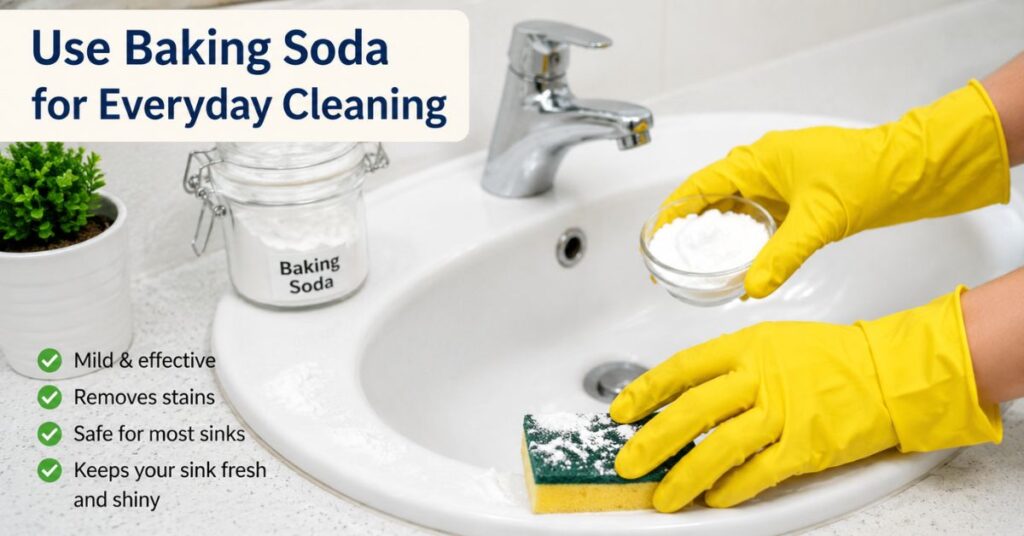
This is my favorite method for regular maintenance.
Sprinkle baking soda across the sink surface. Then add a few drops of dish soap onto a damp sponge.
Gently scrub:
- The basin
- Around the faucet
- Overflow opening
- Drain edges
The baking soda works like a mild scrub without scratching most surfaces.
If you are wondering how to clean bathroom sink stains without damaging the finish, this method is usually the safest starting point.
Clean the Faucet Properly
Faucets often look clean from a distance but collect fingerprints, water spots, and toothpaste splashes.
Vinegar Method
Soak a cloth in white vinegar and wrap it around the faucet for five minutes.
Then wipe gently.
This helps dissolve mineral buildup around the base and handles.
For tight corners, I use an old toothbrush because it reaches areas regular cloths miss.
How to Remove Hard Water Stains
Hard water stains are one of the most annoying bathroom problems.
I once ignored them for months, and the faucet lost its shine completely. After testing several methods, vinegar worked best for me.
Simple Hard Water Solution
- Soak paper towels in vinegar
- Place them over stained areas
- Wait 10 minutes
- Scrub lightly
- Rinse and dry
If stains remain, sprinkle baking soda on top before scrubbing again.
Avoid steel wool or rough scrubbers because they can scratch ceramic and metal surfaces.
Clean Around the Drain
The drain area traps the most hidden grime.
You may notice:
- Hair
- Soap buildup
- Black residue
- Bad smells
Easy Drain Cleaning Routine
Pour hot water into the drain first.
Then add:
- 1/2 cup baking soda
- 1 cup vinegar
Let it fizz for about 10 minutes before flushing with warm water.
This method helps freshen the drain naturally.
For deeper buildup, use a drain brush carefully.
Best Way to Clean Different Sink Materials
Not every sink needs the same treatment.
Ceramic Sinks
Ceramic sinks are durable and easy to maintain.
Use:
- Dish soap
- Baking soda
- Vinegar
Avoid dropping heavy items because ceramic can chip.
Porcelain Sinks
Porcelain scratches more easily than people realize.
Use soft cloths only and avoid abrasive powders.
Glass Sinks
Glass sinks show water spots quickly.
Dry them immediately after cleaning for a streak-free finish.
Natural Stone Sinks
Stone sinks require extra care.
Do not use strong vinegar solutions on marble or natural stone because acid may damage the surface.
Instead, use mild soap and warm water.
What is the best way to clean a bathroom sink?
The answer depends on how many people use the bathroom.
Daily Maintenance
- Rinse toothpaste away
- Wipe water spots
- Dry faucet handles
This takes less than one minute.
Weekly Deep Cleaning
Do a full scrub once a week to prevent buildup.
Monthly Drain Cleaning
Use the baking soda and vinegar drain method monthly to reduce odors and clogs.
A simple routine keeps the sink from becoming difficult to clean later.
Mistakes People Make While Cleaning Bathroom Sinks
I made several of these mistakes before finding a better system.
Using Harsh Scrubbers
Rough scrubbers can leave scratches that collect even more dirt later.
Leaving Cleaner Too Long
Some products damage finishes if left sitting for too long.
Always read labels carefully.
Forgetting to Dry the Sink
Drying matters more than people think. Water spots form quickly on metal and glass surfaces.
Ignoring the Faucet Base
Grime usually hides around the faucet base where water collects daily.
Simple Habits That Keep the Sink Cleaner Longer
The biggest improvement comes from small habits.
Wipe the Sink After Use
A quick wipe prevents toothpaste and soap from drying.
Use Less Product Around the Sink
Too much soap and toothpaste create extra mess.
Keep a Microfiber Cloth Nearby
I keep one inside the vanity drawer for quick touch-ups.
Flush the Drain Weekly
Hot water helps prevent buildup before it becomes serious.
Deep cleaning time is dramatically reduced by these tiny habits.
Eco-Friendly Ways to Clean Bathroom Sink Areas
Many store cleaners contain strong chemicals and heavy fragrances.
I switched to simpler cleaning methods because they feel safer and still work well.
Natural Cleaning Combination
Mix:
- Warm water
- White vinegar
- Small amount of dish soap
This works well for:
- Ceramic sinks
- Faucet cleaning
- Light stains
Lemon for Fresh Smell
Rubbing lemon around the drain area leaves the sink smelling fresher naturally.
Always rinse afterward to avoid sticky residue.
Signs Your Sink Needs a Deep Clean
Sometimes a quick wipe is not enough.
Watch for these signs:
- Slow draining water
- Persistent odor
- Cloudy sink surface
- Yellow stains
- Black residue near drain
- Water spots that do not wipe away
When these appear, spend extra time cleaning both the sink and the drain system.
Conclusion
Learning how to clean bathroom sink surfaces properly does not require complicated tools or expensive cleaners. A simple routine using baking soda, vinegar, warm water, and soft cloths can keep the sink fresh, shiny, and free from buildup.
The key is consistency. Small daily habits prevent heavy stains, bad smells, and stubborn grime from taking over. Once I started spending a few minutes each week maintaining the sink, cleaning became much faster and easier.
Try the methods above and adjust them based on your sink material and daily use. A cleaner sink instantly makes the entire bathroom feel more comfortable and well maintained.
You can use baking soda, dish soap, and white vinegar. These ingredients remove most stains and soap buildup without harsh chemicals.
For everyday cleaning, mild dish soap and baking soda work very well. Vinegar helps with hard water stains.
Light wiping daily and deep cleaning once a week usually keeps the sink in good condition.
Vinegar is safe for many ceramic and porcelain sinks, but avoid using it on natural stone surfaces like marble.
Hair, soap buildup, and bacteria inside the drain often cause odors. Cleaning the drain regularly helps prevent smells.
Use baking soda with a small amount of hydrogen peroxide. Scrub gently after it has sat for a short while.

Muhammad Ahad — Passionate writer sharing informative, engaging, and easy-to-read articles across different topics. Focused on delivering valuable content that helps readers learn, explore, and stay inspired every day.
1 thought on “How to Clean Bathroom Sink and Keep It Fresh Naturally”