

Introduction
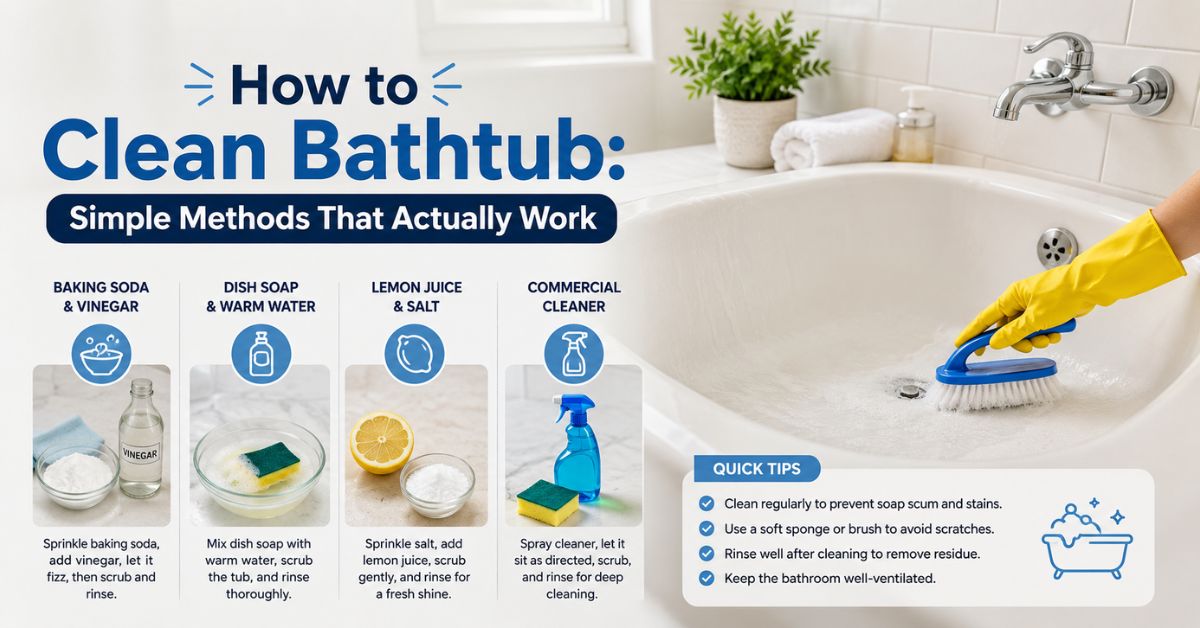
I used to think scrubbing a bathtub required strong chemicals and a lot of effort. After trying different methods in my own home, I discovered that the best results often come from simple techniques and a consistent routine. Whether your tub has soap scum, hard water stains, body oils, or general dirt buildup, learning how to clean bathtub surfaces properly can save time and keep your bathroom looking fresh.
A clean bathtub not only looks better but also feels more comfortable to use. The good news is that most bathtub messes can be removed with common household supplies. In this article, I’ll share practical cleaning methods, useful tips, and mistakes to avoid so you can keep your bathtub spotless without unnecessary work.
Why Bathtubs Get Dirty So Quickly
Bathtubs collect more than just water. Every bath or shower leaves behind residues that gradually build up.
Common causes include:
- Soap scum
- Hard water minerals
- Shampoo residue
- Body oils
- Dirt and dust
- Mold and mildew in damp areas
When these substances accumulate, the bathtub starts looking dull and stained.
Supplies Needed for How to Clean Bathtub Projects
Before starting, gather these basic supplies:
- Baking soda
- White vinegar
- Dish soap
- Spray bottle
- Soft sponge
- Microfiber cloth
- Soft-bristle brush
- Rubber gloves
- Warm water
These simple items handle most bathtub cleaning jobs effectively.
Step-by-Step Guide on How to Clean Bathtub Properly
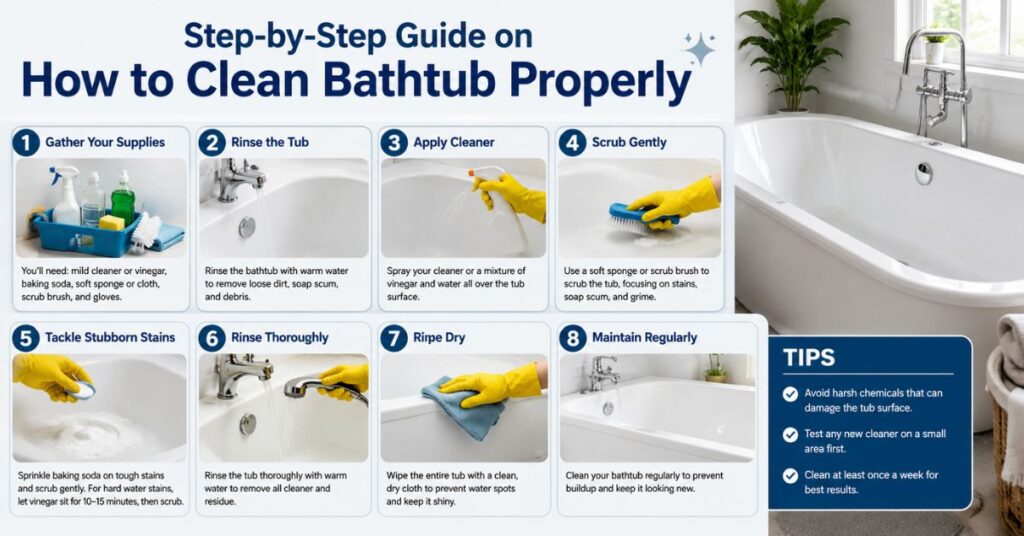
Step 1: Remove Loose Dirt
Rinse the bathtub with warm water. This helps loosen dirt and removes hair or debris sitting on the surface.
Step 2: Apply Cleaning Solution
For everyday cleaning, mix:
- 1 cup white vinegar
- 1 tablespoon dish soap
Spray the mixture over the entire bathtub surface.
Allow it to sit for 10–15 minutes.
Step 3: Scrub Gently
Use a soft sponge or brush to scrub the bathtub.
Pay extra attention to:
- Corners
- Drain area
- Water line
- Faucet surroundings
Avoid aggressive scrubbing that could damage certain bathtub finishes.
Step 4: Rinse Thoroughly
Rinse with warm water until all cleaning solution is removed.
Step 5: Dry the Surface
Use a microfiber cloth to wipe the tub dry. This prevents water spots and slows future buildup.
Bathtub Cleaning Methods Comparison
| Cleaning Method | Best For | Difficulty | Cost |
| Vinegar and Dish Soap | Soap scum | Easy | Low |
| Baking Soda Paste | Light stains | Easy | Low |
| Hydrogen Peroxide | Tough discoloration | Moderate | Low |
| Commercial Cleaner | Heavy buildup | Easy | Medium |
| Steam Cleaning | Deep cleaning | Moderate | High |
This table helps you choose the right approach based on the condition of your bathtub.
Natural Ways to Clean a Bathtub
Many homeowners prefer natural cleaning methods.
Baking Soda Paste
Mix baking soda with a small amount of water until a thick paste forms.
Apply it to stained areas.
Before scrubbing and rinsing, let it sit for 15 minutes.
Vinegar Spray
White vinegar works well against mineral deposits and soap residue.
Spray directly onto problem areas and let it sit before cleaning.
Lemon for Freshness
Cut a lemon in half and rub it over stained sections.
The mild acidity helps break down grime while leaving a fresh scent.
How to Clean Bathtub Stains
Some stains require special attention.
Yellow Stains
Yellow discoloration often comes from hard water minerals.
Use:
- Baking soda
- Vinegar
- Soft brush
Apply, scrub gently, and rinse thoroughly.
Rust Stains
Rust can appear around drains or metal fixtures.
A paste made from baking soda and lemon juice often works well.
Allow it to sit for 20 minutes before scrubbing.
Soap Scum Buildup
Soap scum is one of the most common bathtub problems.
Spray vinegar and dish soap mixture generously and allow extra soaking time before cleaning.
How to Clean Bathtub Without Damaging the Surface
Different bathtub materials require different care.
Acrylic Bathtubs
Use:
- Soft sponges
- Mild dish soap
- Non-abrasive cleaners
Avoid steel wool and rough scrubbing pads.
Porcelain Bathtubs
Porcelain is durable but can still be scratched.
Choose gentle brushes and avoid harsh abrasives.
Fiberglass Bathtubs
Fiberglass scratches easily.
If you want to clean your house, use soft cloths and mild cleaning products.
Understanding your bathtub material helps extend its lifespan.
Common Mistakes People Make
Over the years, I have noticed several cleaning mistakes that create more problems than solutions.
Avoid these:
- Using metal scrubbers
- Mixing cleaning chemicals
- Ignoring small stains
- Leaving cleaners on too long
- Skipping regular maintenance
Small habits can make a significant difference in keeping the bathtub clean.
How Often Should You Clean Your Bathtub?
Cleaning frequency depends on usage.
General recommendations:
- Light use: Once per week
- Average family use: Every 5–7 days
- Heavy use: Every 2–3 days
A quick rinse after each shower can reduce future scrubbing dramatically.
Best Routine for Maintaining a Clean Bathtub
A maintenance routine prevents heavy buildup.
Daily Tasks
- Rinse bathtub after use
- Remove hair and debris
- Allow ventilation
Weekly Tasks
- Clean entire bathtub surface
- Scrub corners
- Wipe fixtures
Monthly Tasks
- Deep clean stains
- Inspect grout and caulking
- Remove mineral deposits
Following a schedule reduces cleaning time in the long run.
How to Remove Hard Water Deposits
The stains caused by hard water are common in many homes.
To remove them:
- Spray white vinegar generously.
- Let it sit for 20 minutes.
- Sprinkle baking soda.
- Scrub gently.
- Rinse thoroughly.
This method often removes mineral buildup without harsh chemicals.
Dealing With Mold and Mildew Around the Bathtub
Moisture encourages mold growth.
Common locations include:
- Caulk lines
- Corners
- Around fixtures
Use a mixture of vinegar and water to treat mild mold problems.
For prevention:
- Keep the bathroom ventilated.
- Use an exhaust fan.
- Dry wet surfaces regularly.
Time-Saving Tips for How to Clean Bathtub Faster
Over time, I developed several shortcuts that save effort.
Helpful tips include:
- Keep a sponge in the bathroom.
- Wipe surfaces immediately after bathing.
- Use a daily shower spray.
- Clean small spots before they become large stains.
- Dry the bathtub after each use.
These habits reduce deep-cleaning sessions significantly.
Signs Your Bathtub Needs Deep Cleaning
Sometimes regular cleaning is not enough.
Watch for:
- Persistent odors
- Discoloration
- Heavy soap scum
- Visible mold
- Rough surface texture
These signs indicate it’s time for a more thorough cleaning session.
Conclusion
Learning how to clean bathtub surfaces effectively does not require expensive products or complicated techniques. Consistent maintenance, gentle cleaning tools, and simple household ingredients can keep your tub looking fresh year-round. Start with a regular weekly routine, tackle stains before they become severe, and use the methods discussed above to make how to clean bathtub tasks faster and easier. If you found these tips helpful, explore more practical home cleaning guides and household solutions at Clean Home Craft.
A mixture of vinegar and dish soap is one of the easiest and most effective methods for routine bathtub cleaning.
No. Baking soda is generally safe for most bathtub surfaces when used with a soft sponge.
Allow vinegar and dish soap solution to soak on the surface before scrubbing. Extra soaking time often improves results.
Most households benefit from a deep cleaning once every month.
Not usually. Many stains and residues can be removed using vinegar, baking soda, and dish soap.

Muhammad Ahad — Passionate writer sharing informative, engaging, and easy-to-read articles across different topics. Focused on delivering valuable content that helps readers learn, explore, and stay inspired every day.
1 thought on “How to Clean Bathtub: Simple Methods That Actually Work”