

Introduction
I used to focus on cleaning bathroom floors, mirrors, and sinks while completely ignoring the walls. Then one day I noticed faint yellow stains near the shower and dust collecting in the corners. That was when I realized bathroom walls quietly collect moisture, soap residue, dust, and even mildew over time.
Learning how to clean bathroom walls properly can make the entire room feel brighter and fresher. The good news is that you do not need expensive products or professional equipment. A few simple supplies and the right method can remove grime without damaging paint, tiles, or wallpaper.
In my experience, regular wall cleaning prevents long-term stains and helps keep the bathroom smelling clean. Whether your walls are painted, tiled, or covered with moisture-resistant panels, the techniques below can help restore their appearance.
Why Bathroom Walls Get Dirty So Quickly
Bathrooms create the perfect environment for buildup because of constant humidity and limited airflow.
Common causes include:
- Soap splashes from showers
- Hair spray and beauty products
- Dust sticking to damp surfaces
- Hard water deposits
- Mold and mildew growth
- Fingerprints and smudges
- Condensation from hot showers
Even if the walls look clean at first glance, they often hold a thin layer of residue that dulls their appearance.
How to Clean Bathroom Walls Safely
Determine the type of wall surface before you begin. Different materials require different cleaning approaches.
Supplies I Usually Use
- Microfiber cloths
- Soft sponge
- Bucket of warm water
- Mild dish soap
- White vinegar
- Spray bottle
- Soft-bristle brush
- Dry towel
- Rubber gloves
Avoid abrasive scrubbers unless you are cleaning durable tile surfaces.
Bathroom Wall Cleaning Methods Comparison
| Wall Type | Recommended Cleaner | Cleaning Tool | Special Note |
| Painted Walls | Warm water and dish soap | Microfiber cloth | Avoid excessive moisture |
| Tile Walls | Vinegar solution | Sponge or brush | Great for soap scum |
| Vinyl Panels | Mild soap solution | Soft cloth | Rinse thoroughly |
| Wallpaper | Damp cloth only | Soft microfiber | Avoid soaking |
| Mold-Prone Areas | Vinegar and water | Soft brush | Improve ventilation afterward |
Preparing the Walls Before Cleaning
Proper preparation saves time and prevents streaks.
Remove Surface Dust First
Always dust walls before applying any liquid cleaner.
I usually start from the top and work downward using a dry microfiber cloth. This removes loose particles that would otherwise turn into muddy streaks.
Protect Nearby Items
Move:
- Towels
- Toilet paper
- Bathroom decorations
- Electric appliances
This keeps everything dry and makes cleaning easier.
How to Clean Bathroom Walls with Dish Soap
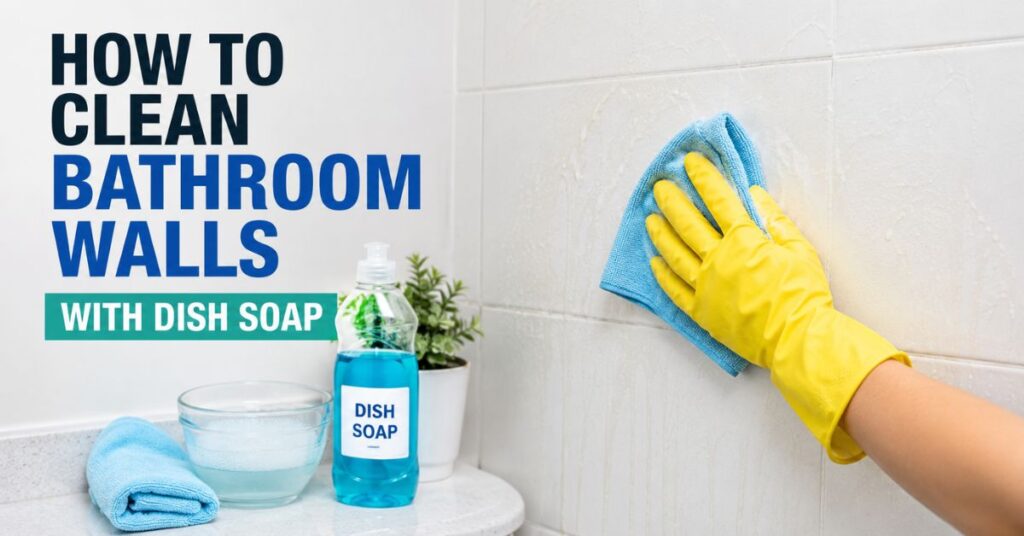
One of the safest methods for most bathroom walls is a simple soap solution.
Step 1: Mix the Cleaning Solution
Add a few drops of dish soap to warm water.
The water should feel slightly slippery but not overly soapy.
Step 2: Wipe the Walls
Dip a microfiber cloth into the solution.
Wring it out thoroughly.
Using gentle circular motions, clean the entire surface.
Step 3: Rinse
Clean water should be applied to a second cloth.
Remove any remaining soap residue.
Step 4: Dry the Surface
Use a dry towel to prevent water spots.
It is particularly effective on painted bathroom walls.
How to Clean Bathroom Walls Naturally with Vinegar
For soap scum and mineral deposits, vinegar is one of my favorite natural solutions.
Create a Vinegar Spray
Mix:
- 1 part white vinegar
- 1 part warm water
Pour into a spray bottle.
Apply and Wait
Spray lightly on the wall surface.
Allow the solution to sit for about five minutes.
Wipe Clean
Use a soft cloth or sponge.
The vinegar helps loosen stubborn buildup without harsh chemicals.
Important Tip
Do not use vinegar on natural stone surfaces because it can damage the finish.
Cleaning Painted Bathroom Walls
Painted walls require a gentler touch.
Use Minimal Water
Too much moisture may damage paint or leave streaks.
Always use a barely damp cloth.
Focus on Problem Areas
Pay extra attention to:
- Around light switches
- Near sinks
- Behind toilets
- Around shower entrances
These spots often collect fingerprints and moisture stains.
Test First
When using any cleaner, test a small hidden area before cleaning the entire wall.
Cleaning Tiled Bathroom Walls
Tile walls can handle stronger cleaning methods.
Remove Soap Scum
A vinegar solution often cuts through soap residue effectively.
After spraying, wait a few minutes, then scrub lightly.
Clean Tile Grout
Use a soft brush to clean grout lines.
Work in small sections for better results.
Rinse Thoroughly
Always rinse tile walls after cleaning to prevent residue buildup.
How to Remove Mold and Mildew from Bathroom Walls
Mold thrives in damp environments.
Small spots can often be handled with common household cleaners.
Signs of Mold Growth
Look for:
- Black spots
- Green patches
- Musty smells
- Discoloration
Cleaning Small Areas
Spray a vinegar solution directly onto affected areas.
Let it sit for 15 minutes.
Gently scrub with a soft brush.
Wipe clean and dry completely.
Improve Ventilation
After cleaning:
- Open windows
- Run the exhaust fan
- Leave the door open after showers
Reducing moisture helps prevent future growth.
Common Mistakes to Avoid
Over the years I have learned that certain mistakes can make wall cleaning harder.
Using Too Much Water
Excess moisture can damage paint and encourage mold growth.
Scrubbing Too Aggressively
Harsh scrubbing may remove paint or damage finishes.
Ignoring Ventilation
A clean wall can quickly become dirty again if humidity remains trapped.
Skipping Regular Maintenance
Waiting too long between cleanings often allows stains to become more difficult to remove.
My Preferred Routine for Keeping Bathroom Walls Clean
Rather than deep cleaning every few weeks, I prefer a simple maintenance routine.
Weekly:
- Wipe visible splashes
- Dust corners
- Check for mildew
Monthly:
- Wash walls with mild soap solution
- Clean around fixtures
- Inspect grout and corners
This routine keeps buildup under control and reduces cleaning time later.
Benefits of Regular Bathroom Wall Cleaning
Consistent wall cleaning provides several advantages.
- Brighter bathroom appearance
- Reduced mold growth
- Better indoor air quality
- Less staining
- Longer-lasting paint and finishes
- Fresher smell throughout the room
Most importantly, it prevents small problems from becoming expensive repairs.
How to Clean Bathroom Walls Without Harsh Chemicals
Many people assume strong chemicals are necessary.
In reality, simple products often work just as well.
My preferred natural options include:
- White vinegar
- Mild dish soap
- Warm water
- Baking soda for spot cleaning
Using these products regularly keeps walls looking fresh while reducing exposure to strong odors and irritating cleaners.
Conclusion
Learning how to clean bathroom walls does not require complicated products or professional tools. A simple combination of regular dusting, mild soap, and occasional vinegar cleaning can keep walls looking fresh throughout the year.
The biggest difference comes from consistency. Small monthly cleanings prevent heavy buildup, reduce mold risk, and help maintain a bright bathroom environment. Try adding wall cleaning to your regular bathroom routine, and you will notice the entire space feels cleaner and more inviting.
If you found these tips helpful, explore more practical home-cleaning guides and maintenance ideas to keep every room in your home looking its best.
A light cleaning once a month is usually enough. Bathrooms with heavy use may benefit from more frequent cleaning.
Bleach can remove mold stains, but it should be used carefully and with proper ventilation. For routine cleaning, milder options are often sufficient.
A mixture of equal parts white vinegar and warm water works well for many bathroom surfaces.
Use a soft cloth with a mild soap solution and avoid excessive moisture.
Hair products, soap residue, humidity, and dust often combine to create a sticky film.
Vinegar is generally safe for painted walls and ceramic tile but should not be used on natural stone surfaces.

Muhammad Ahad — Passionate writer sharing informative, engaging, and easy-to-read articles across different topics. Focused on delivering valuable content that helps readers learn, explore, and stay inspired every day.
1 thought on “How to Clean Bathroom Walls: Fresh & Spotless Tips ”