

Introduction
I used to think dirty grout meant the whole floor needed replacing. No matter how often I mopped, the tiles still looked dull because the grout lines stayed dark and stained. After trying different homemade mixtures, store cleaners, and scrubbing tools over the years, I finally found practical methods that actually work without damaging the tile.
If you are struggling with bathroom grime, kitchen grease, or old floor stains, learning how to clean grout properly can completely change how your space looks. Bright grout lines instantly make tiles appear newer and cleaner.
The good news is that you do not always need expensive products. In many cases, simple household ingredients work better than harsh chemicals when used the right way.
Why Grout Gets Dirty So Quickly
Grout is naturally porous. That means it absorbs moisture, soap residue, grease, and dirt over time. In kitchens, cooking oils settle into grout lines. In bathrooms, soap scum and humidity create stubborn discoloration.
Here are the most common reasons grout becomes stained:
- Moisture buildup
- Poor ventilation
- Dirty mop water
- Grease splatter
- Hard water residue
- Mold and mildew growth
- Foot traffic on tiled floors
Light-colored grout usually shows dirt faster, especially in busy homes with kids or pets.
What You Need Before You Start
Before starting how to clean grout, gather a few simple tools. Having everything ready saves time and keeps the cleaning process smooth.
Basic Cleaning Supplies
- Baking soda
- White vinegar
- Warm water
- Spray bottle
- Old toothbrush or grout brush
- Microfiber cloth
- Small bowl
- Rubber gloves
Optional Items for Heavy Stains
- Hydrogen peroxide
- Steam cleaner
- Oxygen bleach
- Magic eraser
- Commercial grout cleaner
I personally keep an old electric toothbrush for grout cleaning. It reaches narrow lines easily and reduces hand fatigue during deep scrubbing sessions.
Best Homemade Method for Cleaning Grout
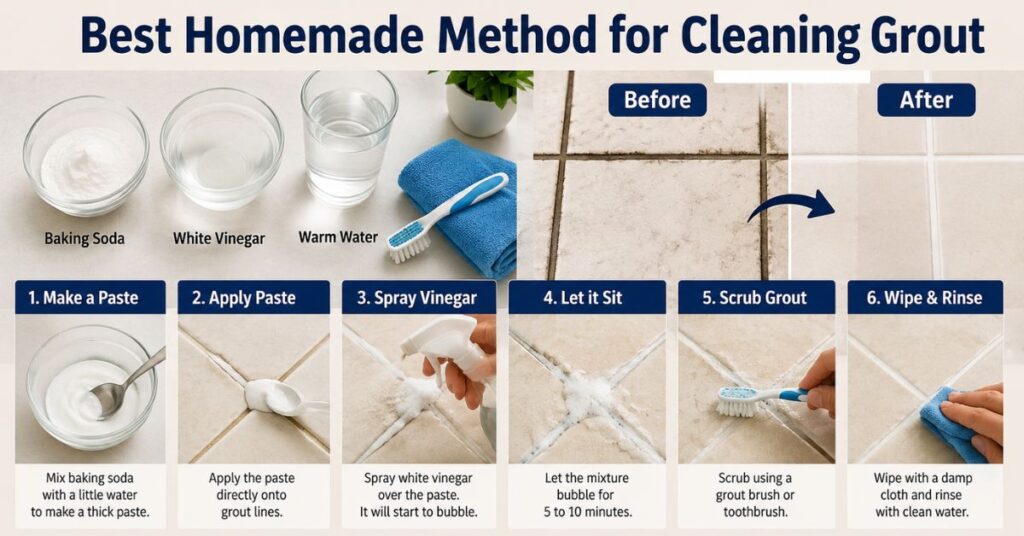
The baking soda and vinegar method remains one of the most reliable ways to restore grout naturally.
Step-by-Step Process
- Mix baking soda with a little water to create a thick paste.
- Apply the paste directly onto grout lines.
- Spray white vinegar over the paste.
- The mixture should bubble for five to ten minutes.
- Scrub using a grout brush or toothbrush.
- Wipe with a damp microfiber cloth.
- Rinse with clean water.
This method works especially well for bathroom floors and shower walls.
One mistake I made early on was letting the mixture dry completely before scrubbing. Fresh foam loosens dirt better, so I now scrub while the reaction is still active.
Comparison Table for Grout Cleaning Methods
| Cleaning Method | Best For | Cost | Scrubbing Level | Safe for Most Tiles |
| Baking Soda + Vinegar | Everyday dirt | Low | Medium | Yes |
| Hydrogen Peroxide Paste | Deep stains | Low | Medium | Yes |
| Steam Cleaner | Mold and grime | Medium | Low | Usually |
| Oxygen Bleach | Large floor areas | Medium | Medium | Yes |
| Commercial Cleaner | Heavy discoloration | Higher | Low to Medium | Depends on product |
How to Clean Bathroom Grout
Bathroom grout often collects soap scum, mildew, and moisture stains. It usually needs deeper cleaning than kitchen grout.
Focus on Ventilation
Before cleaning, open windows or turn on the exhaust fan. Dry air helps prevent mold from spreading during scrubbing.
Use Hydrogen Peroxide for Mold
For stubborn black spots, I mix:
- 1 part baking soda
- 1 part hydrogen peroxide
The paste lifts mold stains surprisingly well. Apply it directly to the grout and let it sit for about 10 minutes before scrubbing.
Avoid Metal Brushes
Metal scrubbers can scratch tile surfaces and damage grout. Soft-bristle brushes are safer and still effective.
How to Clean Kitchen Tile Grout
Kitchen grout usually becomes greasy rather than moldy. Around the stove area, grease sticks to grout lines and traps dust.
Degreasing Trick That Works
I often use warm water mixed with a few drops of dish soap before applying baking soda paste. This cuts through oily buildup faster.
Pay Attention to Corners
Corners near cabinets collect hidden grime. A small detailing brush works well in tight spaces.
If kitchen grout smells unpleasant even after cleaning, leftover grease is often the cause. If the problem persists, repeat the cleaning procedure.
The Fastest Way to Clean Floor Grout
Sometimes there is no time for detailed scrubbing. When I need quick results before guests arrive, I use a faster routine.
Quick Cleaning Routine
- Vacuum or sweep first
- Spray grout cleaner evenly
- Let it sit for 5 minutes
- Scrub high-traffic areas only
- Mop with warm water
Even a short cleaning session can noticeably brighten tile floors.
Steam Cleaning for Grout
Steam cleaners can make a huge difference, especially in bathrooms with years of buildup.
The heat loosens grime without heavy chemicals. I first tried steam cleaning after moving into an older apartment, and the grout color changed almost instantly.
Benefits of Steam Cleaning
- Less chemical use
- Faster dirt removal
- Good for moldy grout
- Easier on hands and knees
Things to Watch Out For
Not all grout handles extreme heat well. Very old or damaged grout may weaken further under intense steam pressure.
Always test a small hidden area first.
Common Mistakes People Make
When learning how to clean grout, many people accidentally make stains worse.
Using Too Much Water
Soaking grout can push dirt deeper into porous lines.
Scrubbing Too Aggressively
Hard scrubbing may chip grout or remove sealant.
Skipping Sealing
Freshly cleaned grout should ideally be sealed to protect against future stains.
Mixing Harsh Chemicals
Bleach mixed with ammonia-based products creates dangerous fumes. Never combine strong cleaners without checking labels carefully.
How to Keep Grout Clean Longer
After spending hours cleaning grout once, nobody wants stains returning immediately.
These habits make a noticeable difference:
- Dry shower walls after use
- Mop with clean water
- Clean spills quickly
- Use bathroom ventilation fans
- Seal grout yearly
- Vacuum tile floors regularly
I also avoid dark-colored cleaning products that leave residue behind.
Best Commercial Products for Tough Grout
While homemade solutions work most of the time, certain stains need stronger products.
Oxygen Bleach Cleaners
These are effective for deep floor grout stains without the harsh smell of chlorine bleach.
Grout Pens
Grout pens do not technically clean grout, but they refresh faded lines quickly. I sometimes use them in rental properties where grout still looks uneven after cleaning.
Tile-Safe Sprays
If you’re using a cleaner, always make sure it’s safe for:
- Natural stone
- Marble
- Ceramic tile
- Porcelain tile
Some acidic products can damage sensitive surfaces.
Should You Use Bleach on Grout?
Bleach can whiten grout temporarily, but it is not always the best long-term solution.
I stopped using straight bleach regularly because it weakened older grout in one bathroom over time.
Better Alternative
Oxygen bleach is usually safer and less harsh while still removing stains effectively.
If you still choose chlorine bleach:
- Wear gloves
- Open windows
- Dilute properly
- Never mix with vinegar
How Often Should You Clean Grout?
The answer depends on the area.
Recommended Cleaning Schedule
- Bathroom shower grout: weekly light cleaning
- Kitchen grout: every 2 weeks
- Floor grout: monthly deep cleaning
- Full grout sealing: once yearly
Frequent light cleaning is easier than waiting until stains become severe.
Signs Your Grout Needs Replacement
Sometimes cleaning is not enough anymore.
Here are signs grout may need replacing instead:
- Cracks in grout lines
- Missing sections
- Persistent mold returning quickly
- Loose tiles
- Water leaking behind tiles
In one older bathroom I worked on, cleaning improved the appearance temporarily, but cracked grout kept trapping moisture. Regrouting solved the issue permanently.
Conclusion
Learning how to clean grout completely changed how I maintain tiled spaces at home. Instead of replacing tiles or using harsh chemicals constantly, I now rely on simple routines that keep grout looking fresh with less effort.
The best approach usually starts with baking soda, vinegar, and patience. For deeper stains, hydrogen peroxide or steam cleaning can make a huge difference. Most importantly, regular maintenance prevents heavy buildup from returning too quickly.
If your grout has been making your floors or bathroom look older than they really are, try one of these methods this week. Small improvements in grout appearance can make the entire room feel cleaner and brighter.
Vinegar is safe for many tiled surfaces, but avoid using it regularly on natural stone because acidity can cause damage.
A paste made from baking soda and water followed by vinegar spray is one of the easiest and most affordable options.
Yes, many stained grout lines can brighten significantly with proper cleaning methods and consistent maintenance.
Most cleaners work best after sitting for 5 to 10 minutes. This helps loosen dirt before scrubbing.
Steam cleaning is generally safe for healthy grout, but damaged or aging grout may weaken further under high heat.
Black grout stains usually come from mold, mildew, trapped moisture, or dirt buildup in porous grout lines.

Muhammad Ahad — Passionate writer sharing informative, engaging, and easy-to-read articles across different topics. Focused on delivering valuable content that helps readers learn, explore, and stay inspired every day.
1 thought on “How to Clean Grout: Easy Methods That Actually Work”