

Introduction
Stainless steel has a reputation for looking sleek and modern, but anyone who owns stainless steel appliances, sinks, or cookware knows how quickly fingerprints, water spots, and greasy smudges can appear. Learning how to clean stainless steel properly can make a huge difference in keeping your kitchen and home looking polished without causing scratches or dull spots.
Over the years, I’ve tested countless cleaning methods on refrigerators, dishwashers, sinks, and cookware. Some products worked well, while others left streaks behind. At Clean Home Craft, we often find that the simplest techniques deliver the best results. The key is using the right tools, cleaning in the correct direction, and avoiding harsh materials that can damage the finish.
Whether you’re dealing with daily fingerprints or stubborn stains, the methods below can help restore the shine and protect your stainless steel surfaces.
Why Stainless Steel Needs Special Care
However, stainless steel does not resist stains completely. It resists corrosion better than many metals, but it can still develop:
- Water spots
- Grease buildup
- Fingerprints
- Food residue
- Surface discoloration
- Minor scratches
The protective chromium layer on stainless steel helps prevent rust. However, abrasive cleaners and rough scrubbing tools can damage that protective layer over time.
How to Clean Stainless Steel: Basic Step-by-Step Method
The easiest way to clean most stainless steel surfaces involves simple household supplies.
Supplies You’ll Need
- Warm water
- Microfiber cloth
- Mild dish soap
- Dry towel
- Spray bottle (optional)
Cleaning Steps
- Dust can be removed with a dry microfiber cloth.
- Mix a few drops of dish soap into warm water.
- Dampen a microfiber cloth with the solution.
- Wipe the surface following the grain of the steel.
- Rinse the cloth with clean water.
- Wipe away any soap residue.
- Dry immediately using a clean towel.
Following the grain is important because it reduces streaks and prevents unnecessary wear on the finish.
Step-by-Step Stainless Steel Cleaning Table
| Cleaning Task | Recommended Method | Best Tool | Frequency |
| Daily fingerprints | Damp microfiber cloth | Microfiber cloth | Daily |
| Light grease | Warm water and dish soap | Soft cloth | Weekly |
| Water spots | Vinegar solution | Spray bottle and cloth | As needed |
| Heavy grease | Dish soap plus warm water | Non-abrasive sponge | As needed |
| Polishing | Mineral oil or stainless steel polish | Microfiber cloth | Monthly |
| Sink cleaning | Baking soda paste | Soft sponge | Weekly |
How to Clean Stainless Steel Appliances
Large appliances often collect fingerprints throughout the day.
Refrigerator Doors
Refrigerator doors tend to show every touch, especially in busy households.
To clean:
- Spray warm water onto a microfiber cloth.
- Wipe along the grain.
- Remove stubborn fingerprints with a small amount of vinegar.
- Dry thoroughly.
Dishwashers
Dishwashers frequently collect water marks.
For best results:
- Clean with soapy water.
- Rinse with a damp cloth.
- Buff dry using a fresh microfiber towel.
Ovens and Microwaves
Kitchen grease often settles on stainless steel appliance surfaces.
Use:
- Warm water
- Dish soap
- Soft microfiber cloth
Avoid steel wool or rough scrubbers.
How to Clean Stainless Steel Naturally
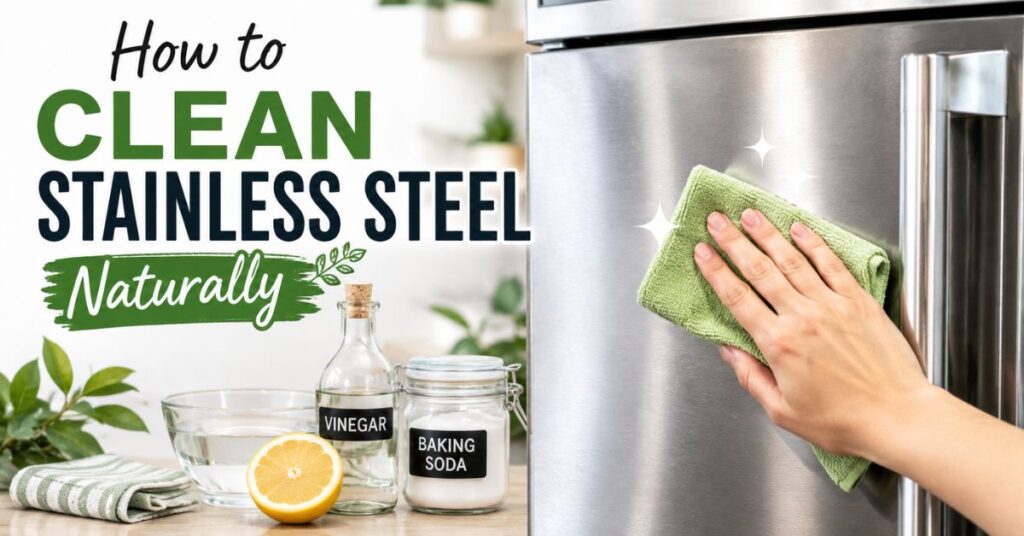
Many homeowners prefer natural cleaning methods over commercial products.
White Vinegar Method
White vinegar works well against fingerprints and mineral deposits.
Steps:
- Fill a spray bottle with white vinegar.
- Spray lightly onto the surface.
- Wipe with a microfiber cloth.
- Dry completely.
Vinegar helps dissolve residue without leaving a greasy film behind.
Baking Soda Paste
For tougher stains:
- Mix baking soda with a little water.
- Create a thick paste.
- Apply gently to the stained area.
- Rub carefully using a soft cloth.
- Rinse thoroughly.
- Dry immediately.
This method works particularly well on sinks and cookware.
How to Remove Fingerprints from Stainless Steel
Fingerprints are one of the most common complaints with stainless steel surfaces.
To remove them:
- Spray white vinegar onto a cloth.
- Wipe in the direction of the grain.
- Buff dry.
For extra shine:
- Place a tiny amount of mineral oil on a microfiber cloth.
- Polish lightly.
- Remove excess oil.
The surface will look cleaner and resist fingerprints longer.
How to Clean Stainless Steel Sinks
Kitchen sinks face constant exposure to food particles, water, and soap residue.
Daily Sink Cleaning
After washing dishes:
- Rinse the sink thoroughly.
- Wipe with a microfiber cloth.
- Dry completely.
This simple habit prevents mineral deposits from forming.
Deep Cleaning Method
For a deeper clean:
- Wet the sink.
- Sprinkle baking soda across the surface.
- Scrub gently with a soft sponge.
- Rinse well.
- Dry using a clean towel.
This process removes buildup while preserving the finish.
The best way to remove water spots from stainless steel
Hard water can leave cloudy marks and white spots.
Quick Water Spot Solution
Mix:
- Equal parts water
- Equal parts white vinegar
Spray the mixture onto affected areas.
Let it sit for one minute before wiping clean.
Dry thoroughly afterward.
Most water spots disappear immediately with this method.
The most common mistakes to avoid when cleaning stainless steel
Many scratches and dull surfaces happen because of simple cleaning mistakes.
Avoid these practices:
Using Steel Wool
Steel wool can scratch the surface permanently.
Leaving Water Behind
Standing water may create mineral spots.
Scrubbing Against the Grain
Always follow the grain pattern.
Using Harsh Chemicals
Avoid products containing:
- Bleach
- Chlorine
- Abrasive powders
These substances can damage the protective layer.
Skipping the Drying Step
Drying is just as important as washing.
A dry surface maintains a brighter shine.
How to Polish Stainless Steel for Extra Shine
In addition to improving appearance, polishing can also reduce fingerprints.
Mineral Oil Method
Apply:
- A few drops of mineral oil
- Soft microfiber cloth
Buff gently along the grain.
A little goes a long way.
Commercial Stainless Steel Polish
Many specialized stainless steel polishes are available.
Use only products specifically designed for stainless steel surfaces.
Always follow manufacturer instructions.
For more home cleaning ideas, readers of Clean Home Craft often prefer methods that combine simple ingredients with consistent maintenance habits rather than relying heavily on expensive specialty products.
How Often Should You Clean Stainless Steel?
Cleaning frequency depends on the surface.
High-Touch Appliances
Examples include:
- Refrigerators
- Dishwashers
- Microwaves
Clean every few days.
Stainless Steel Sinks
Clean daily and deep clean weekly.
Cookware
Wash after each use.
Decorative Surfaces
Dust and wipe weekly.
Regular maintenance prevents heavy buildup and reduces cleaning time later.
Signs Your Stainless Steel Needs Deep Cleaning
Watch for:
- Persistent fingerprints
- Greasy film
- Cloudy appearance
- Mineral deposits
- Food residue
- Dull finish
When these signs appear, use a more thorough cleaning process involving dish soap, vinegar, or baking soda.
Long-Term Maintenance Tips
Protecting stainless steel is easier than restoring it.
Helpful habits include:
- Wiping spills immediately
- Drying surfaces after cleaning
- Using microfiber cloths
- Avoiding abrasive cleaners
- Cleaning with the grain
- Polishing occasionally
These small habits help maintain a professional-looking finish for years.
Conclusion
Knowing how to clean stainless steel correctly helps preserve its appearance and extend its lifespan. Simple tools such as microfiber cloths, warm water, dish soap, vinegar, and baking soda can handle most cleaning tasks without damaging the finish. Remember to clean with the grain, avoid abrasive materials, and dry surfaces thoroughly after washing.
Consistent maintenance takes only a few minutes but keeps appliances, sinks, and cookware looking polished year-round. For more practical cleaning guides, household tips, and easy maintenance solutions, visit CleanHomeCraft.com and explore additional resources designed to make everyday cleaning simpler and more effective.
A microfiber cloth, warm water, and mild dish soap are usually the safest and most effective combination.
When used properly and rinsed if necessary, white vinegar is generally safe for stainless steel and works well for removing fingerprints and water spots.
Clean thoroughly, dry completely, and polish lightly with mineral oil or a stainless steel polish.
Yes. Baking soda is mildly abrasive and effective for removing stains when used gently.
Cloudiness often comes from mineral deposits, soap residue, or hard water stains.

Muhammad Ahad — Passionate writer sharing informative, engaging, and easy-to-read articles across different topics. Focused on delivering valuable content that helps readers learn, explore, and stay inspired every day.