

Introduction
If your dishwasher has started leaving behind tiny food particles, cloudy residue, or unpleasant odors, the filter may be the hidden culprit. Learning how to clean a dishwasher filter can restore cleaning performance and extend the life of your appliance without spending money on repairs.
At Clean Home Craft, we’ve found that many homeowners don’t realize dishwasher filters require regular attention. A quick cleaning every few weeks can dramatically improve results. The good news is that this task takes less than fifteen minutes and requires only a few basic supplies.
Whether you’re tackling this chore for the first time or looking for better techniques, these practical steps will help you keep your dishwasher working efficiently.
Why You Should Learn How to Clean a Dishwasher Filter
Dishwasher filters trap food scraps, grease, and debris to prevent them from recirculating onto your dishes. Over time, buildup affects performance.
Common signs your filter needs cleaning include:
- Dishes coming out dirty.
- A bad smell inside the dishwasher.
- Water draining slowly.
- Visible food particles after a wash cycle.
- Reduced cleaning efficiency.
Regular maintenance prevents these issues before they become major problems.
Understanding Dishwasher Filters
Most modern dishwashers have removable filters located at the bottom of the tub.
Manual Filters
Manual filters require periodic cleaning by the user. They are quieter and more energy efficient.
Self-Cleaning Filters
These use grinders to break down food debris automatically. However, they may still benefit from occasional inspection and maintenance.
Check your owner’s manual to identify your dishwasher type.
Supplies Needed for How to Clean a Dishwasher Filter
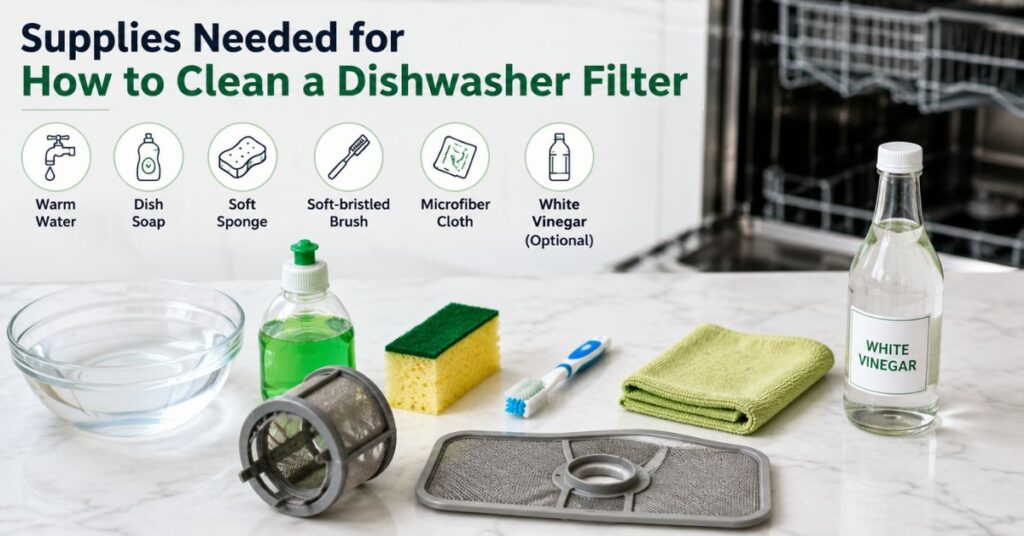
You likely already have everything required:
- Warm water
- Dish soap
- Soft sponge
- Soft-bristled brush or old toothbrush
- Microfiber cloth
- White vinegar (optional)
Avoid abrasive scrubbers that can damage delicate mesh surfaces.
Step-by-Step Guide: How to Clean a Dishwasher Filter
Cleaning the filter is simpler than many people expect.
Step 1: Turn Off the Dishwasher
For safety, ensure the appliance is turned off and cool before beginning.
Step 2: Remove the Bottom Rack
Slide out the lower rack completely to access the dishwasher floor.
Step 3: Locate the Filter
Most filters sit beneath the spray arm at the bottom center.
They often consist of:
- A cylindrical upper filter.
- A flat lower filter.
Step 4: Unlock and Remove the Filter
Twist the cylindrical filter counterclockwise.
Lift it gently upward.
Carefully remove any secondary filter pieces.
Step 5: Rinse Under Warm Water
Run warm water over the filter to loosen food particles.
Avoid extremely hot water if the manual advises against it.
Step 6: Scrub Away Residue
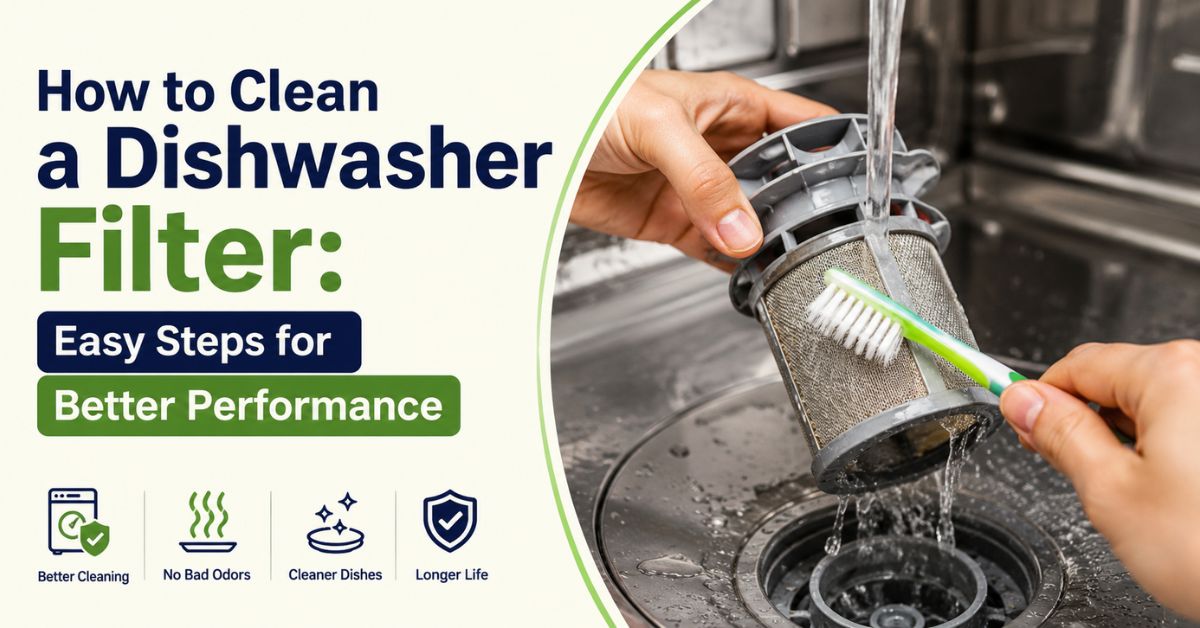
Use a soft toothbrush with dish soap.
Focus on:
- Mesh sections.
- Plastic grooves.
- Hidden crevices.
Never force debris through the mesh.
Step 7: Clean the Filter Housing
Wipe the filter compartment with a damp cloth.
Remove visible debris from surrounding areas.
Step 8: Reinstall the Filter
Place all components back correctly.
Twist until securely locked.
An improperly installed filter can affect dishwasher performance.
Dishwasher Filter Cleaning Schedule
The ideal cleaning frequency depends on dishwasher usage.
| Household Usage | Recommended Filter Cleaning |
| 1–2 loads weekly | Every 2 months |
| 3–5 loads weekly | Once monthly |
| Daily dishwasher use | Every 2–3 weeks |
| Large households | Every 2 weeks |
| Heavy food residue loads | Weekly inspection |
Following a schedule prevents stubborn buildup.
Common Mistakes to Avoid
Many homeowners unintentionally shorten the lifespan of their filters.
Avoid these mistakes:
- Using wire brushes.
- Ignoring unpleasant odors.
- Reinstalling the filter incorrectly.
- Delaying cleaning for several months.
- Using bleach unless approved by the manufacturer.
- Scrubbing aggressively.
Gentle cleaning is usually more effective.
Natural Cleaning Methods for Stubborn Buildup
Some residue can be difficult to remove.
Vinegar Soak
Mix equal parts:
- Warm water
- White vinegar
Soak the filter for fifteen to twenty minutes before scrubbing.
Baking Soda Paste
Combine baking soda with a small amount of water.
Apply to greasy spots.
Scrub lightly using a soft brush.
At Clean Home Craft, readers often appreciate these budget-friendly solutions because they rely on ingredients already found in most kitchens.
Benefits of Cleaning Your Dishwasher Filter Regularly
Maintaining your filter delivers noticeable improvements.
Better Cleaning Performance
Water circulates more efficiently.
Fresher Smelling Dishwasher
Food debris no longer sits trapped inside.
Lower Repair Risk
Reduced strain helps internal components function properly.
Improved Energy Efficiency
The dishwasher doesn’t need to work as hard.
Longer Appliance Lifespan
Preventive care often extends usability.
Small maintenance habits can save money over time.
What If the Filter Won’t Come Out?
Occasionally, filters become stuck.
Try these tips:
- Review the user manual.
- Check for locking tabs.
- Twist gently without forcing.
- Remove visible debris around the edges.
- Contact customer support if resistance continues.
Using excessive force may cause damage.
Signs It’s Time to Replace Your Dishwasher Filter
Cleaning isn’t always enough.
Replacement may be necessary if you notice:
- Torn mesh.
- Cracks in plastic components.
- Persistent odors despite cleaning.
- Filters that no longer lock securely.
- Significant wear from age.
Replacing damaged filters helps maintain optimal performance.
Conclusion
Knowing how to clean a dishwasher filter is one of the simplest ways to improve dishwasher performance. A few minutes of routine care can eliminate odors, boost cleaning power, and reduce unnecessary repairs. By following these practical steps and maintaining a regular schedule, you’ll keep your appliance operating efficiently for years to come.
For more practical cleaning solutions, household tips, and easy maintenance guides, visit CleanHomeCraft.com. Clean Home Craft is dedicated to helping homeowners simplify everyday chores with methods that actually work.
Most households benefit from monthly cleaning, although heavy use may require more frequent maintenance.
No. Operating without a filter can allow food debris to circulate and potentially damage internal components.
In most cases, yes. A diluted vinegar soak helps remove buildup. Always check manufacturer recommendations first.
Other causes may include clogged spray arms, hard water deposits, improper loading, or detergent issues.
No. Some models use self-cleaning systems. Consult your appliance manual to determine your dishwasher type.
Only if your manufacturer specifically approves it. Bleach may damage certain materials.

Muhammad Ahad — Passionate writer sharing informative, engaging, and easy-to-read articles across different topics. Focused on delivering valuable content that helps readers learn, explore, and stay inspired every day.
1 thought on “How to Clean a Dishwasher Filter: Easy Steps for Better Performance”