

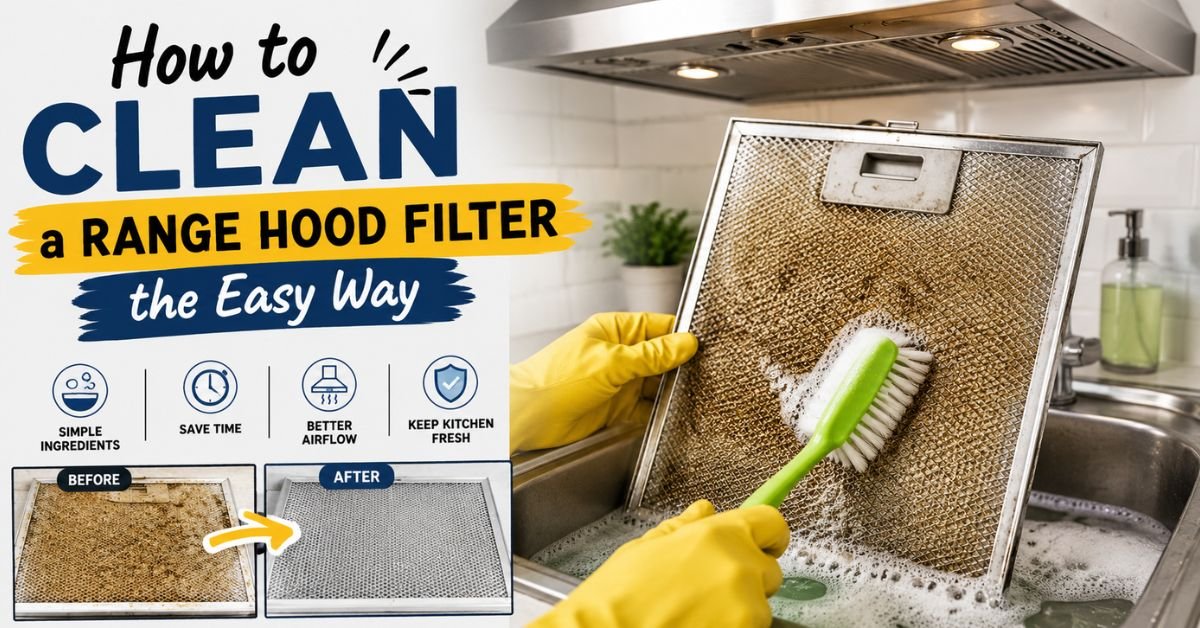
Introduction
When I first noticed that my kitchen still smelled like fried food hours after cooking, I assumed the range hood had stopped working. After a closer look, I found the real problem a grease-covered filter that had not been cleaned in months. A clogged filter reduces airflow, traps odors, and forces your range hood to work harder than necessary.
Learning How to Clean a Range Hood Filter is one of the easiest ways to improve your kitchen’s ventilation and keep cooking odors under control. The good news is that you don’t need expensive cleaners or professional help. In most homes, hot water, dish soap, and baking soda are enough to restore a greasy filter.
At Clean Home Craft, we regularly test practical household cleaning methods that are affordable, safe, and easy for busy homeowners. The method below is one I personally rely on because it delivers consistent results without damaging the filter.
Range Hood Filters Should Be Cleaned Regularly
Your range hood filter captures grease, smoke, cooking oil, and tiny food particles before they spread throughout your kitchen. Over time, this greasy buildup blocks airflow and makes the hood less effective.
Regular cleaning helps you:
- Improve kitchen ventilation
- Remove lingering cooking odors
- Reduce grease buildup on cabinets
- Improve suction performance
- Extend the life of your range hood
- Lower the risk of grease-related kitchen fires
If you cook daily, cleaning the filter every month is a smart habit. If you cook only occasionally, every two to three months is usually enough.
Signs Your Range Hood Filter Needs Cleaning
Many people forget about the filter until the hood stops working properly. Fortunately, there are several warning signs that tell you it’s time to clean it.
Look for these symptoms:
- Weak airflow from the hood
- Strong cooking odors that remain after meals
- Visible grease on the filter
- Sticky residue around the hood
- Loud fan operation
- Dripping grease during cooking
Ignoring these signs only makes cleaning more difficult later.
Types of Range Hood Filters
Before starting, identify the type of filter installed in your hood.
| Filter Type | Can It Be Cleaned? | Recommended Cleaning Method |
| Aluminum Mesh Filter | Yes | Hot water, dish soap, baking soda |
| Stainless Steel Mesh Filter | Yes | Degreasing soak and gentle scrub |
| Baffle Filter | Yes | Dishwasher or hand wash |
| Charcoal Filter | No (usually) | Replace every 3–6 months |
Always check your owner’s manual if you’re unsure whether your filter is reusable.
How to Clean a Range Hood Filter Step by Step
Cleaning a greasy filter looks intimidating, but it usually takes less than an hour.
Step 1: Remove the Filter
Turn off the range hood first.
Most filters are secured with a small latch or clip. Hold the filter with one hand while releasing the latch so it doesn’t fall.
If it feels stuck, avoid forcing it. Wiggle it gently until it slides free.
Step 2: Fill the Sink with Hot Water
The hotter the water, the better it cuts through grease.
Fill your sink or a large container with:
- Very hot water
- A generous squirt of grease-cutting dish soap
- Half a cup of baking soda
Mix everything until the baking soda dissolves.
Step 3: Soak the Filter
Place the filter completely under the water.
Allow it to soak for:
- 15–20 minutes for light grease
- 30–45 minutes for heavy buildup
During this time, the grease softens naturally, making scrubbing much easier.
Step 4: Gently Scrub Away Grease
Use a soft nylon brush or an old toothbrush.
Scrub both sides of the filter using small circular motions.
Pay extra attention to the corners where grease often collects.
Avoid using steel wool or harsh metal brushes because they may scratch aluminum mesh.
Step 5: Rinse Thoroughly
Rinse the filter under hot running water until:
- Soap is gone
- Baking soda residue disappears
- Water flows freely through the mesh
Hold the filter toward a light source. If light passes evenly through the mesh, you’ve removed most of the grease.
Step 6: Let It Dry Completely
Place the filter on a clean towel or drying rack.
Allow it to air dry completely before reinstalling it.
Installing a damp filter may trap moisture inside the hood, which can encourage mold or corrosion over time.
Can You Clean a Range Hood Filter in the Dishwasher?
Many aluminum and stainless-steel filters are dishwasher-safe, but it depends on the manufacturer’s instructions.
If your filter is dishwasher-safe:
- Place it upright in the dishwasher.
- Use a heavy-duty wash cycle.
- Skip heated drying if recommended by the manufacturer.
- Wash it separately from dishes if it’s heavily coated in grease.
Hand washing is often the gentler option, especially for older filters with delicate mesh.
Natural Cleaning Solutions That Work Well

If you prefer to avoid strong chemical degreasers, several everyday household products can clean a range hood filter effectively.
Baking Soda
Baking soda is one of the safest grease removers for metal filters. It helps loosen stubborn residue without scratching the surface.
Dish Soap
A grease-cutting dish soap is often all you need for regular maintenance. It breaks down cooking oils and rinses away easily.
White Vinegar
Vinegar works well for light grease and helps remove lingering odors. However, avoid mixing vinegar directly with baking soda in the same container, as the reaction reduces their cleaning power after the fizzing stops.
Lemon Juice
Fresh lemon juice leaves the filter smelling clean and can help dissolve light grease deposits.
Mistakes to Avoid When Cleaning Your Filter
I’ve seen people accidentally damage perfectly good filters by using the wrong tools or cleaning methods. Avoid these common mistakes:
- Using steel wool that scratches aluminum.
- Skipping the soaking step.
- Reinstalling the filter while it’s still wet.
- Forgetting to clean the hood around the filter.
- Using bleach on metal filters.
- Waiting until grease becomes rock hard.
Small mistakes can shorten the life of your filter and reduce your range hood’s performance.
Cleaning the Inside of the Range Hood
While the filter is soaking, take a few minutes to clean the hood itself.
Use a microfiber cloth dampened with warm, soapy water to wipe:
- The underside of the hood
- Fan housing (avoid electrical components)
- Exterior surfaces
- Light covers
- Greasy corners and edges
At Clean Home Craft, we recommend cleaning the hood whenever you wash the filter. Doing both at the same time keeps grease from building up and makes future cleaning much easier.
How Often Should You Clean a Range Hood Filter?
Your cooking habits determine the ideal cleaning schedule.
| Cooking Frequency | Recommended Cleaning |
| Daily cooking | Every month |
| 3–5 times weekly | Every 6–8 weeks |
| Once or twice weekly | Every 2–3 months |
| Occasional cooking | Every 3–4 months |
If you fry foods frequently or cook with lots of oil, clean the filter more often.
Tips to Keep Your Range Hood Filter Cleaner Longer
A few simple habits can reduce grease buildup between cleanings.
Turn the Hood On Early
Switch on the fan a minute before cooking. This starts airflow before steam and grease rise.
Let It Run After Cooking
Leave the fan running for 10–15 minutes after you finish cooking. It helps clear remaining smoke and moisture.
Wipe the Hood Weekly
A quick wipe with warm soapy water prevents grease from hardening.
Avoid Excess Oil Splatter
Use splatter screens when frying foods to reduce airborne grease.
Inspect the Filter Monthly
Even if it doesn’t look dirty, a monthly inspection helps you stay ahead of heavy buildup.
Conclusion
Keeping your range hood filter clean doesn’t require expensive products or a lot of time. By following these simple steps, you can remove stubborn grease, improve airflow, reduce cooking odors, and help your range hood perform efficiently for years. The key is consistency. A quick monthly cleaning is far easier than dealing with months of hardened grease.
Now that you know How to Clean a Range Hood Filter, make it part of your regular kitchen cleaning routine. Your kitchen will stay fresher, your appliances will last longer, and cooking will become a more enjoyable experience. For more practical cleaning guides, household tips, and easy DIY solutions, visit CleanHomeCraft.com and explore the latest articles from Clean Home Craft.
It’s generally not recommended. Oven cleaners are very strong and may discolor or damage aluminum filters. Dish soap and baking soda are much safer choices.
Yes. Baking soda helps loosen grease, especially when combined with hot water and a quality dish soap.
For normal grease, 20–30 minutes is enough. Very dirty filters may need up to 45 minutes.
If airflow remains weak, check the ductwork for blockages or inspect the fan motor. In some cases, the filter may also need replacement.
Most charcoal filters are disposable and should be replaced instead of cleaned. Always check the manufacturer’s instructions.

Muhammad Ahad — Passionate writer sharing informative, engaging, and easy-to-read articles across different topics. Focused on delivering valuable content that helps readers learn, explore, and stay inspired every day.