

Introduction
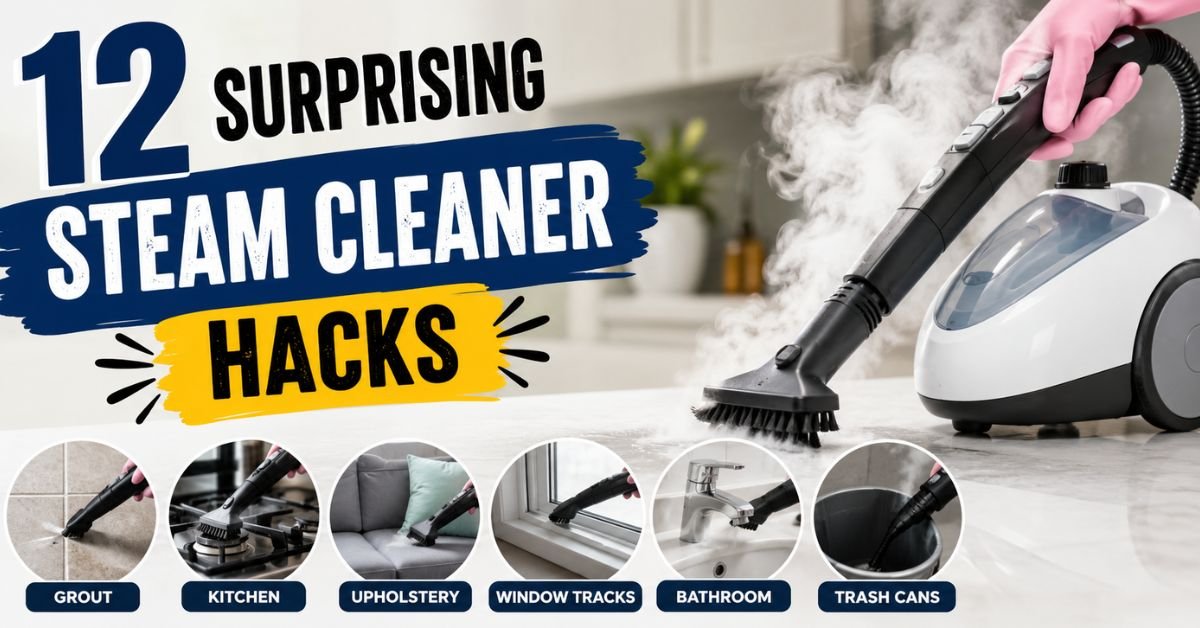
A steam cleaner is one of those household tools that often gets used for floors and then tucked away in a closet. However, after years of cleaning my own home, I discovered that it can handle far more than most people realize. These 12 Surprising Steam Cleaner Hacks helped me save time, reduce the need for harsh chemicals, and tackle stubborn dirt in places that were once frustrating to clean.
At Clean Home Craft, we enjoy testing practical cleaning methods that rely on simple tools rather than expensive products. A quality steam cleaner uses high-temperature steam to loosen grime, kill many common bacteria, and refresh surfaces without leaving behind chemical residue. The key is knowing where and how to use it safely.
In this guide, you’ll learn 12 Surprising Steam Cleaner Hacks that can make everyday cleaning easier while helping your home look and feel fresher.
Why Steam Cleaning Works So Well
Steam cleaners use hot vapor instead of strong cleaning chemicals. The heat softens grease, loosens dirt, and lifts grime from many hard surfaces.
Some of the biggest advantages include:
- Uses little or no cleaning chemicals
- Removes stubborn grease naturally
- Helps sanitize many household surfaces
- Reaches tight corners and grout lines
- Saves time on difficult cleaning jobs
- Suitable for many different rooms
Always read your steam cleaner’s manual before cleaning delicate materials.
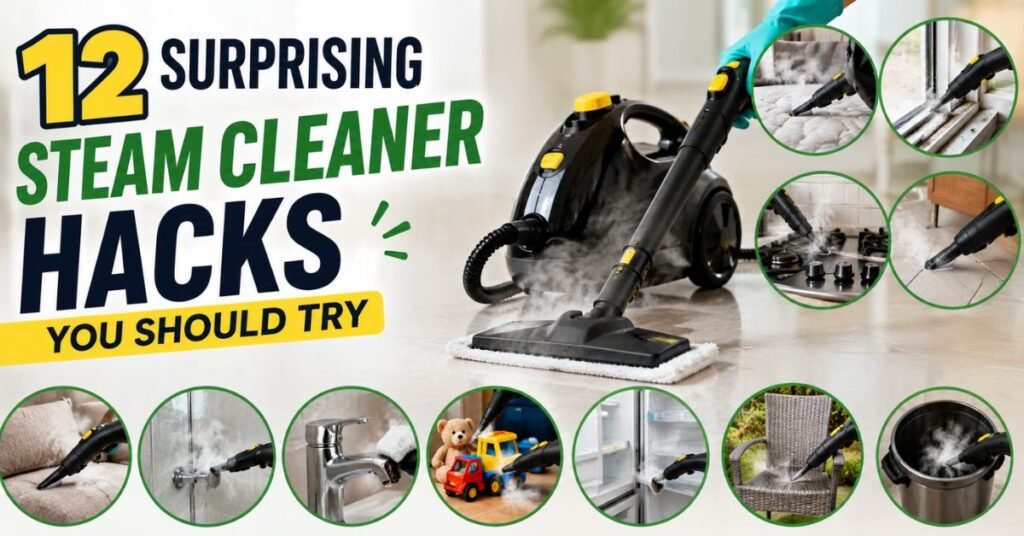
12 Surprising Steam Cleaner Hacks You Should Try
1. Refresh Mattress Surfaces
Mattresses collect dust, body oils, and allergens over time.
Use a fabric attachment and slowly move the steam cleaner across the surface without soaking the mattress.
Benefits include:
- Freshens fabric
- Helps reduce odors
- Loosens surface dust
- Makes regular vacuuming more effective
Make the bed after the mattress has dried completely.
2. Clean Window Tracks Without Scrubbing
Window tracks collect dust mixed with moisture, creating stubborn grime.
Instead of spending twenty minutes with a toothbrush, direct steam into the corners and wipe away the loosened dirt with a microfiber cloth.
This method works especially well for:
- Sliding windows
- Patio doors
- Balcony tracks
3. Remove Grease From Kitchen Cabinets
Greasy cabinet doors are common near stoves.
Steam softens the sticky buildup so it wipes away with very little effort.
After steaming:
- Wipe immediately
- Dry with a clean towel
- Repeat only on stubborn spots
Avoid prolonged steaming on unfinished wood.
4. Deep Clean Bathroom Grout
Bathroom grout often traps soap residue and mildew.
Direct steam along each grout line before wiping with a microfiber cloth.
You’ll notice:
- Brighter grout
- Less scrubbing
- Cleaner tile joints
- Better overall appearance
Steam Cleaner Uses at a Glance
| Area | Best Attachment | Time Needed | Difficulty |
| Mattress | Fabric tool | 15–20 minutes | Easy |
| Window tracks | Detail nozzle | 10 minutes | Easy |
| Kitchen cabinets | Small brush | 15 minutes | Easy |
| Tile grout | Jet nozzle | 20 minutes | Medium |
| Shower doors | Squeegee tool | 15 minutes | Easy |
| Upholstery | Fabric attachment | 20 minutes | Medium |
5. Freshen Upholstered Furniture
Sofas absorb everyday odors from pets, cooking, and regular use.
Light steam helps refresh fabric without using scented sprays.
Always:
- Test a hidden area first.
- Avoid over-wetting.
- Let furniture dry fully.
6. Restore Shower Doors
Soap scum builds up surprisingly fast.
Steam loosens the white film on glass, making it easy to wipe away with a microfiber cloth or squeegee.
The result is noticeably clearer glass with less effort than traditional scrubbing.
7. Clean Around Faucets
Mineral deposits often collect around faucet bases.
Steam reaches narrow spaces where brushes struggle.
After steaming:
- Wipe immediately.
- Polish with a dry microfiber cloth.
The chrome often looks almost new.
8. Refresh Children’s Plastic Toys
Plastic toys can collect fingerprints, dust, and everyday grime.
A quick burst of steam followed by a clean cloth helps clean many hard plastic toys.
Always avoid steaming toys with electronic components or batteries.
9. Remove Refrigerator Door Grime
The edges of refrigerator doors collect sticky fingerprints and food residue.
Steam loosens dirt around:
- Door seals
- Handles
- Hinges
- Plastic trim
Readers of Clean Home Craft often appreciate this trick because it makes refrigerator cleaning much faster without relying on strong degreasers.
10. Sanitize Pet Accessories
Pet bowls, plastic feeding mats, litter scoop handles, and hard-sided pet carriers can develop grime over time. Steam helps loosen dried residue and freshens these surfaces without leaving behind chemical cleaners.
For the best results:
- Remove loose dirt first.
- Steam evenly across the surface.
- Wipe with a clean microfiber cloth.
- Let everything cool before your pet uses it again.
Avoid steaming delicate pet bedding or items that contain foam unless the manufacturer says it is safe.
11. Clean Outdoor Patio Furniture
Plastic and metal patio furniture often collects pollen, dust, bird droppings, and weather stains.
A steam cleaner makes seasonal cleanup much easier.
Focus on:
- Chair arms
- Table edges
- Decorative grooves
- Metal frames
- Plastic surfaces
Finish by wiping away loosened dirt with a damp microfiber cloth. This simple routine can make outdoor furniture look refreshed before family gatherings or summer barbecues.
12. Deodorize Trash Cans
Even after emptying the trash, unpleasant odors can linger inside the bin.
Steam reaches corners that are difficult to scrub by hand and loosens sticky residue.
After steaming:
- Empty the trash can completely.
- Steam the inside from top to bottom.
- Wipe away loosened grime.
- Leave the lid open until completely dry.
A clean, dry trash can stays fresher much longer.
Extra Tips for Safe Steam Cleaning
Using a steam cleaner correctly helps protect your home while delivering the best results.
Test Before Cleaning
Always test steam on a hidden area first, especially on painted, finished, or delicate surfaces.
Keep the Nozzle Moving
Holding steam in one place for too long may damage certain materials.
Use Distilled Water
Many manufacturers recommend distilled water because it reduces mineral buildup inside the machine.
Dry Surfaces Afterwards
Steam loosens dirt, but wiping it away immediately produces the best finish.
Know What Not to Steam
Avoid using a steam cleaner on:
- Unsealed hardwood floors
- Waxed furniture
- Silk fabrics
- Delicate wallpaper
- Electronics
- Unsealed natural stone
- Freshly painted surfaces
Common Steam Cleaning Mistakes
Even experienced homeowners occasionally make these mistakes:
- Using too much steam on wood.
- Forgetting to vacuum before steaming.
- Skipping the manufacturer’s instructions.
- Using the wrong attachment.
- Not allowing surfaces to dry properly.
- Assuming every material is steam-safe.
Avoiding these simple errors helps your steam cleaner last longer and prevents accidental damage.
Conclusion
These 12 Surprising Steam Cleaner Hacks prove that a steam cleaner is much more than a floor-cleaning tool. From refreshing mattresses and upholstery to cleaning grout, window tracks, kitchen cabinets, pet accessories, and even trash cans, steam can simplify many everyday cleaning jobs while reducing the need for strong chemicals.
The secret is using the correct attachment, following the manufacturer’s instructions, and testing delicate surfaces before cleaning. Small habits like wiping surfaces immediately after steaming and allowing everything to dry thoroughly will give you better results every time.
If you enjoyed these 12 Surprising Steam Cleaner Hacks, visit CleanHomeCraft.com for more practical cleaning guides, household tips, and easy-to-follow tutorials that help keep every room in your home looking its best.
No. Steam loosens dirt and helps sanitize many surfaces, but you should still remove dust, vacuum regularly, and wipe away loosened debris.
Only sealed hardwood floors that the flooring manufacturer approves for steam cleaning should be cleaned this way.
For most homes, once every two to four weeks is enough for deep cleaning. High-traffic areas may need more frequent attention.
High-temperature steam can reduce many common household bacteria and germs on suitable hard surfaces. However, results depend on the temperature, contact time, and the surface being cleaned.
Most manufacturers recommend using only water. Adding chemicals may damage the machine or void the warranty.

Muhammad Ahad — Passionate writer sharing informative, engaging, and easy-to-read articles across different topics. Focused on delivering valuable content that helps readers learn, explore, and stay inspired every day.
1 thought on “12 Surprising Steam Cleaner Hacks”