

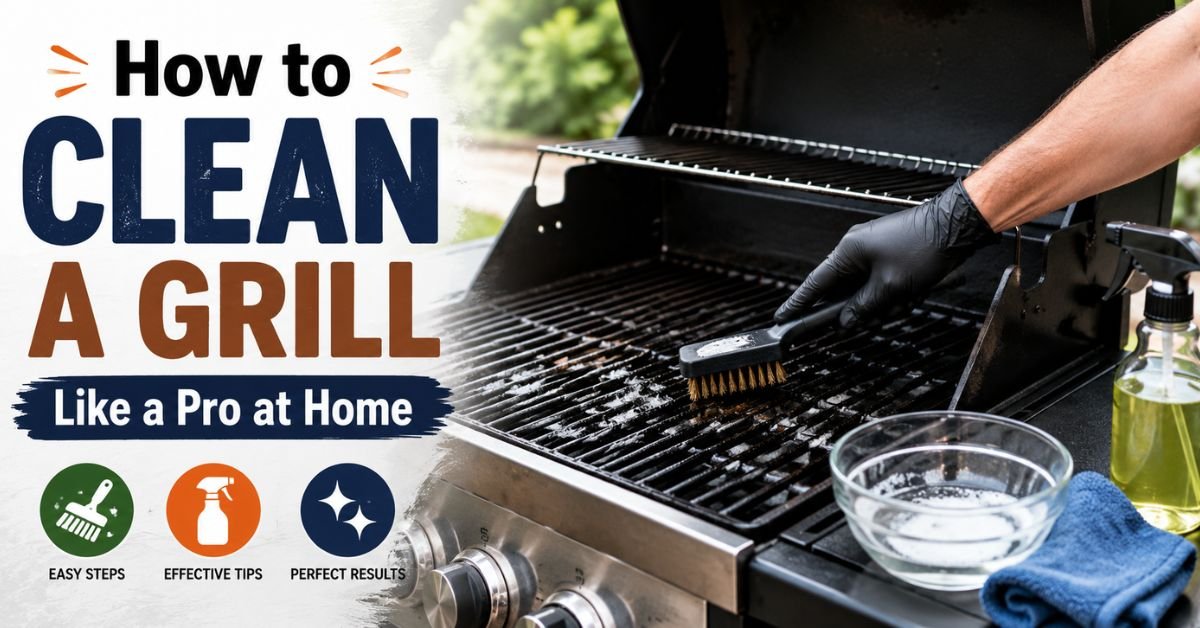
Introduction
A clean grill does more than make food taste better. It also cooks more evenly, lasts longer, and helps prevent flare-ups caused by built-up grease. After years of grilling everything from burgers to vegetables, I’ve learned that spending a little time cleaning after each cookout saves a lot of effort later.
The secret is using the right tools and simple techniques instead of harsh scrubbing. If you’ve been wondering **how to clean a grill without damaging the grates or wasting hours, you’re in the right place.
At Clean Home Craft, we believe the best cleaning methods are practical, affordable, and easy to follow. Whether you own a gas grill, charcoal grill, or electric grill, these tips will help you keep it in excellent condition throughout the year.
Why Cleaning Your Grill Matters
Many people focus only on cooking, but a dirty grill affects both flavor and performance. Burnt grease, food residue, and ash can create unpleasant smoke and uneven heat.
Regular cleaning helps you:
- Improve food flavor.
- Reduce grease flare-ups.
- Extend the grill’s lifespan.
- Prevent rust from developing.
- Maintain even cooking temperatures.
- Remove bacteria left from previous meals.
- Keep your outdoor cooking area looking tidy.
Cleaning doesn’t have to be a major project. A few minutes after each use makes deep cleaning much easier later.
Gather Your Cleaning Supplies
Before starting, collect everything you need.
Basic Cleaning Tools
- Grill brush with stainless steel or nylon bristles
- Plastic scraper
- Microfiber cloths
- Warm water
- Dish soap
- Bucket
- Sponge
- Rubber gloves
Natural Cleaning Ingredients
Many homeowners prefer natural products because they are inexpensive and effective.
Useful ingredients include:
- White vinegar
- Baking soda
- Lemon
- Warm water
These everyday items remove grease without exposing your grill to strong chemicals.
Step-by-step instructions for cleaning a grill
Every grill benefits from the same basic cleaning routine. The process changes slightly depending on the fuel type, but the overall approach remains simple.
Step 1: Heat the Grill First
After 10 to 15 minutes of grilling, turn off the grill.
The remaining food particles become brittle and easier to remove.
Once heated, turn the grill off and allow it to cool until it’s warm but safe to touch.
Step 2: Brush the Cooking Grates
Grill grates should be brushed while they are still warm.
Brush back and forth across every section.
Pay extra attention to corners where grease often collects.
Avoid using excessive force because aggressive scraping can damage protective coatings.
Step 3: Remove Loose Debris
Lift out the cooking grates if possible.
Shake away loose ash, charcoal dust, or burnt food.
Use a plastic scraper for stubborn spots instead of sharp metal tools.
Step 4: Wash with Warm Soapy Water
Fill a bucket with warm water and a few drops of dish soap.
Soak removable grates for 15–20 minutes.
After soaking:
- Scrub gently.
- Rinse thoroughly.
- Dry completely before reinstalling.
Never leave cast iron grates wet because moisture encourages rust.
Step 5: Clean the Inside
Grease often collects inside the lid and cooking chamber.
Use:
- Damp microfiber cloth
- Plastic scraper
- Mild soap solution
Wipe every surface carefully.
Avoid spraying large amounts of water inside gas burners.
Step 6: Empty the Grease Tray
Many grill owners forget this simple task.
Remove the grease tray carefully.
Dispose of hardened grease safely.
Wash the tray with warm soapy water before replacing it.
Keeping the grease tray clean reduces odors and lowers fire risk.
Cleaning Different Types of Grill Grates
Not every grate should be cleaned the same way.
Stainless Steel Grates
These are among the easiest to maintain.
Clean them using:
- Warm water
- Dish soap
- Grill brush
- Soft sponge
Dry thoroughly to prevent water spots.
Cast Iron Grates
Cast iron requires more care.
After washing:
- Dry immediately.
- Apply a thin layer of cooking oil.
- Heat the grill briefly to season the surface.
This protects against rust and keeps food from sticking.
Porcelain-Coated Grates
Porcelain coatings can chip if cleaned aggressively.
Instead:
- Use a soft nylon brush.
- Avoid metal scrapers.
- Wash gently with warm soapy water.
Small chips expose the metal underneath, making rust more likely.
Natural Ways to Remove Tough Grease
Sometimes grease becomes thick after months of cooking.
Household ingredients are more effective than expensive cleaners.
Vinegar Spray
Mix equal parts:
- White vinegar
- Warm water
Spray generously over greasy areas.
After 15 minutes, wipe it clean.
Baking Soda Paste
Mix:
- Baking soda
- Small amount of water
Create a thick paste.
Spread it over stubborn grease.
Leave it for 20 minutes.
Scrub gently using a sponge.
This method works especially well on removable grates.
Lemon Steam Method
Cut a lemon in half.
Rub it across warm grill grates.
The natural acidity loosens grease while leaving a fresh scent.
Many experienced grill owners use this quick trick after weekend barbecues.
Common Grill Cleaning Mistakes
Even careful homeowners sometimes make cleaning harder than necessary.
Avoid these common mistakes:
- Cleaning completely cold grates.
- Using harsh wire tools on porcelain surfaces.
- Leaving cast iron wet.
- Ignoring the grease tray.
- Forgetting to clean burner covers.
- Using oven cleaner on delicate grill finishes.
- Waiting months between deep cleanings.
At Clean Home Craft, we’ve found that a simple maintenance routine after every few grilling sessions prevents heavy grease buildup and makes seasonal deep cleaning much easier.
Deep Cleaning Your Grill Every Season
While quick cleaning after each cookout keeps your grill in good shape, a seasonal deep clean removes hidden grease, carbon deposits, and dirt that build up over time. I usually do this at the beginning and end of the grilling season, and it makes a noticeable difference in performance.
Follow these steps:
- Disconnect the gas supply (for gas grills) or remove leftover charcoal.
- Remove cooking grates, heat plates, and grease trays.
- Soak removable parts in warm, soapy water.
- Scrape loose debris from the firebox.
- Wipe the interior with a damp microfiber cloth.
- Clean burner tubes gently using a soft brush.
- Check for loose screws, rust, and damaged parts.
- Dry every component before reassembling the grill.
This seasonal routine helps your grill heat evenly and reduces the chance of unexpected flare-ups.
Grill Cleaning Comparison Table
| Grill Part | Cleaning Method | Recommended Frequency |
| Cooking Grates | Brush and wash with warm soapy water | After every use |
| Burner Covers | Wipe with damp cloth | Monthly |
| Grease Tray | Empty and wash | Every 2–3 uses |
| Interior Firebox | Scrape debris and wipe clean | Monthly |
| Exterior Surface | Clean with mild soap and microfiber cloth | Weekly |
| Cast Iron Grates | Clean, dry, and season with oil | After each cleaning |
| Charcoal Tray | Remove ash and debris | After every use |
How Often Should You Clean Your Grill?
Many people wait until the grill looks dirty, but regular maintenance is much easier than removing months of grease.
A simple schedule works well:
After Every Use
- Brush warm grates.
- Empty food debris.
- Wipe the lid if needed.
Every Month
- Wash removable parts.
- Clean burner covers.
- Empty and scrub the grease tray.
- Check for rust.
Every Season
- Perform a complete deep cleaning.
- Inspect hoses and connections.
- Tighten loose hardware.
- Replace worn grill brushes or damaged accessories.
Following this routine means you’ll spend less time scrubbing and more time enjoying your meals.
Tips to Keep Your Grill Cleaner Longer
Keeping a grill clean is easier than cleaning one that’s been neglected.
Here are a few habits that have worked well for me:
- Preheat the grill before cooking.
- Lightly oil the grates before adding food.
- Remove food residue while the grill is still warm.
- Cover the grill after it cools.
- Empty grease before it overflows.
- Store the grill in a dry location.
- Replace worn grill brushes regularly.
These small habits prevent heavy buildup and reduce deep-cleaning time.
Storing Your Grill Properly
Proper storage protects your grill from moisture, rust, and dirt.
If you won’t be using it for several weeks:
- Clean it thoroughly first.
- Dry every surface completely.
- Apply a thin coat of cooking oil to cast iron grates.
- Cover the grill with a weather-resistant cover.
- Store it in a sheltered location whenever possible.
If you live in an area with snow or heavy rain, occasional inspections during the off-season can prevent corrosion.
Conclusion
Learning how to clean a grill doesn’t require expensive products or complicated techniques. A simple routine of brushing the grates, washing removable parts, and performing seasonal deep cleaning will keep your grill working efficiently for years.
Regular maintenance also improves food flavor, reduces flare-ups, and protects your investment. Whether you grill every weekend or only during family gatherings, these practical habits will make cleaning much easier.
For more expert home cleaning guides, practical household tips, and easy maintenance tutorials, visit CleanHomeCraft.com and explore the latest resources from Clean Home Craft.
The easiest method is to heat the grill for about 10 minutes, brush the warm grates, and wipe surfaces with warm, soapy water. Cleaning after every use prevents stubborn grease buildup.
Yes. A mixture of equal parts white vinegar and warm water helps loosen grease naturally. It is an affordable and effective option for routine cleaning.
It’s best to clean the grates while they are warm, not extremely hot. Warm grates allow food residue to come off more easily while reducing the risk of burns.
Yes. Mild dish soap is safe for stainless steel, porcelain-coated, and many other grill grates. Rinse thoroughly before cooking again.
Dry the grill completely after washing. For cast iron grates, apply a thin layer of cooking oil before storing them.
Most homeowners should deep clean their grill every three to four months or after a busy grilling season.

Muhammad Ahad — Passionate writer sharing informative, engaging, and easy-to-read articles across different topics. Focused on delivering valuable content that helps readers learn, explore, and stay inspired every day.