

Introduction
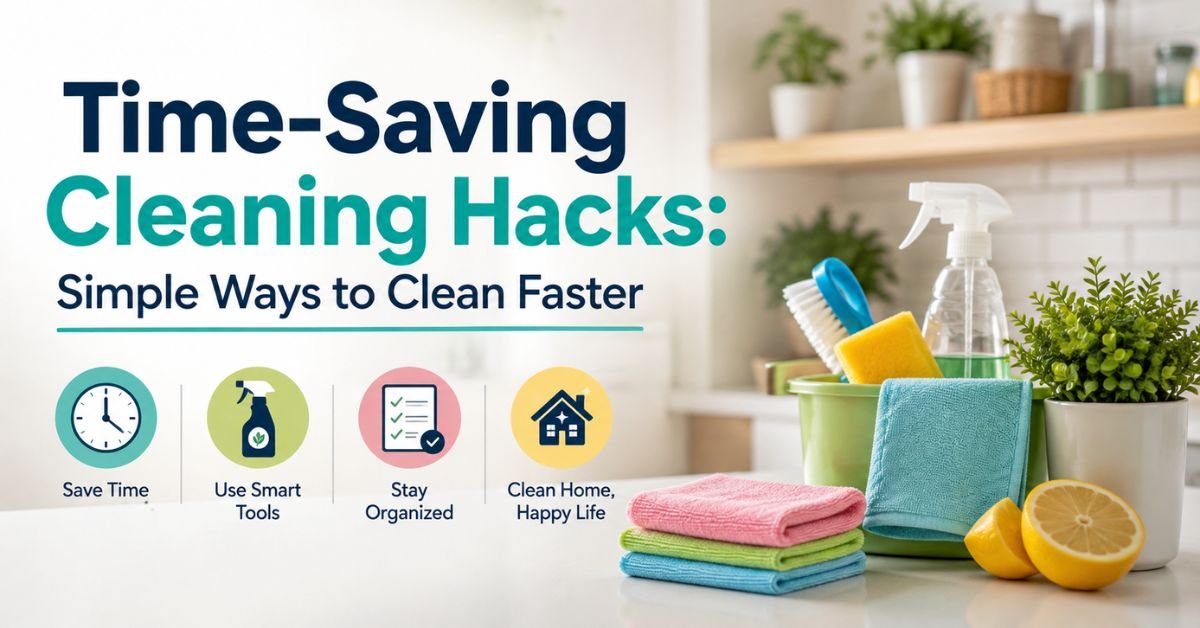
Cleaning can easily take over an entire afternoon, especially when every room seems to need attention at the same time. The good news is that you do not always need more effort—you often need a better system. These time-saving cleaning hacks can help you finish everyday chores faster while still keeping your home fresh and comfortable.
I have found that the biggest difference comes from changing the order of tasks, keeping useful supplies nearby, and dealing with small messes before they become stubborn problems. At Clean Home Craft, we focus on practical household methods that make cleaning feel less overwhelming and easier to fit into a busy routine.
Whether you live in a small apartment, a family home, or a larger house, these simple ideas can help you save minutes throughout the day.
Start With a Simple Cleaning Strategy
Before grabbing a spray bottle, take a quick look around the room. Decide what needs attention first instead of cleaning randomly.
A useful approach is to work from top to bottom. Dust or wipe higher surfaces first, then move toward counters, furniture, and floors. This prevents falling dust from making freshly cleaned areas dirty again.
Also, carry a small cleaning basket with you. Put your basic supplies inside so you are not repeatedly walking back to a cabinet.
Your basket can contain:
- Microfiber cloths
- All-purpose cleaner
- Glass cleaner
- Small scrub brush
- Disposable gloves
- Trash bags
- Paper towels
This small habit can save surprisingly much time during a whole-house cleaning session.
Time-Saving Cleaning Hacks for Everyday Messes
Clean Spills Before They Dry
A fresh spill usually takes seconds to wipe away. A dried spill may require soaking, scrubbing, and repeated wiping.
Whenever you notice sauce, coffee, grease, or another liquid on a surface, handle it immediately when possible.
Keep a washable microfiber cloth near frequently used areas such as the kitchen counter and dining table. Having the cloth within reach removes the excuse of postponing the job.
Use Microfiber Cloths Efficiently
Instead of using one cloth for everything, fold a microfiber cloth into sections. Use one section for the first pass, then rotate it when it becomes dirty.
This reduces the number of cloths you need during quick cleaning.
Microfiber also works well for dust because it can capture fine particles instead of simply moving them around. For routine dusting, a slightly damp cloth is often enough.
Put Things Away Before You Wipe
A cluttered surface takes longer to clean. Before wiping a table, kitchen counter, or bathroom vanity, return loose objects to their proper places.
Try the “one-touch” rule: when you pick something up, put it where it belongs instead of moving it to another temporary pile.
This simple change makes the actual cleaning process much quicker.
Work Room by Room
Cleaning an entire house at once can feel exhausting. Instead, divide your work into small zones.
For example:
| Area | Quick Task | Approx. Time |
| Kitchen | Counters, sink, stove | 10 minutes |
| Bathroom | Sink, mirror, toilet | 10 minutes |
| Bedroom | Bed, surfaces, floor | 10 minutes |
| Living room | Dust, cushions, floor | 10 minutes |
| Entryway | Shoes, clutter, floor | 5 minutes |
The times are only examples. You may need to spend more or less time on your home.
The main idea is to create small cleaning sessions instead of waiting until every room becomes messy.
Time-Saving Cleaning Hacks for the Kitchen
Let Products Sit While You Do Another Task
One of the easiest ways to waste time is scrubbing immediately after applying a suitable cleaner.
For compatible surfaces, apply the product according to its label directions and allow it to work for the recommended contact time. While it sits, move to another task.
For example, you might apply a suitable cleaner to a greasy stovetop, then wipe the dining table while the cleaner loosens the residue.
Never mix cleaning chemicals. In particular, avoid combining bleach with ammonia, acids, or other incompatible products.
Keep the Sink Clear
A clear sink makes the kitchen look cleaner instantly. After meals, rinse dishes promptly and remove food particles from the sink.
If you have a dishwasher, scrape dishes before loading them rather than leaving them stacked around the counter.
A clean sink also gives you a convenient place to rinse cleaning cloths and small tools.
Clean as You Cook
You do not have to wait until dinner is finished before starting cleanup.
While food cooks, wash a cutting board, wipe a counter, or put ingredients away. By the time the meal is ready, much of the cleanup may already be done.
This habit can make the final kitchen reset significantly shorter.
Save Time in the Bathroom
Keep Supplies Nearby
If your bathroom has storage space, keep frequently used cleaning tools close to the areas they are designed for.
A small brush and suitable bathroom cleaner can make quick maintenance easier. You are more likely to wipe a surface when the supplies are convenient.
However, always follow product instructions and check that a cleaner is suitable for the material.
Use a Daily Two-Minute Reset
After a shower, quickly check the sink and countertop. Remove obvious water spots, toothpaste residue, or loose hair.
Likewise, keep the toilet area tidy with regular maintenance rather than waiting for a major cleaning session.
These tiny resets prevent buildup and reduce the amount of deep scrubbing later.
Make Vacuuming Faster
Before vacuuming, pick up loose objects from the floor.
Look for:
- Toys
- Socks
- Cables
- Paper
- Shoes
- Small household items
Vacuuming around clutter forces you to stop repeatedly. A two-minute pickup beforehand can make the vacuuming process smoother.
Also, start at the farthest corner and work toward the exit. This gives you a clear route and reduces unnecessary movement.
For hard floors, use the appropriate vacuum attachment or cleaning method recommended by the flooring manufacturer.
Use the Two-Minute Rule
If a cleaning task takes less than two minutes, consider doing it immediately.
Examples include:
- Wiping a small spill
- Returning shoes to their place
- Emptying a small trash bin
- Wiping a bathroom mirror
- Putting clean dishes away
- Removing crumbs from a counter
These tasks seem insignificant individually. However, postponing dozens of them can create a large cleaning job later.
The goal is not to clean constantly. Instead, handle tiny tasks when they naturally fit into your routine.
Create a Weekly Cleaning Rhythm
A simple schedule prevents everything from piling up on one day.
You might organize your week like this:
Monday: Kitchen surfaces and appliances
Tuesday: Bathroom maintenance
Wednesday: Bedrooms and dusting
Thursday: Living areas
Friday: Floors and entryway
Weekend: Laundry, deeper cleaning, or skipped tasks
For more practical household ideas, Clean Home Craft can also be used as a source of simple cleaning inspiration when you need ideas for specific rooms or surfaces.
Your schedule does not have to match this example. time-saving cleaning hacks according to your household, work schedule, pets, and available time.
Keep Cleaning Supplies Organized
A messy cleaning cabinet can slow you down. Group similar supplies together so you can find them quickly.
For example:
- Kitchen cleaning products in one section
- Bathroom supplies in another
- Microfiber cloths together
- Brushes and sponges in a small container
- Extra trash bags in an easy-to-reach spot
Check your supplies occasionally. Running out of your favorite cloths or cleaner in the middle of a cleaning session can interrupt your momentum.
Avoid Overcleaning
Not every surface requires intensive scrubbing every day.
Focus your effort on high-touch or frequently used areas and visible messes. Save deeper cleaning for tasks that actually need it.
For example, a kitchen counter used several times a day deserves regular attention, while less-used decorative surfaces may need cleaning less frequently.
A realistic cleaning routine should make your home easier to maintain, not turn every day into a deep-cleaning marathon.
Conclusion
The best time-saving cleaning hacks are usually simple habits rather than complicated tricks. Clean small spills quickly, reduce clutter before wiping, work in zones, keep supplies together, and handle short tasks before they become larger chores.
You also do not need to clean your entire home perfectly every day. A consistent routine can keep everyday mess under control while leaving deeper cleaning for scheduled sessions.
You can build on these ideas by starting with two or three. Small changes can gradually make your cleaning routine faster and less stressful.
For more practical home cleaning ideas, visit CleanHomeCraft.com and discover easy-to-follow tips designed to help you maintain a cleaner, more comfortable home.
Start by removing clutter, then work from top to bottom and clean one area at a time. Use a portable cleaning basket to reduce unnecessary trips between rooms.
Choose the highest-priority areas first. Spend a few minutes collecting clutter, then focus on visible surfaces, the kitchen, bathroom, and floors. Avoid starting detailed deep-cleaning tasks.
Break large chores into short sessions. The use of a timer can help you remain focused. Also, keep frequently used supplies together so you spend less time searching and walking around.
Yes, especially if you become overwhelmed by whole-house cleaning. Completing one room or zone gives you a clear finish point and makes progress easier to see.
Quick cleaning can happen daily, while deeper tasks can be scheduled weekly or monthly. The right frequency depends on how many people live in your home and how heavily each area is used.
Start with clutter and obvious messes. Then clean surfaces from higher areas downward before finishing with floors. This prevents you from creating extra work.

Muhammad Ahad — Passionate writer sharing informative, engaging, and easy-to-read articles across different topics. Focused on delivering valuable content that helps readers learn, explore, and stay inspired every day.