


Introduction
Window blinds collect dust, fingerprints, grease, and other dirt over time. how to clean window blinds Even when the rest of a room looks clean, dusty blinds can make the entire space feel untidy. The good news is that you do not need expensive products or special equipment to keep them looking fresh.
When I clean window blinds, I always start by checking their material. This matters because wooden, fabric, vinyl, and aluminum blinds need different cleaning methods. Using too much water or the wrong cleaner can damage their finish.
At Clean Home Craft, we believe that simple cleaning routines can make household chores easier. Learning how to clean window blinds properly will help you remove dirt, reduce dust buildup, and keep your window coverings in good condition.
Let’s look at some easy methods you can use with everyday household supplies.
Why Should You Clean Window Blinds Regularly?
Blinds are often forgotten during normal house cleaning. However, their horizontal slats collect dust from the air, cooking fumes, and everyday household activity.
Here are a few reasons to clean them regularly:
- Reduce dust buildup: Clean blinds help prevent loose dust from spreading around the room.
- Improve indoor freshness: Removing trapped dirt helps keep your living space feeling fresh.
- Protect the material: Regular care prevents stubborn dirt from building up.
- Improve appearance: Clean blinds make windows look brighter and more attractive.
- Extend their lifespan: Gentle cleaning helps prevent unnecessary wear and damage.
I recommend light dusting once a week and deeper cleaning every one to three months, depending on the room and how quickly dirt collects.
Supplies You Need to Clean Window Blinds
Before starting, gather a few basic supplies. Most of these items are probably already available in your home.
- Microfiber cloth
- Soft dusting brush
- Vacuum cleaner with a brush attachment
- Mild dish soap
- Warm water
- Small cleaning bowl
- Spray bottle
- Old clean sock
- Dry towel
Avoid using rough scrubbers, strong chemicals, or excessive water. These can scratch surfaces, remove protective finishes, or cause fabric damage.
How to Clean Window Blinds Without Removing Them
You do not always need to take blinds off the window to clean them. In fact, regular cleaning is easier when they remain installed.
Follow these simple steps:
Step 1: Close the Blinds
Turn the blinds so the slats face downward and lie flat. This makes it easier to reach the surface and remove loose dust.
Step 2: Remove Loose Dust
Wipe each slat from end to end with a microfiber cloth or soft duster.
Work from the top down because dust can fall onto the lower slats. For better results, clean both sides.
Step 3: Use a Vacuum Cleaner
To remove heavy dust buildup from your blinds, use a vacuum with a soft brush attachment.
Set the vacuum to low suction and gently move it across the slats. Avoid pressing too hard, especially when cleaning thin aluminum blinds.
Step 4: Wipe With a Damp Cloth
Warm water with a few drops of mild dish soap. Dip a microfiber cloth into the mixture and wring it out well.
Wipe each slat gently to remove fingerprints and light stains. Finish with a clean, slightly damp cloth to remove soap residue.
Step 5: Dry the Blinds
To remove leftover moisture, use a dry microfiber cloth. Leave the blinds open for a while so air can circulate around them.
This final step helps prevent water spots and moisture-related damage.
How to Clean Different Types of Window Blinds
Not all blinds are made from the same material. Therefore, choosing the right cleaning method is important.
How to Clean Wooden Blinds
Wooden blinds need gentle care because excess moisture can cause swelling, warping, or damage to their finish.
Here is how I recommend cleaning them:
- Close the slats to expose one side.
- For dust removal, use a dry microfiber cloth.
- Wipe stubborn marks with a barely damp cloth.
- Dry each slat immediately.
- Repeat on the other side of the blinds.
Never soak wooden blinds or spray water directly onto them. For natural wood, use a suitable wood-safe cleaner if the manufacturer recommends one.
How to Clean Vinyl and Aluminum Blinds
Vinyl and aluminum blinds are generally easier to clean because they can handle gentle damp wiping.
Follow these steps:
- Close the blinds and remove loose dust.
- Mix mild dish soap with warm water.
- With a soft microfiber cloth, wipe each slat clean.
- Pay extra attention to corners and edges.
- Dry the surface with a clean towel.
Aluminum slats can bend easily, so avoid applying too much pressure while wiping.
How to Clean Fabric Blinds
Fabric blinds require extra attention because they can absorb water and develop stains.
Start by vacuuming the surface with an upholstery brush attachment. Use low suction to avoid pulling or stretching the fabric.
For small marks, check the manufacturer’s cleaning instructions before applying any product. Test an approved cleaner on a hidden area first.
Avoid soaking fabric blinds. Some materials require professional cleaning rather than water-based treatment.
How to Remove Grease and Stubborn Stains From Window Blinds
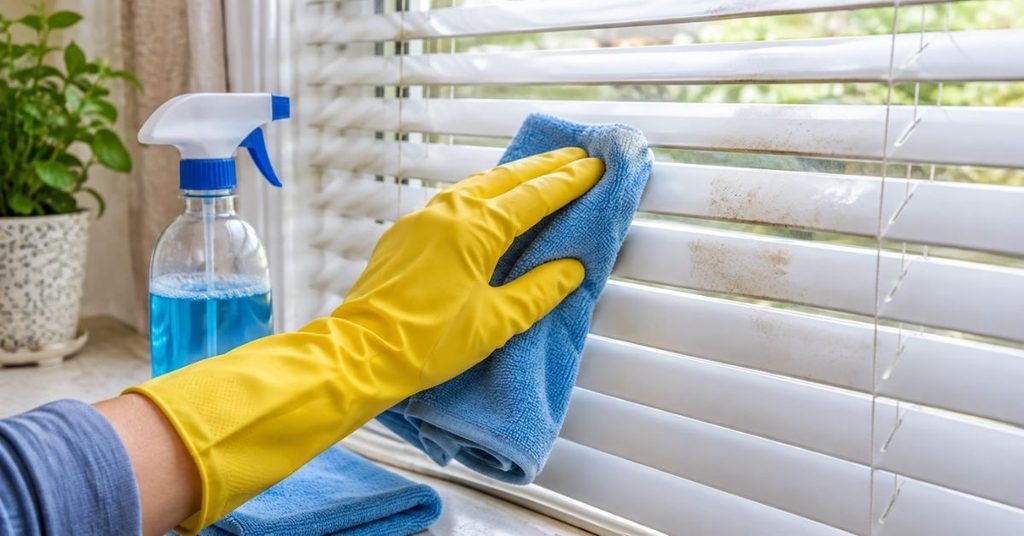
Kitchen blinds often collect grease because cooking releases tiny oil particles into the air. This sticky layer attracts dust and becomes harder to remove over time.
For washable vinyl or aluminum blinds, try this method:
- Warm water should be treated with mild dish soap.
- Dip a microfiber cloth into the solution.
- Only slightly dampen the cloth.
- Gently wipe the greasy areas.
- Use another cloth with clean water to remove soap.
- Dry the slats completely.
For stubborn marks, repeat the process instead of scrubbing aggressively.
If you are unsure whether a cleaning product is safe, check the manufacturer’s instructions first. Never mix household cleaning chemicals, especially bleach with ammonia or acidic cleaners.
How to Clean Window Blinds With an Old Sock
An old clean sock is a useful tool when you do not have a special blind-cleaning brush.
I often recommend this simple trick for narrow slats that are difficult to reach with an ordinary cloth.
Here’s how to use it:
- Find a clean cotton sock.
- Put it over your hand like a glove.
- Lightly dampen it with water if the material allows damp cleaning.
- Hold each slat between your fingers.
- Move your hand from one end to the other.
- Turn the blinds and repeat on the opposite side.
For dry dusting, use the sock without water. Wash it afterward so you do not transfer collected dirt to other surfaces.
Common Mistakes to Avoid When Cleaning Window Blinds
Even simple cleaning tasks can cause damage if you use the wrong technique. Avoid these common mistakes:
- Using too much water: Excess moisture can damage wood and fabric blinds.
- Scrubbing too hard: Rough cleaning can scratch vinyl or bend aluminum slats.
- Ignoring both sides: Dust collects on the front and back of blinds.
- Using strong chemicals: Harsh products may discolor or weaken certain materials.
- Skipping regular dusting: Waiting too long allows dirt to become harder to remove.
- Forgetting the cords: Dust and dirt can collect around lifting cords and other small parts.
At CleanHomeCraft.com, we recommend starting with the gentlest cleaning method and only moving to stronger methods when the material allows it.
How Often Should You Clean Window Blinds?
The right cleaning schedule depends on your household and the room where your blinds are installed.
For example, kitchen blinds may need more attention because of cooking grease. Bedroom blinds may collect dust, while living room blinds can gather dirt from open windows and everyday activity.
Here is a simple cleaning schedule:
| Cleaning task | Recommended frequency | Best method |
| Light dusting | Once a week | Microfiber cloth |
| Vacuuming | Every 2 weeks | Soft brush attachment |
| Damp wiping | Every 1–2 months | Mild soapy water, if suitable |
| Deep cleaning | Every 3 months | Material-safe cleaning method |
| Checking cords and corners | Monthly | Soft cloth |
Adjust this schedule if you notice visible dirt or stains before the next cleaning day.
Conclusion
Clean window blinds can make a noticeable difference in the appearance of your home. The key is to remove dust regularly, use gentle cleaning products, and choose a method that matches the blind material.
Whether you have wooden, fabric, vinyl, or aluminum blinds, a little care can help keep them looking fresh. Avoid excessive water, harsh chemicals, and rough scrubbing.
Now that you know how to clean window blinds, try adding a quick dusting session to your weekly cleaning routine. For more practical home and kitchen cleaning advice, keep visiting Clean Home Craft. Happy cleaning!
The easiest method is to close the blinds and wipe each slat with a microfiber cloth. Start at the top and work downward to avoid spreading dust onto clean areas.
Vinegar may be suitable for some washable vinyl or aluminum blinds, but it is not safe for every material or finish. Avoid using it on natural wood and delicate fabric unless the manufacturer approves it.
Use a microfiber cloth, soft duster, or vacuum brush attachment while the blinds remain installed. Clean both sides of the slats and remove any remaining moisture when using a damp cloth.
Start with a vacuum cleaner fitted with a soft brush attachment. Use low suction and gently remove loose dust before wiping the slats with a suitable cloth.
Some removable vinyl or aluminum blinds may be suitable for washing, but others can be damaged by soaking. Always check the manufacturer’s instructions before placing blinds in water.

Muhammad Ahad — Passionate writer sharing informative, engaging, and easy-to-read articles across different topics. Focused on delivering valuable content that helps readers learn, explore, and stay inspired every day.