


Introduction
When the house suddenly looks messy, you do not always need hours of scrubbing. I have found that knowing how to clean your home fast is mostly about choosing the right order.Rather than cleaning every room from top to bottom, concentrate on those areas that make the biggest visual difference.
A fast cleaning session works especially well when guests are coming, you have a busy schedule, or the weekend has disappeared before you even noticed. Our goal at Clean Home Craft is to make everyday cleaning feel practical rather than overwhelming.
The trick is simple: remove clutter, work from cleaner areas toward dirtier ones, and avoid getting stuck on tiny details. With a little planning, you can make your home feel noticeably fresher in less time.
How to Clean Your Home Fast Without Getting Overwhelmed
Before grabbing your cleaning products, take two minutes to look around. Decide which areas need attention most. Usually, the kitchen, bathroom, living room, and entryway create the biggest impression.
Do not try to make everything perfect. It is your goal to keep the home clean, comfortable, and presentable.
Start by collecting:
- A laundry basket or large storage bin
- Microfiber cloths
- An all-purpose cleaner
- Glass cleaner
- A broom or vacuum
- A mop
- Trash bags
- Rubber gloves
Put everything you need in one basket. Carrying your supplies from room to room wastes surprisingly much time.
Start With Clutter
Clutter can make a clean room look dirty. Pick up clothes, toys, papers, cups, shoes, and anything that belongs somewhere else.
Use a simple three-category system:
- Put away
- Throw away
- Deal with later
Do not start organizing drawers or closets during a quick cleaning session. Those jobs can wait.
Use a Fast Room-by-Room Cleaning Order
A useful order is to begin with clutter and surfaces, then move toward floors. This prevents you from cleaning the floor twice.
1. Tidy the Living Room
Begin with the room people see first.
Straighten cushions, fold blankets, collect cups, and return misplaced items. Then dust obvious surfaces such as the coffee table, television stand, and shelves.
Instead of moving furniture if you only have a few minutes to spare, focus on visible surfaces.
2. Refresh the Kitchen
It is often the kitchen that determines whether a home feels clean or not.
Load or wash the dishes first. Then wipe the counters, stovetop, cabinet handles, and dining table. If the sink looks dull, scrub it while another surface dries.
Do not deep-clean the oven or refrigerator during a quick session. Save those jobs for another day.
3. Give the Bathroom a Quick Reset
Bathrooms can become presentable surprisingly quickly.
Spray the sink and toilet with an appropriate cleaner and allow the product to sit according to its label directions. While it works, clean the mirror and wipe the counter.
Then return to the toilet and sink. Dispose of used towels and empty the trash.
4. Finish With Bedrooms
Make the beds first. This instantly changes the appearance of a bedroom.
Put dirty clothes into the laundry basket and clear bedside tables. Dust the most visible surfaces if time allows.
There is no need to reorganize wardrobes during a fast clean.
Work From Top to Bottom
One of the easiest ways to save time is to clean high surfaces before low ones.
Dust can fall downward. Therefore, clean shelves, tables, and other raised surfaces before vacuuming or sweeping.
A simple sequence is:
Dust → Wipe → Vacuum/Sweep → Mop
This approach reduces repeated work.
Use Short Cleaning Bursts
Instead of thinking, “I have to clean the whole house,” divide the work into small blocks.
Try:
- 5 minutes for clutter
- 10 minutes for the living room
- 10 minutes for the kitchen
- 5 minutes for the bathroom
- 10 minutes for bedrooms
- 10 minutes for floors
This makes the task feel much easier. If you finish one section early, use the extra time on the area that needs it most.
Quick Cleaning Method vs. Deep Cleaning
| Cleaning Task | Fast Method | Deep-Clean Method |
| Kitchen | Wipe counters and stovetop | Clean cabinets, appliances, and inside drawers |
| Bathroom | Clean toilet, sink, and mirror | Scrub grout, shower walls, and hidden areas |
| Bedroom | Make bed and remove clutter | Dust furniture and clean under the bed |
| Living room | Tidy, dust, and vacuum | Move furniture and clean upholstery |
| Floors | Vacuum or sweep visible areas | Vacuum edges and mop thoroughly |
| Dust | Clean obvious surfaces | Dust shelves, corners, vents, and fixtures |
The fast method is useful when you need a noticeable improvement quickly. Deep cleaning can then be scheduled separately.
How to Clean Your Home Fast Before Guests Arrive
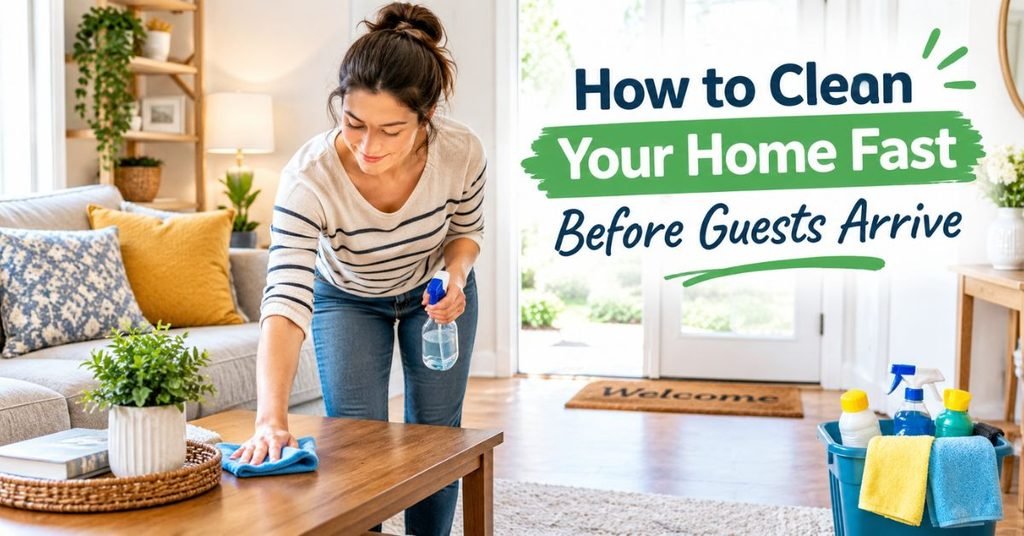
When guests are arriving soon, focus on what they will actually notice.
Start at the entrance. Remove shoes, bags, and unnecessary items. A clean entryway creates a good first impression.
Next, move to the living room. Straighten furniture and remove visible clutter.
Then clean the bathroom. This is one area guests are likely to notice closely.
Finally, check the kitchen. Remove dirty dishes from the sink and wipe the main counters.
A useful last-minute checklist includes:
- Empty obvious trash
- Make the beds
- Close cluttered cabinets
- Wipe fingerprints from mirrors
- Straighten cushions
- Open curtains
- Improve ventilation
- Vacuum visible floors
You do not need to clean every hidden corner.
Save Time by Cleaning While You Wait
Small waiting periods can become useful cleaning opportunities.
For example, while water heats for tea, wipe a nearby counter. While a cleaning product sits on a surface, clean the mirror or empty the trash.
These tiny actions add up.
For more practical household routines, Clean Home Craft focuses on simple cleaning methods that fit around normal daily life instead of requiring an entire day.
Avoid These Time-Wasting Cleaning Habits
Some cleaning habits make a quick job much longer.
Trying to Clean Everything
A fast clean is not the right time for a complete home makeover. Pay attention to dirt, clutter, odors, and high-use areas.
Moving From Room to Room Randomly
Constantly changing locations wastes time. Finish one small task category before moving to another.
Using Too Many Products
You rarely need a separate product for every surface. However, always check product labels and surface instructions before using a cleaner.
Never mix cleaning chemicals, especially products containing bleach with acids or ammonia-based cleaners.
Getting Distracted
You might discover an old box while cleaning a shelf and suddenly start sorting your entire storage area. Stop yourself.
Write down bigger projects for later.
Make Your Daily Routine Faster
The easiest way to clean quickly is to prevent messes from building up.
Try a short daily reset:
- Make the bed after getting up.
- Put clothes away instead of leaving them on furniture.
- Wipe kitchen counters after preparing food.
- Wash dishes regularly.
- Return items after using them.
- Empty small trash bins before they overflow.
- Spend five minutes tidying before bed.
These habits reduce the amount of cleaning required later.
Use the One-Touch Rule
When possible, handle an item once.
If you pick up a jacket, hang it up instead of placing it on a chair. If you finish with a cup, take it to the kitchen rather than leaving it on the table.
This sounds small, but it prevents clutter from traveling around the house.
A Simple 30-Minute Emergency Cleaning Plan
If you only have half an hour, use this sequence:
/Minutes 1–5: Collect clutter and trash.
/Minutes 6–12: Tidy the living room and entryway.
|Minutes 13–18: Clean the kitchen counters, sink, and stovetop|.
Minutes 19–23: Refresh the bathroom sink, toilet, and mirror.
Minutes 24–30: Give the main floor areas a quick sweep or vacuum.
If you have another five minutes, open curtains, replace towels, and check for anything obviously out of place.
Conclusion
Learning how to clean your home fast does not mean rushing through every task or ignoring cleanliness. It means spending your time where it creates the greatest improvement.
Start with clutter, clean visible surfaces, move from high areas toward the floor, and concentrate on kitchens, bathrooms, living spaces, and other high-traffic areas. Most importantly, do not let a quick cleaning session turn into an unexpected organizing project.
Once you develop a short routine, your home becomes much easier to maintain. Even 10–15 minutes of daily tidying can reduce the pressure of a larger cleaning session.
For more practical routines, household ideas, and easy cleaning tips, visit CleanHomeCraft.com and keep building cleaning habits that work for your everyday life.
Start with clutter, then clean visible surfaces, the kitchen, bathroom, and floors. Avoid deep-cleaning tasks until you have more time.
Start with the room that creates the biggest visual difference. For many homes, this means the living room or kitchen.
Divide the time into short blocks. Spend a few minutes on clutter, then focus on the living room, kitchen, bathroom, and visible floors.
Dust first. Dust and debris can fall onto the floor, so vacuuming afterward prevents repeated work.
Start with trash and obvious clutter. Do not try to organize everything at once. Clear walking paths and visible surfaces first.

Muhammad Ahad — Passionate writer sharing informative, engaging, and easy-to-read articles across different topics. Focused on delivering valuable content that helps readers learn, explore, and stay inspired every day.