

Introduction
I used to think stainless steel was “easy” because it looks shiny and modern. But after living with stainless steel appliances for years, I learned the truth: it shows fingerprints, water spots, and dull streaks faster than almost any surface in the kitchen. Even worse, some strong cleaners can leave permanent haze if you use them too often.
That’s exactly why I switched to a natural stainless steel cleaner routine. I wanted something safe, affordable, and gentle enough to use every day without worrying about damaging the finish. Over time, I tested different homemade mixes on my fridge, stove, sink, and even cabinet handles.
In this guide, I’m sharing what actually works in real homes, not just “Pinterest ideas.” You’ll get a simple method that cleans, shines, and protects stainless steel without harsh chemicals.
Why Stainless Steel Gets Streaky So Easily
Stainless steel isn’t fragile, but it is sensitive to oils and mineral deposits. Most streaks happen because of:
- Fingerprints and cooking grease
- Hard water spots
- Soap residue from dishwashing
- Wrong wiping direction
- Too much cleaner left behind
Also, stainless steel has a “grain,” just like wood. If you wipe against that grain, it almost always leaves visible lines.
Once I started wiping with the grain, my cleaning time dropped in half.
What Makes a Natural Stainless Steel Cleaner Actually Effective?
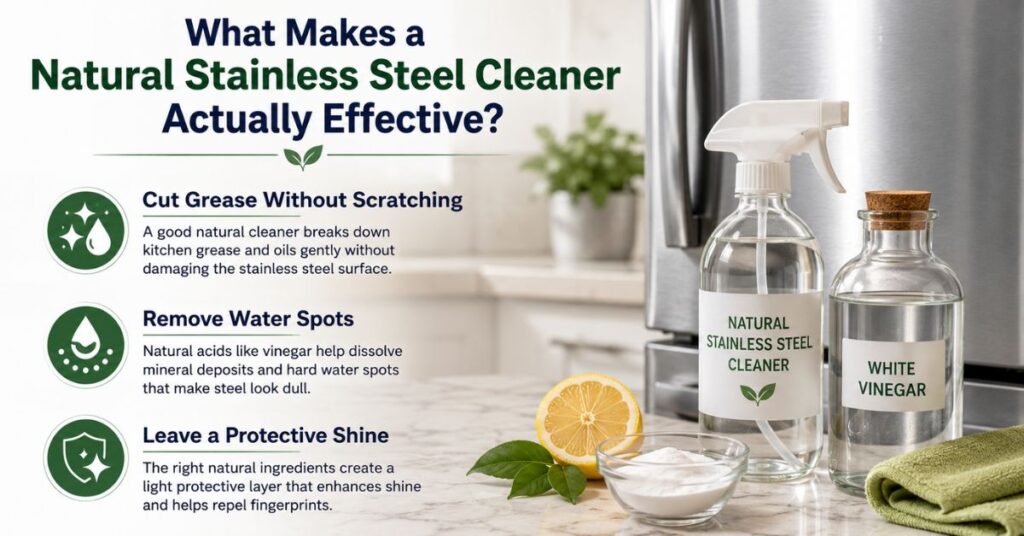
A good natural stainless steel cleaner should do three things:
Cut Grease Without Scratching
Kitchen stainless steel is often covered in invisible oil. A natural cleaner must break that down gently, without harsh abrasives.
Remove Water Spots
If you live in an area with hard water, your sink and fridge can look cloudy. Natural acids like vinegar help dissolve mineral buildup.
Leave a Protective Shine
The secret to stainless steel looking “new” is not just cleaning it’s adding a light protective layer that repels fingerprints.
That’s why I always finish with oil polishing (but not too much).
My Go-To Natural Stainless Steel Cleaner Recipe (2 Ingredients)
This is the simplest natural stainless steel cleaner I use weekly, especially for fridges and dishwashers.
Ingredients
- White vinegar
- Warm water
How to Mix It
In a spray bottle, mix:
- 1 cup white vinegar
- 1 cup warm water
Shake gently.
How I Use It
- Spray lightly on the surface
- Let it sit for 20–30 seconds
- Wipe with a microfiber cloth in the direction of the grain
- Dry immediately with a second clean cloth
Drying is the key step people skip. If you air-dry stainless steel, streaks are almost guaranteed.
When Vinegar Is Not Enough (My Heavy-Duty Method)
Sometimes vinegar alone won’t cut through greasy stove splatter or old fingerprints. That’s when I upgrade my method.
Best Add-On: A Drop of Dish Soap
I add dish soap only when needed because soap can leave residue if you use too much.
Quick Mix
- 2 cups warm water
- 1 cup vinegar
- 2–3 drops dish soap
This version of natural stainless steel cleaner works beautifully on range hoods and refrigerator doors.
How to Apply Without Streaks
Instead of spraying directly on the appliance, spray the cloth first. This prevents dripping and uneven drying.
Step-by-Step: How I Clean Stainless Steel Appliances Without Damage
This is my repeatable routine that works every time.
Step 1: Remove Loose Dust
Before using any cleaner, wipe with a dry microfiber cloth. Dust + liquid = muddy streaks.
Step 2: Spray Lightly (Don’t Soak It)
Too much liquid creates drip marks, especially on vertical surfaces like fridge doors.
Step 3: Wipe With the Grain
Look closely and you’ll see the grain lines. Follow them.
Step 4: Dry Immediately
I always keep a second cloth for drying. This is what gives that “polished showroom” look.
Step 5: Polish With a Tiny Amount of Oil
After cleaning, I add a drop of olive oil or mineral oil on a cloth and buff gently.
This step makes your natural stainless steel cleaner routine feel like a professional service.
The Best Oils for Polishing Stainless Steel Naturally
Oil polishing is optional, but it’s a game changer.
Mineral Oil (Best Choice)
- Doesn’t go rancid
- Leaves a smooth shine
- Great for sinks and appliances
Olive Oil (Works, But Use Sparingly)
Olive oil shines well, but too much can feel sticky over time.
Baby Oil (Surprisingly Good)
Baby oil works well because it’s mostly mineral oil with fragrance.
Tip: Use only a pea-sized amount. If you can see oily smears, you used too much.
Natural Stainless Steel Cleaner vs Store-Bought Cleaners
I’m not against store products, but many of them contain strong solvents and perfumes. Some even leave a greasy coating that attracts dust.
The best part about a homemade natural stainless steel cleaner is control you know exactly what’s on your surfaces.
Table: Stainless Steel Cleaning Methods (What Works Best)
| Cleaning Method | Best For | Pros | Cons |
| Vinegar + Water | Daily cleaning, fingerprints | Cheap, natural, streak-reducing | Not great on heavy grease |
| Vinegar + Soap Mix | Stove splatter, oily buildup | Stronger grease-cutting | Must rinse/wipe well |
| Baking Soda Paste | Sink stains, stubborn spots | Gentle scrubbing power | Can leave residue if not rinsed |
| Lemon + Salt | Spot cleaning, odor removal | Fresh scent, natural | Salt can scratch if rubbed hard |
| Mineral Oil Polish | Final shine + protection | Reduces fingerprints | Overuse can look greasy |
What I Avoid Using on Stainless Steel (Learned the Hard Way)
I ruined a small section of my stainless steel trash can once because I used the wrong product. Since then, I avoid:
- Steel wool (scratches instantly)
- Bleach (can discolor)
- Harsh oven cleaners
- Abrasive powder cleaners
- Rough scrub pads
Even some “multi-purpose sprays” can leave cloudy streaks if they contain wax or heavy fragrance oils.
If you’re serious about protecting your appliances, stick to a natural stainless steel cleaner and microfiber cloths.
How to Clean Stainless Steel Sink Naturally (My Weekend Method)
Sinks need a slightly different approach because they deal with food stains and hard water.
What I Use
- Baking soda
- Vinegar
- Soft sponge
- Microfiber towel
- Mineral oil (optional)
My Method
- Sprinkle baking soda all over the sink
- Scrub gently with a damp sponge
- Rinse with warm water
- Spray vinegar and let it fizz
- Rinse again
- Dry fully
- Add a tiny oil polish if you want shine
This combination is my favorite natural stainless steel cleaner trick for sinks because it removes stains without scratching.
How Often Should You Clean Stainless Steel?
It depends on your kitchen habits, but here’s what works in my home:
- Daily: quick wipe for fingerprints
- Weekly: full vinegar cleaning + drying
- Monthly: deep clean + oil polish
If you cook often, your stove area may need attention every 2–3 days.
The key is small cleanings more often. That prevents heavy buildup and makes everything easier.
Quick Tips for a Streak-Free Stainless Steel Finish
These are small habits that make a huge difference:
- Always use microfiber cloths
- Use two cloths (one for cleaning, one for drying)
- Never let cleaner air-dry
- Buff lightly at the end
- Avoid circular wiping
- Always wipe with the grain
Once you get used to this, stainless steel stops being annoying.
Conclusion
Stainless steel looks amazing when it’s clean, but it definitely needs the right routine. After years of trial and error, I can confidently say that a natural stainless steel cleaner made with vinegar and warm water is the easiest way to keep appliances shiny without harsh chemicals.
If you remember only a few things, remember this: wipe with the grain, dry immediately, and use a tiny bit of oil if you want that professional shine.
Try this method once, and your fridge, stove, and sink will look noticeably better the same day. If you want more practical cleaning routines like this, explore more tips on Clean Home Craft and keep your home looking fresh without stress.
The best natural stainless steel cleaner is a simple mix of white vinegar and warm water. It removes fingerprints, water spots, and light grease without damaging the finish.
Yes, vinegar is safe for stainless steel when diluted. However, always dry the surface afterward to prevent streaks or dull spots.
Baking soda is mild, but it can scratch if you scrub aggressively or use a rough pad. Use a soft sponge and gentle pressure.
Spray a vinegar-water mix, wipe with the grain, and dry immediately. For extra protection, apply a tiny drop of mineral oil afterward.
Yes, lemon juice works well because it’s acidic like vinegar. It helps remove water spots and odors, but it’s better for spot cleaning than full appliance cleaning.

Muhammad Ahad — Passionate writer sharing informative, engaging, and easy-to-read articles across different topics. Focused on delivering valuable content that helps readers learn, explore, and stay inspired every day.
1 thought on “Natural Stainless Steel Cleaner (My Safe, Streak-Free Method)”