
Introduction
I started making my own homemade all purpose cleaner for one simple reason: store-bought sprays were getting expensive, and half of them left a weird sticky feeling on my kitchen counters. Some smelled too strong, and others didn’t cut through grease at all. After testing different DIY mixes over the years, I found a few recipes that truly work for everyday cleaning without wasting ingredients or time.
This post is not about complicated “Pinterest-style” cleaners. It’s about real-life cleaning, the kind where you’re wiping fingerprints off doors, cleaning stovetop grease, and quickly freshening your bathroom sink before guests arrive. If you want a reliable homemade all purpose cleaner that’s cheap, safe (when used correctly), and effective, you’ll love these methods.
Why I Prefer a Homemade Cleaner Over Store-Bought Sprays
The biggest difference I noticed was control. When you make your own cleaner, you know exactly what’s inside the bottle. No mystery chemicals, no unnecessary dyes, and no overpowering fragrances.
Here’s why I personally stick to DIY cleaners:
- It saves money long-term
- You can adjust the strength for different messes
- It reduces plastic bottle waste
- It smells fresher and more natural
- It works great for everyday dirt and dust
And honestly, once you find a recipe you trust, it becomes part of your weekly routine like refilling dish soap.
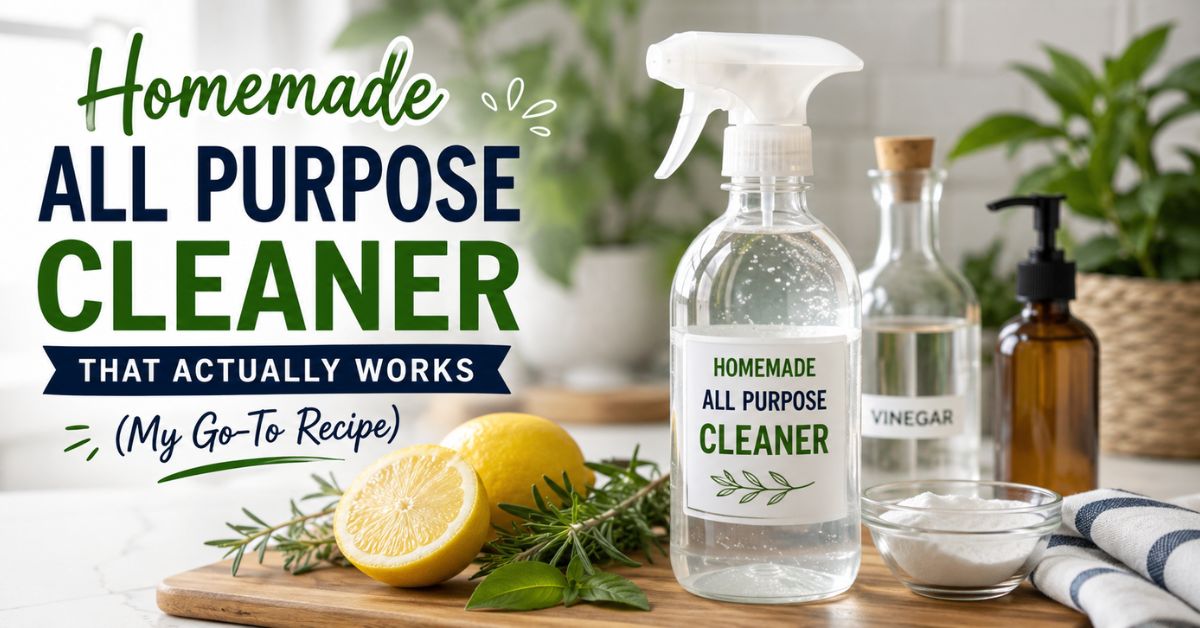
My Everyday Homemade All Purpose Cleaner Recipe (Simple + Powerful)
This is the recipe I use the most because it’s balanced. It cuts grease, removes light stains, and works on most washable surfaces.
Ingredients
- 1 cup warm distilled water
- 1 cup white vinegar
- 1 tablespoon Castile soap (unscented or lemon)
- 10–15 drops essential oil (optional: lemon, tea tree, eucalyptus)
How to Mix It (No Foaming Mistakes)
Here’s the trick most people don’t mention: don’t mix vinegar and soap too aggressively. If you shake it hard, it can clump or foam.
Follow this order:
- Pour warm water into a spray bottle
- Add Castile soap and gently swirl
- Add vinegar slowly
- Add essential oil if you want fragrance
- Close bottle and lightly shake
This homemade all purpose cleaner works beautifully for counters, sinks, stovetops, and even trash cans.
Best Places to Use Homemade All Purpose Cleaner in Your Home
I keep one bottle in the kitchen and one upstairs because I use it constantly.
Kitchen Surfaces
This is where it shines the most.
Use it on:
- Countertops (sealed stone, laminate, wood finish)
- Stove knobs and stovetop surface
- Appliance exteriors
- Cabinet doors
- Dining table
For greasy stovetops, I spray, wait 2 minutes, then wipe with a microfiber cloth.
Bathroom Quick Cleaning
Bathrooms get dirty fast, especially around sinks.
It works great on:
- Sink and faucet
- Toilet exterior
- Shower door glass (light buildup)
- Tiles (non-porous)
I personally use it daily for quick wipe-downs, then deep-clean weekly.
High-Touch Spots That Get Gross Fast
Some places get dirty without us noticing.
Spray and wipe:
- Light switches
- Door handles
- Refrigerator handle
- Remote controls (spray on cloth, not directly)
- Kids’ desks
This is where a homemade all purpose cleaner becomes a daily lifesaver.
Homemade All Purpose Cleaner for Grease (My Heavy-Duty Version)
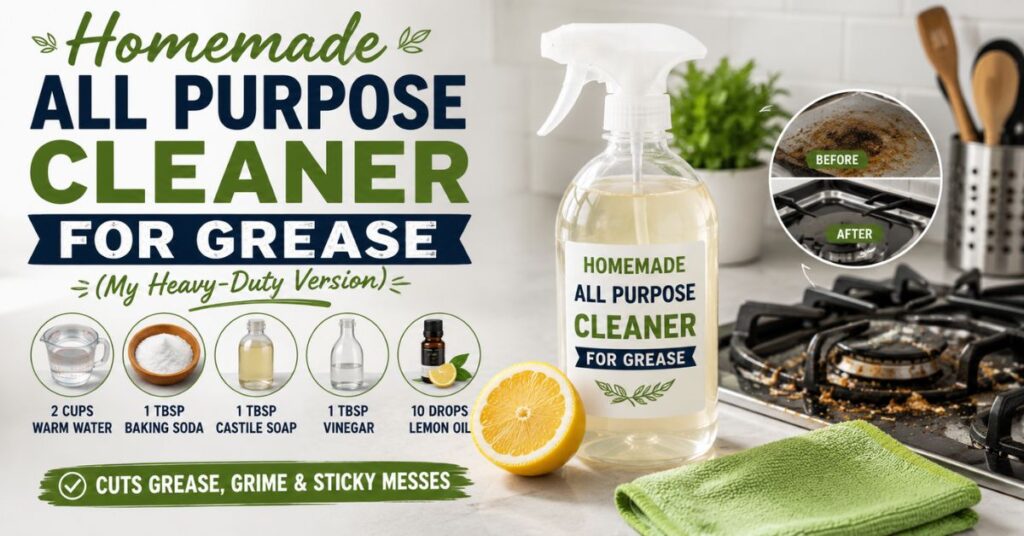
When you’re dealing with real grease like behind the stove or near the fryer my regular mix needs a boost.
Grease-Cutting Ingredients
- 2 cups warm water
- 1 tablespoon baking soda
- 1 tablespoon Castile soap
- 1 tablespoon vinegar
- 10 drops lemon essential oil
How I Use It for Sticky Kitchen Messes
Spray directly on grease spots and let it sit 3–5 minutes. Then scrub with a sponge or soft brush.
This version of homemade all purpose cleaner is my favorite for:
- Range hood grease
- Microwave interior
- Oven door exterior
- Sticky cabinet handles
Just don’t use it on aluminum surfaces because vinegar can dull them.
Surfaces You Should NOT Clean With Vinegar-Based DIY Sprays
This part matters. Vinegar is effective, but it can damage certain materials over time.
Avoid vinegar-based homemade all purpose cleaner on:
- Granite and marble (it can etch the surface)
- Natural stone tiles
- Hardwood floors (can dull finish)
- Cast iron cookware
- Waxed furniture
If you have granite counters, use the non-vinegar recipe below instead.
Non-Vinegar Homemade All Purpose Cleaner (Safe for Stone)
When I clean granite counters at home, I use this gentle formula.
Ingredients
- 2 cups warm water
- 1 teaspoon dish soap (mild)
- 1 tablespoon rubbing alcohol (70%)
- 10 drops essential oil (optional)
Why This Works
The alcohol helps the surface dry faster and prevents streaks. Dish soap lifts grease without damaging stone.
This homemade all purpose cleaner is perfect for:
- Granite countertops
- Marble bathroom sinks
- Stainless steel appliances
- Glass tables
My Weekly Cleaning Routine Using Homemade Cleaner
A cleaner is only helpful if you actually use it. My routine is simple and realistic.
Daily 5-Minute Reset
- Wipe kitchen counters
- Clean sink quickly
- Spray dining table
- Wipe stovetop spills
Weekly Deep Clean
- Cabinet doors
- Bathroom sink + mirror
- Door frames and handles
- Trash can lid
- Baseboards (quick wipe)
When your homemade all purpose cleaner is ready in a bottle, cleaning feels less like a chore.
Step-by-Step Table: How to Make and Use It Correctly
| Task | What to Do | Best Cleaner Version | Time Needed |
| Daily counter cleaning | Spray and wipe with microfiber cloth | Vinegar + soap mix | 2 minutes |
| Greasy stovetop | Spray, wait, scrub lightly | Heavy-duty grease mix | 5–7 minutes |
| Bathroom sink | Spray, wipe, rinse if needed | Vinegar mix or alcohol mix | 3 minutes |
| Glass and mirrors | Spray on cloth, wipe in circles | Alcohol-based mix | 2 minutes |
| Cabinets (sticky spots) | Spray, wait 2 minutes, wipe | Heavy-duty mix | 10 minutes |
| Door handles | Spray on cloth, wipe thoroughly | Alcohol-based mix | 1 minute |
Tips to Make Your Homemade Cleaner More Effective
I learned these through trial and error, especially after making weak batches that smelled nice but cleaned nothing.
Use Warm Water When Mixing
Warm water helps dissolve soap and baking soda better. Cold water can leave cloudy residue.
Let the Cleaner Sit Before Scrubbing
Don’t spray and instantly wipe. Give it 1–3 minutes to break down grime.
Always Use a Microfiber Cloth
Paper towels smear grease. Microfiber actually grabs dirt instead of pushing it around.
Label Your Bottle Clearly
I once mixed two different cleaners and forgot which one was which. Not fun.
Write:
- Ingredients type
- Date mixed
- Surface warnings
That’s how I keep my homemade all purpose cleaner safe and organized.
Storage and Shelf Life (What I Personally Do)
DIY cleaners don’t last forever, especially if you use natural ingredients.
How Long It Lasts
- Vinegar + water mix: 3–4 weeks
- Alcohol-based cleaner: up to 2 months
- Baking soda mixes: best used within 2 weeks
Best Storage Tips
- Store in a cool cabinet
- Avoid direct sunlight
- Use glass spray bottles if possible
- Shake gently before each use
If it smells “off,” dump it and remake it. A homemade all purpose cleaner is cheap, so there’s no reason to keep old batches.
Common Mistakes People Make With DIY All Purpose Cleaners
I’ve made all of these mistakes at least once.
Mixing Vinegar and Bleach (Never Do This)
This creates toxic fumes. Keep vinegar far away from bleach products.
Using Too Much Soap
More soap doesn’t mean better cleaning. It usually means sticky residue.
Expecting It to Replace Everything
A homemade all purpose cleaner is amazing, but it won’t replace oven cleaner for burnt-on messes or disinfectant for serious germ situations.
Conclusion
A good homemade all purpose cleaner doesn’t need fancy ingredients or complicated steps. The simple vinegar-and-soap mix is what I use most for kitchens and bathrooms, while the alcohol version is my go-to for granite, glass, and streak-free cleaning. If you keep one spray bottle ready, daily cleaning becomes faster, easier, and way less stressful.
Try one recipe this week and see how it fits into your routine. And if you want more real-life cleaning tips like this, explore more guides on CleanHomeCraft.com your home will thank you.
The best one is usually a mix of water, vinegar, and a small amount of Castile soap. It’s cheap, easy, and handles daily messes well.
Yes, but vinegar-based cleaners may streak. For glass, I recommend the alcohol-based homemade all purpose cleaner for a cleaner finish.
It can reduce germs, but it’s not a hospital-grade disinfectant. If you need real disinfection, use rubbing alcohol (70%) or an approved disinfectant.
Only if the wood is sealed. Avoid vinegar on unsealed wood because it can damage the finish over time.
Usually it’s from too much soap or hard water. Use distilled water and reduce soap to avoid buildup.

Muhammad Ahad — Passionate writer sharing informative, engaging, and easy-to-read articles across different topics. Focused on delivering valuable content that helps readers learn, explore, and stay inspired every day.
1 thought on “Homemade All Purpose Cleaner That Actually Works (My Go-To Recipe)”