

Introduction
Learning how to clean a fabric couch can save you money, protect your furniture, and make your living room feel noticeably fresher. Fabric sofas collect more than visible crumbs. Dust, body oils, food spills, pet hair, and everyday odors can settle deep into the fibers. The good news is that you do not always need expensive equipment or professional services.
I have found that the best couch-cleaning results usually come from working slowly and using the right amount of moisture. At Clean Home Craft, we focus on practical home-cleaning methods that are simple enough to use during a normal weekend cleanup.
Before applying anything to your sofa, always check the manufacturer’s care label. Different fabrics can react very differently to water, detergents, and heat.
Check Your Couch Before Cleaning
Before grabbing a spray bottle, inspect the entire sofa. Look for stains, loose threads, fading, removable cushions, and areas that receive heavy use.
Find the Cleaning Code
Many upholstered couches have a care tag underneath a cushion or attached to the frame. You may see letters such as:
- W: Water-based cleaning products are generally suitable.
- S: Use a solvent-based upholstery cleaner.
- WS: Water-based or solvent-based products may be suitable.
- X: Vacuuming or professional cleaning is usually recommended.
If the label is missing, avoid soaking the fabric. Test any cleaning solution on a hidden section first and allow it to dry before continuing.
Inspect Problem Areas
Pay extra attention to:
- Armrests
- Seat cushions
- Headrest areas
- Food and drink spills
- Pet-hair buildup
- Darkened edges
- Greasy patches
This inspection helps you decide where to spend most of your cleaning time.
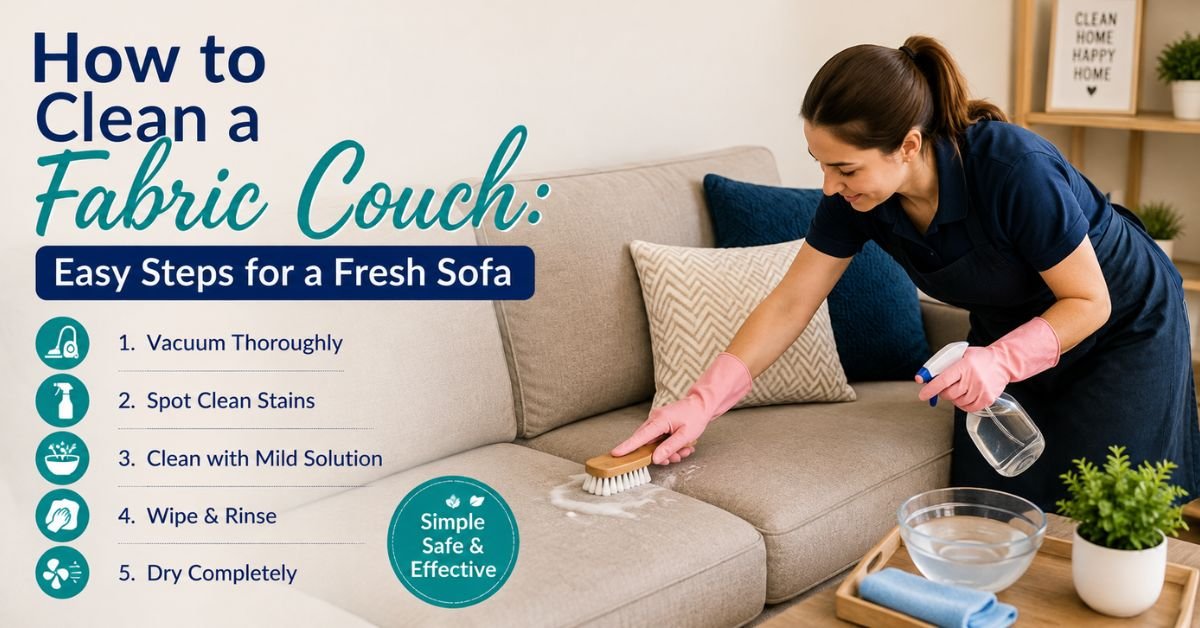
How to Clean a Fabric Couch Step by Step
Once you know your couch can handle the planned method, work from dry cleaning toward controlled spot cleaning. This prevents you from turning loose dirt into muddy residue.
1. Remove Cushions and Loose Items
Take off removable cushions, blankets, and decorative pillows. Check underneath the cushions because crumbs and small debris often hide there.
If the cushion covers are removable, check their washing instructions before putting them into a machine. Some covers require gentle washing or air drying.
2. Vacuum the Entire Sofa
Use an upholstery attachment to vacuum the couch thoroughly. Move slowly rather than quickly dragging the nozzle across the fabric.
Vacuum:
- The seat surfaces
- Cushion sides
- Backrest
- Armrests
- Seams
- Crevices
- The area underneath cushions
For stubborn pet hair, a soft upholstery brush or rubber glove can help gather loose hairs before vacuuming.
3. Prepare a Mild Cleaning Solution
For a water-safe couch, start with a small amount of mild liquid dish soap mixed into lukewarm water. You want a lightly soapy solution, not a bucket full of foam.
Dip a clean microfiber cloth into the mixture and wring it out very well. The cloth should be damp rather than dripping.
Too much water can cause several problems, including slow drying, water marks, unpleasant odors, and possible fabric damage.
4. Clean Small Sections
Instead of covering the whole sofa at once, work in small sections.
Gently wipe the fabric using light, controlled movements. Avoid aggressively scrubbing because friction can damage delicate fibers or push stains deeper.
Rinse your cloth frequently in clean water. A dirty cloth can spread grime from one section to another.
5. Treat Stains Separately
Old stains often need more attention than ordinary surface dirt. Do not immediately pour a strong cleaner over them.
To begin, dampen a clean cloth and blot the area. For greasy marks, a tiny amount of mild dish soap may help on a compatible water-safe fabric.
Always test the solution somewhere hidden first.
Never mix different household cleaning chemicals. In particular, avoid combining bleach with other cleaners.
6. Remove Soap Residue
After cleaning, use another clean, slightly damp microfiber cloth to wipe away leftover soap.
This step matters because detergent residue can attract new dust and leave the fabric feeling stiff.
Use as little water as necessary. The goal is to remove residue without saturating the upholstery.
7. Dry the Couch Completely
Good airflow is one of the easiest ways to improve the final result. Open nearby windows when weather permits and use a fan to circulate air around the sofa.
Do not sit on the couch until the fabric is completely dry.
If cushions are removable, stand them upright so air can reach more surfaces.
Quick Fabric Couch Cleaning Comparison
| Cleaning Method | Best For | Moisture Level | Main Benefit |
| Vacuuming | Dust, crumbs, hair | None | Safe routine cleaning |
| Damp microfiber cloth | Light surface grime | Low | Simple and gentle |
| Mild soap solution | Everyday marks | Low | Helps loosen dirt |
| Upholstery cleaner | Compatible deeper stains | Medium | Targeted cleaning |
| Professional cleaning | Delicate or heavily soiled fabric | Varies | Specialized treatment |
How to Handle Common Couch Stains
Different spills need different approaches. The sooner you deal with a fresh mark, the easier it usually is to remove.
Coffee and Tea
Blot fresh coffee or tea immediately with a clean cloth. Do not rub outward aggressively because this can enlarge the affected area.
After blotting, use a small amount of appropriate upholstery cleaner according to the fabric label.
Grease and Food
Remove solid food carefully with a spoon or dull edge. For a water-safe fabric, a tiny amount of mild dish soap can help break down oily residue.
Blot rather than scrubbing.
Pet Accidents
Remove solid material first, then blot moisture with absorbent towels. Follow the manufacturer’s cleaning instructions and consider an upholstery-safe enzymatic product if the fabric permits it.
Allow the area to dry completely.
Ink
Ink can be particularly difficult. Avoid experimenting with harsh household chemicals because they may spread the stain or permanently discolor the fabric.
For valuable or delicate upholstery, professional cleaning is often the safer choice.
Mistakes to Avoid When Cleaning a Fabric Couch
Even a simple cleaning method can go wrong when too much product or water is used.
Avoid these common mistakes:
- Skipping the care label
- Soaking the upholstery
- Scrubbing aggressively
- Using too much detergent
- Mixing cleaning chemicals
- Ignoring hidden test areas
- Using excessive heat
- Sitting on damp cushions
- Leaving soap residue behind
Also, avoid assuming that a natural ingredient is automatically safe for every fabric. Upholstery materials vary, so compatibility should always come first.
A Simple Maintenance Routine
You do not need to deep-clean your sofa every week. Regular light maintenance can keep heavy buildup under control.
Try this routine:
- Vacuum once a week.
- Remove crumbs as soon as possible.
- Blot spills immediately.
- Rotate removable cushions when appropriate.
- Keep pets from repeatedly using one favorite spot.
- Inspect high-use areas every few weeks.
- Deep-clean according to the manufacturer’s recommendations.
For more practical household ideas, Clean Home Craft also focuses on straightforward cleaning routines that fit into busy schedules.
When to Call a Professional
Some couches are better left to trained upholstery cleaners. Consider professional help when the fabric is delicate, heavily stained, vintage, expensive, or marked with an X cleaning code.
Professional cleaning is also worth considering when odors remain after appropriate cleaning or when a large section of upholstery has been affected by a serious spill.
Trying several untested chemicals can make the problem worse. Sometimes paying for specialist care is less expensive than replacing damaged upholstery.
Conclusion
Knowing how to clean a fabric couch does not require a complicated collection of products. Start by checking the care label, remove loose debris, vacuum thoroughly, and use a carefully controlled amount of suitable cleaning solution. Most importantly, avoid excessive water and harsh scrubbing.
For routine care, small cleaning sessions are easier than waiting until the entire sofa becomes heavily soiled. With regular vacuuming and quick attention to spills, your couch can stay cleaner and more comfortable for longer.
For more practical home-cleaning ideas and easy household tips, visit CleanHomeCraft.com and keep building a simpler, fresher home one cleaning task at a time.
Only if the manufacturer’s care instructions allow water-based cleaning. Always test a hidden area first and avoid saturating the fabric.
Vacuuming once a week is a useful routine for many households. Deeper cleaning can be done when the upholstery becomes visibly dirty or according to the manufacturer’s recommendations.
A small amount of mild dish soap may work on some water-safe fabrics. However, always check the care label and perform a hidden spot test first.
Start by vacuuming thoroughly and allowing the couch to receive plenty of fresh airflow. For persistent odors, use an upholstery-safe odor treatment that matches the manufacturer’s instructions.
Only when the manufacturer specifically permits steam or moisture-based cleaning. Heat and moisture can damage certain upholstery materials.
Over-wetting, uneven cleaning, excessive detergent, or residue can cause visible marks. Cleaning small sections evenly and using minimal moisture can reduce this risk.

Muhammad Ahad — Passionate writer sharing informative, engaging, and easy-to-read articles across different topics. Focused on delivering valuable content that helps readers learn, explore, and stay inspired every day.
1 thought on “How to Clean a Fabric Couch: Easy Steps for a Fresh Sofa”